
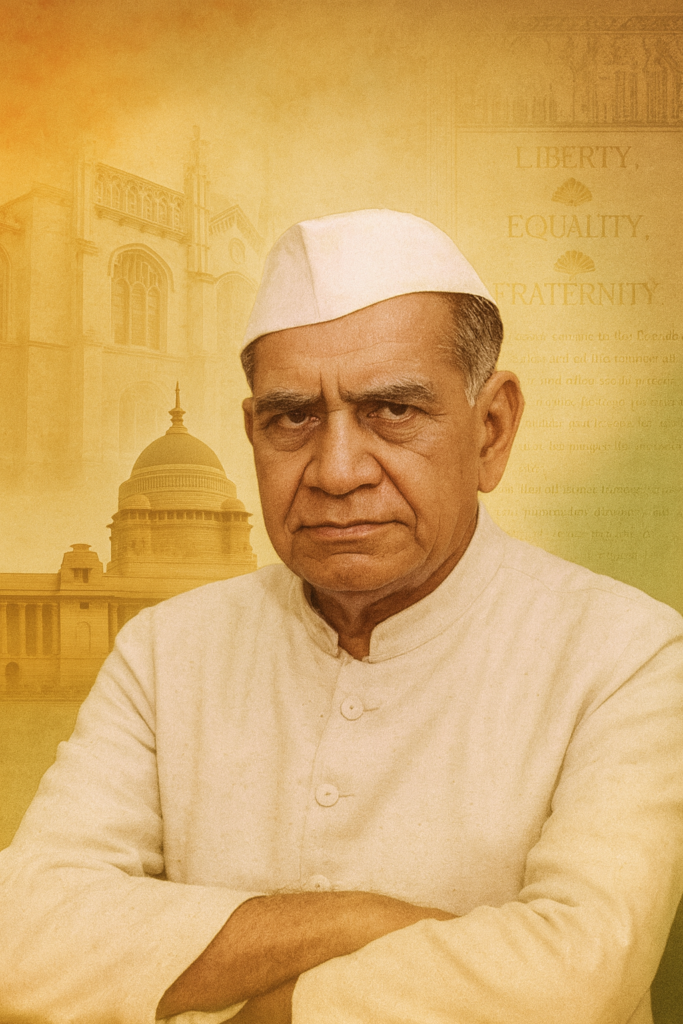
Dr Fakhruddin Ali Ahmed
A brief, inspiring and informative biography of Dr. Fakhruddin Ali Ahmed — his life, public service and legacy.
Introduction
Dr. Fakhruddin Ali Ahmed was a prominent Indian politician who served as the fifth President of India from 1974 until his death in 1977. His life and career hold an important place in modern Indian political history.
Basic Details
Personal Information
Full nameDr. Fakhruddin Ali Ahmed
Born13 May 1905, Delhi (then British India)
Died11 February 1977, New Delhi
ReligionIslam
Political partyIndian National Congress
PositionFifth President of India (1974–1977)
Early Life and Education
Dr. Fakhruddin Ali Ahmed was born into a respected family. He completed his early education in India and later travelled to England for higher studies. He studied at the University of Cambridge where he obtained a degree in law. During his time in England he became interested in the Indian freedom movement and the ideas shaping India's future.
Political Career
Joining the freedom movement
He joined the Indian National Congress in 1931 and became an active leader in Assam. He participated in freedom agitation efforts and, like many leaders of the time, he was jailed during the Quit India movement of 1942.
Public Office
After independence, Dr. Fakhruddin Ali Ahmed held several ministerial portfolios and served the nation in multiple roles. Some of the important responsibilities he handled included:
- Agriculture Minister
- Food and Supply Minister
- Other ministerial responsibilities in central and state government
The Presidency
On 20 August 1974 Dr. Fakhruddin Ali Ahmed was sworn in as the fifth President of India. He was the second Muslim to occupy the office after Dr. Zakir Hussain. His tenure coincided with a turbulent period in Indian politics — including the Emergency (1975–1977) declared by the central government under Prime Minister Indira Gandhi. The Emergency remains a controversial chapter in India's political history.
Death in Office
Dr. Fakhruddin Ali Ahmed passed away on 11 February 1977 while still serving as President. He was one of the few Indian presidents to die during their term in office.
Legacy and Honours
Dr. Fakhruddin Ali Ahmed is remembered as a loyal and dignified public servant. Several institutions, roads and public buildings in India bear his name in tribute to his contribution to public life. His tenure and the choices made during that era continue to be studied by historians and political observers.
Closing — Lessons and Reflections
Dr. Fakhruddin Ali Ahmed's life offers lessons on public service, duty and the complexities of political leadership during challenging times. Remembering leaders of the past with nuance helps us learn from history and better understand the responsibilities of public office.
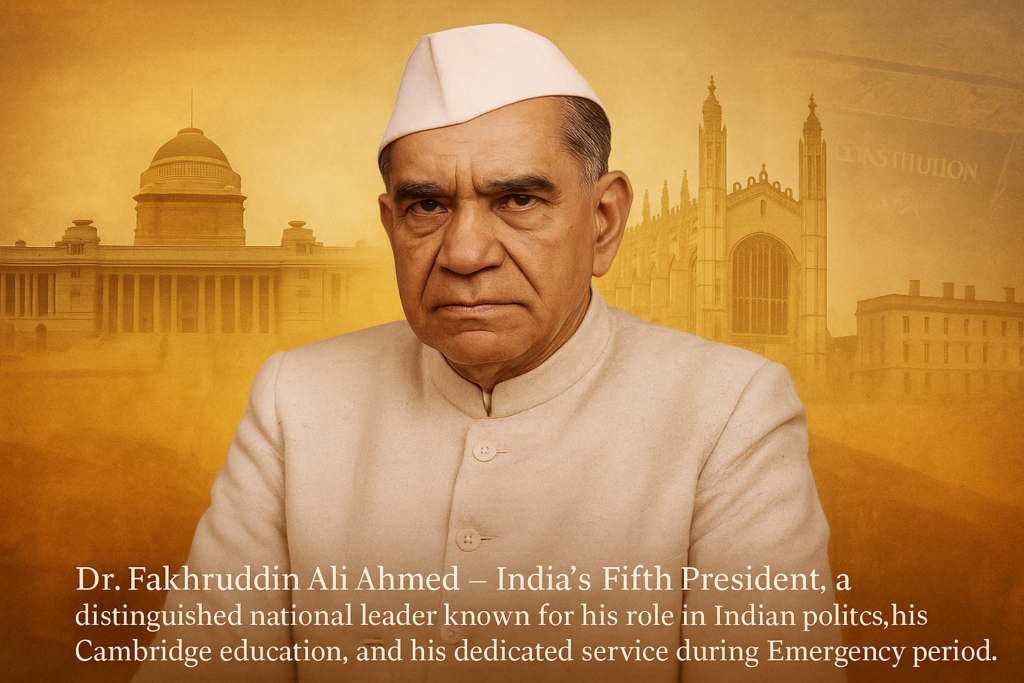
Dr. Fakhruddin Ali Ahmed : Introduction
Dr. Fakhruddin Ali Ahmed was the Fifth President of the Indian Republic. He was a respected political leader and a dedicated freedom fighter. His life reflects simplicity, integrity, and a deep commitment to public service.
📅 Birth and Early Life
Dr. Fakhruddin Ali Ahmed was born on 13 May 1905 in Delhi. His family had roots in Assam, and he came from a well-educated Muslim family. He completed his early education in India, and later went to England for higher studies.
🛒 Buy Now on AmazonIn England, he studied law at the University of Cambridge and obtained the Bar-at-Law degree.
🇮🇳 Political Life and Freedom Struggle
During his studies in London, he was influenced by Mahatma Gandhi and the ideas of the Indian freedom movement. After returning to India, he joined the Indian National Congress and entered active politics in 1931.
He played an active role in the Quit India movement (1942) and was imprisoned for participating in it.
Ministerial Responsibilities After Independence
After India gained independence, he served in several important ministerial roles, including:
- Agriculture Minister
- Food and Civil Supplies Minister
- Minister in other key administrative departments
🏛️ Appointment as President of India
On 20 August 1974, Dr. Fakhruddin Ali Ahmed became the Fifth President of India.
- He was the second Muslim President of India (after Dr. Zakir Hussain).
- He was the first President who served during the Emergency (1975–1977).
During the Emergency, he approved all decisions sent by Prime Minister Indira Gandhi without raising objections. This aspect of his presidency remained highly discussed and debated.
⚰️ Death
Dr. Fakhruddin Ali Ahmed passed away on 11 February 1977 in New Delhi while still serving as President. He was the second Indian President to die while in office.
🏅 Legacy
Many institutions, roads, and buildings in India have been named after him. He is remembered as a leader who fulfilled his duties even during the most challenging political circumstances. His contribution left a distinct mark on the history of Indian democracy.
Dr. Fakhruddin Ali Ahmed – Education
Dr. Fakhruddin Ali Ahmed had a highly distinguished academic background. His education helped him become a skilled advocate and an intelligent political leader.
🏫 Early Education
He completed his early education in India. He was a brilliant student and showed interest in studies from the beginning.
🎓 Higher Education Abroad
He went to England for higher studies, where he joined the prestigious University of Cambridge (St. Catharine’s College).
He completed his law studies there and later became a Barrister-at-Law from the Inner Temple, London.
📚 Key Educational Highlights
- Strong academic foundation
- Deep knowledge across various subjects
- Legal education supported his political and administrative capabilities
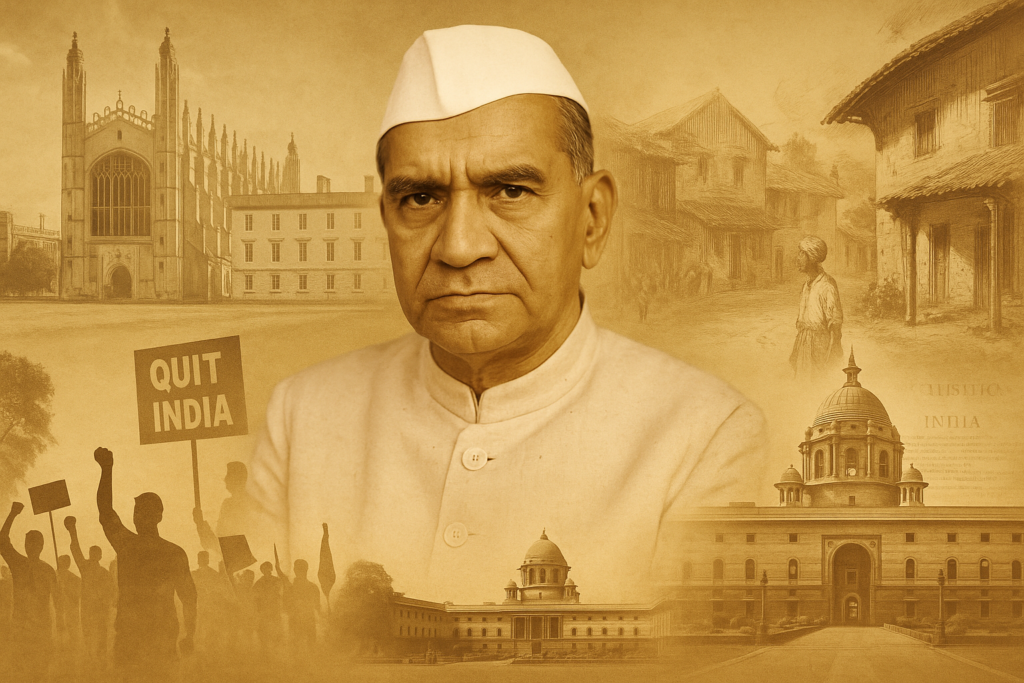
Dr. Fakhruddin Ali Ahmed – Early Life
Dr. Fakhruddin Ali Ahmed’s early life was shaped by a rich cultural and intellectual environment. Born into a prestigious and educated Muslim family, his upbringing deeply influenced his personality and future path.
📅 Birth
- Date: 13 May 1905
- Place: Delhi, British India
His family originally belonged to Assam, where they later settled permanently.
🛒 Buy Now on Amazon👨👩👦 Family Background
Father: Colonel Zalnoor Ali Ahmed – an esteemed doctor and officer in the British Army.
Mother: An English woman who exposed him to international thinking and diverse cultural values in his early years.
🏫 Childhood and Upbringing
His childhood was spent in a disciplined and education-focused environment. From a young age, he was intelligent, calm, and deeply interested in studies. His family valued education highly, which developed in him a lifelong thirst for knowledge.
✈️ Travel Abroad & Beginning of Studies
During his youth, he travelled to England to pursue higher studies. His exposure to modern thinking, rational ideas, and nationalistic emotions played a major role in shaping his personality.
Dr. Fakhruddin Ali Ahmed – Political Life
Dr. Fakhruddin Ali Ahmed’s political journey extended from his participation in the freedom struggle to becoming the President of India. He was known not only as a dedicated freedom fighter but also as an efficient administrator and a respected constitutional authority.
🏁 Entry into Politics
In 1931, he joined the Indian National Congress. During this time, he emerged as a prominent youth leader in Assam. Inspired by Mahatma Gandhi’s ideals, he played an active role in the Indian freedom movement.
✊ Contribution to the Freedom Struggle
He participated in the Quit India movement (1942) with full dedication. Due to his involvement, he was arrested and imprisoned for three years. His contribution earned him recognition as a committed freedom fighter.
🏢 Political Career After Independence
After India gained independence, he held several significant positions:
In Assam Government
- Served as Minister
- Handled key departments such as Agriculture and Finance
In the Central Government
Under the leadership of Prime Minister Indira Gandhi, he served as a minister in the central cabinet. He held charge of various ministries including:
- Agriculture Minister
- Food and Civil Supplies Minister
- Law and Justice Minister
🇮🇳 President of India
On 20 August 1974, Dr. Fakhruddin Ali Ahmed became the Fifth President of India. Notable aspects of his presidency include:
- He was the second Muslim President of India (after Dr. Zakir Hussain).
- He served as President during the Emergency period (1975–1977).
He approved the Emergency proclamation presented by Prime Minister Indira Gandhi, a decision that became a subject of national political debate.
⚰️ Passing Away During Tenure
He passed away on 11 February 1977 while still in office. He was one of the very few Indian presidents to die during their presidential term.
🏅 Political Legacy
Dr. Fakhruddin Ali Ahmed is remembered as a dedicated, simple, and constitutionally responsible leader. His contribution left a lasting impact on Indian democracy and governance.
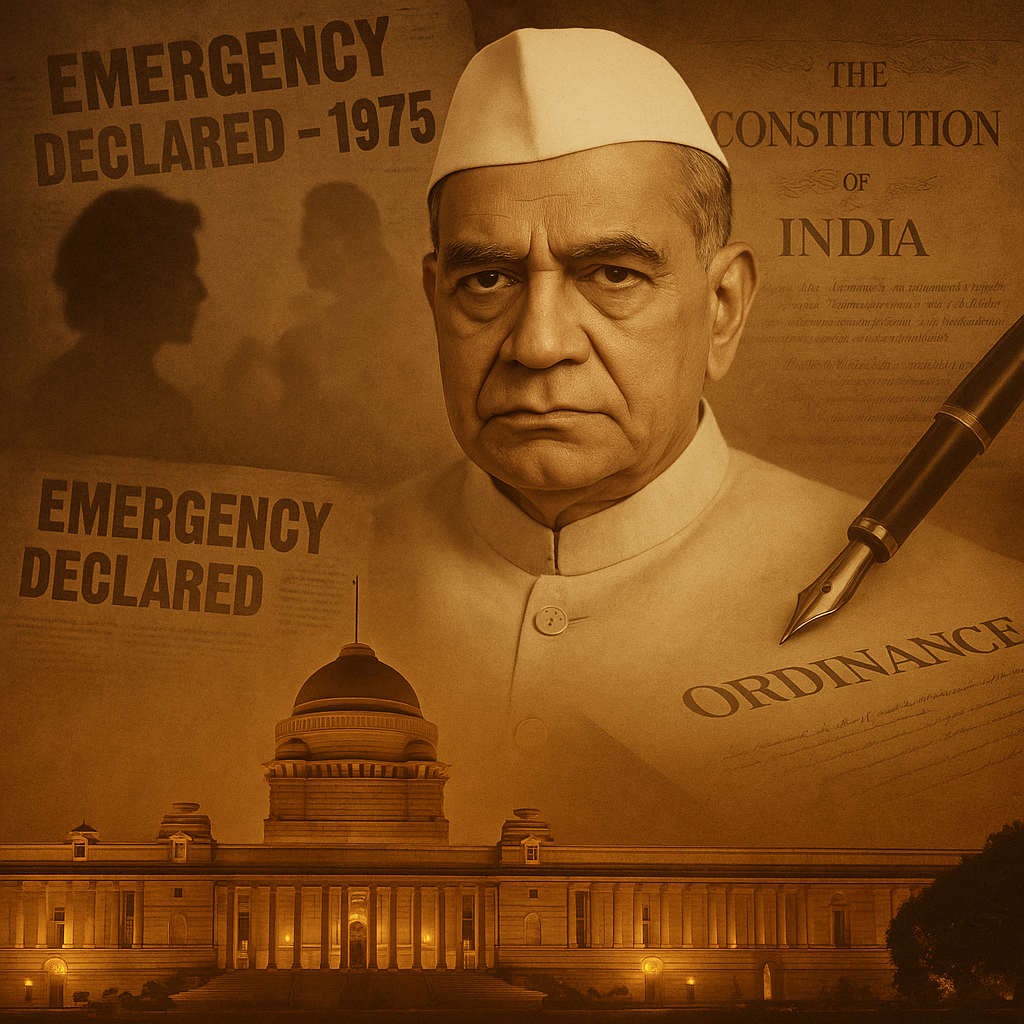
Dr. Fakhruddin Ali Ahmed – Presidency
Dr. Fakhruddin Ali Ahmed’s tenure as President of India is remembered as an important yet controversial chapter in the history of Indian democracy. As the Fifth President of India, he held the highest constitutional office during a period marked by extraordinary political developments, including the Emergency.
🛒 Buy Now on Amazon🗳️ Election as President
- Date: 20 August 1974
- He became the Fifth President of India.
- He was the candidate of the Indian National Congress and known to be close to Prime Minister Indira Gandhi.
- He was the second Muslim President of India (after Dr. Zakir Hussain).
- He was the first President from Northeast India (Assam).
🏛️ Key Features of His Tenure
The Emergency (1975–1977)
On 25 June 1975, Prime Minister Indira Gandhi declared a national internal Emergency. President Fakhruddin Ali Ahmed approved the proclamation of Emergency under Article 352 without delay.
During the Emergency, he signed numerous ordinances and notifications sent by the Prime Minister — even late at night. This aspect of his presidency later faced strong criticism.
Constitutional Role & Controversies
Critics argued that he did not exercise his constitutional powers independently. His tenure raised the important debate of whether the President should act solely on the advice of the Prime Minister or also review and question such decisions when necessary.
⚰️ Death During Tenure
Dr. Fakhruddin Ali Ahmed passed away on 11 February 1977 while serving as President. He became the second Indian President to die in office (the first being Dr. Zakir Hussain).
🏅 Legacy as President
His presidency is remembered as a highly sensitive and challenging period. While his loyalty and sincerity were never doubted, his role during the Emergency remains widely debated for its impact on democracy and constitutional freedoms.
Dr. Fakhruddin Ali Ahmed – Demise
The death of Dr. Fakhruddin Ali Ahmed holds a significant place in Indian history, as he was one of the few Presidents who passed away while still holding office. His demise occurred during a turbulent time marked by the ongoing Emergency.
📅 Date and Place of Death
- Date: 11 February 1977
- Place: New Delhi, India
- At the time, he was the serving President of India.
🩺 Cause of Death
His death was attributed to a heart attack. Though he had been experiencing health issues, the sudden nature of the heart attack shocked the entire nation.
🕊️ Impact of His Death
The nation observed political mourning. Government buildings and institutions lowered their flags to half-mast as a mark of respect. Parliament also offered a special tribute in his honor.
🏛️ Successor
After his demise, Vice President B. D. Jatti took charge as the Acting President until a new presidential election was conducted.
🏅 Memory & Respect
Several roads, schools, and public institutions across India have been named after Dr. Fakhruddin Ali Ahmed. He is remembered as a humble, dutiful, and dignified President who left a lasting imprint on Indian democratic history.
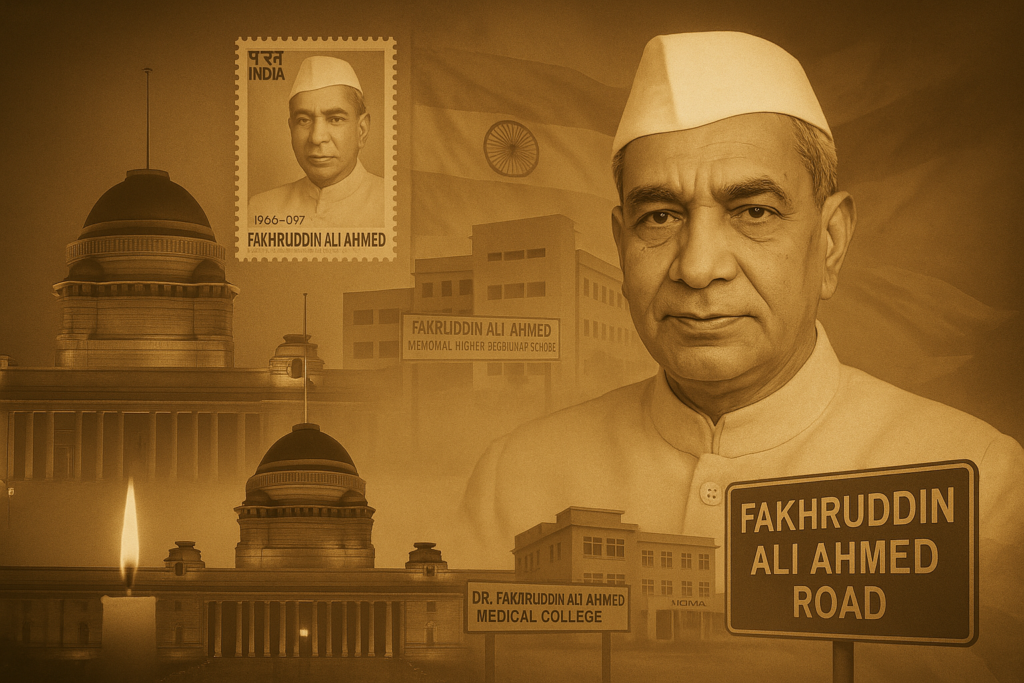
Dr. Fakhruddin Ali Ahmed – Respect and Heritage
Dr. Fakhruddin Ali Ahmed made a significant contribution to Indian politics, the freedom struggle, and India’s constitutional journey. He is remembered not only as the Fifth President of India but also as a sincere, polite, and service-oriented leader. After his demise, he was honoured in many ways, and efforts were made to preserve his legacy for future generations.
🌟 Respect
National Mourning and Final Honors
After his passing, the Government of India declared national mourning. He was given a state funeral with full political and national respect.
Tribute in Parliament
The Indian Parliament held a special session in his honour, where leaders paid tribute to his contributions to the nation.
🛒 Buy Now on AmazonCommemorative Stamp
The Government of India issued a postal stamp to honour Dr. Fakhruddin Ali Ahmed and recognise his service to the nation.
🏛️ Heritage
Academic and Social Institutions
Several schools, colleges, and institutions across India have been named after him. Notable examples include:
- Fakhruddin Ali Ahmed Memorial Higher Secondary School
- Dr. Fakhruddin Ali Ahmed Medical College, Barpeta, Assam
Naming of Streets and Buildings
Many cities across India honour him by naming streets, squares, and government buildings after him.
Symbol of Secularism and Inclusiveness
Dr. Fakhruddin Ali Ahmed is regarded as a symbol of India’s secular values. Though he was a Muslim leader, he represented the entire nation with neutrality, dignity, and unity.
Role in Emergency – A Historical Discussion
His role during the Emergency (1975–1977) remains a subject of constitutional debate. Scholars and historians continue to analyse this period to understand the responsibilities and limitations of the President’s office.
✨ A Memorable Personality
Today, Dr. Fakhruddin Ali Ahmed is remembered as a President who:
- lived a simple and principled life,
- upheld the Constitution faithfully,
- and strengthened the spirit of unity in India’s diverse society.
Conclusion
Dr. Fakhruddin Ali Ahmed’s life stands as a meaningful chapter in India’s democratic and political history. From his early upbringing in a culturally rich environment to his participation in the freedom struggle and finally rising to become the Fifth President of India, his journey reflects dedication, humility and service to the nation.
🛒 Buy Now on AmazonAlthough his tenure included challenging moments such as the Emergency, his sincerity, administrative experience and constitutional responsibility continue to be remembered and studied. Institutions, roads and public spaces named after him keep his contributions alive across the country.
In remembering Dr. Fakhruddin Ali Ahmed, we honour a leader who valued simplicity, national unity and constitutional faith. His life inspires future generations to uphold democratic values and contribute to the nation with honesty and commitment.
References
- Government of India Archives – Records related to the Presidents of India.
- Parliament of India – Lok Sabha and Rajya Sabha Debates and Tributes.
- Ministry of Information & Broadcasting – Publications on Indian political history.
- “The Presidents of India” – Rashtrapati Bhavan Official Documentation.
- Historical Documents on the Emergency (1975–1977), National Archives of India. 🛒 Buy Now on Amazon
- Biographical Notes – Dr. Fakhruddin Ali Ahmed Memorial Committee.
- Cambridge University Alumni Records – Educational Background.
- Inner Temple Bar Association – Barrister-at-Law Records.
- Indian National Congress – Historical Data on freedom movement Leaders.
- Newspaper Archives (The Hindu, Times of India) – Coverage from 1940–1977.
Frequently Asked Questions (FAQs) About Dr. Fakhruddin Ali Ahmed
1. who was Dr. Fakhruddin Ali Ahmed?
Dr. Fakhruddin Ali Ahmed was an Indian freedom fighter, senior Congress leader, and the fifth President of India. He served as President from 1974 until his death in 1977.
2. When and where was Dr. Fakhruddin Ali Ahmed born?
Dr. Fakhruddin Ali Ahmed was born on 13 May 1905 in Delhi, British India. His family had strong roots in Assam.
3. What was Dr. Fakhruddin Ali Ahmed’s educational background?
He studied law at the University of Cambridge and later qualified as a Barrister-at-Law from the Inner Temple in London, England.
4. What role did he play in India’s freedom struggle?
He joined the Indian National Congress in 1931 and actively participated in the Quit India movement of 1942, for which he was imprisoned by the British authorities.
5. When did Dr. Fakhruddin Ali Ahmed become President of India?
He was sworn in as the fifth President of India on 20 August 1974 and became the second Muslim to hold the office after Dr. Zakir Hussain.
6. Why is Dr. Fakhruddin Ali Ahmed’s presidency often discussed?
His presidency is mainly remembered for the Emergency (1975–1977), when he approved the Emergency proclamation issued by Prime Minister Indira Gandhi, a decision that remains a subject of historical and constitutional debate.
7. What is the legacy of Dr. Fakhruddin Ali Ahmed?
Dr. Fakhruddin Ali Ahmed is remembered as a dedicated public servant, freedom fighter, and constitutional leader. Several institutions, roads, and public buildings have been named in his honor across India.