
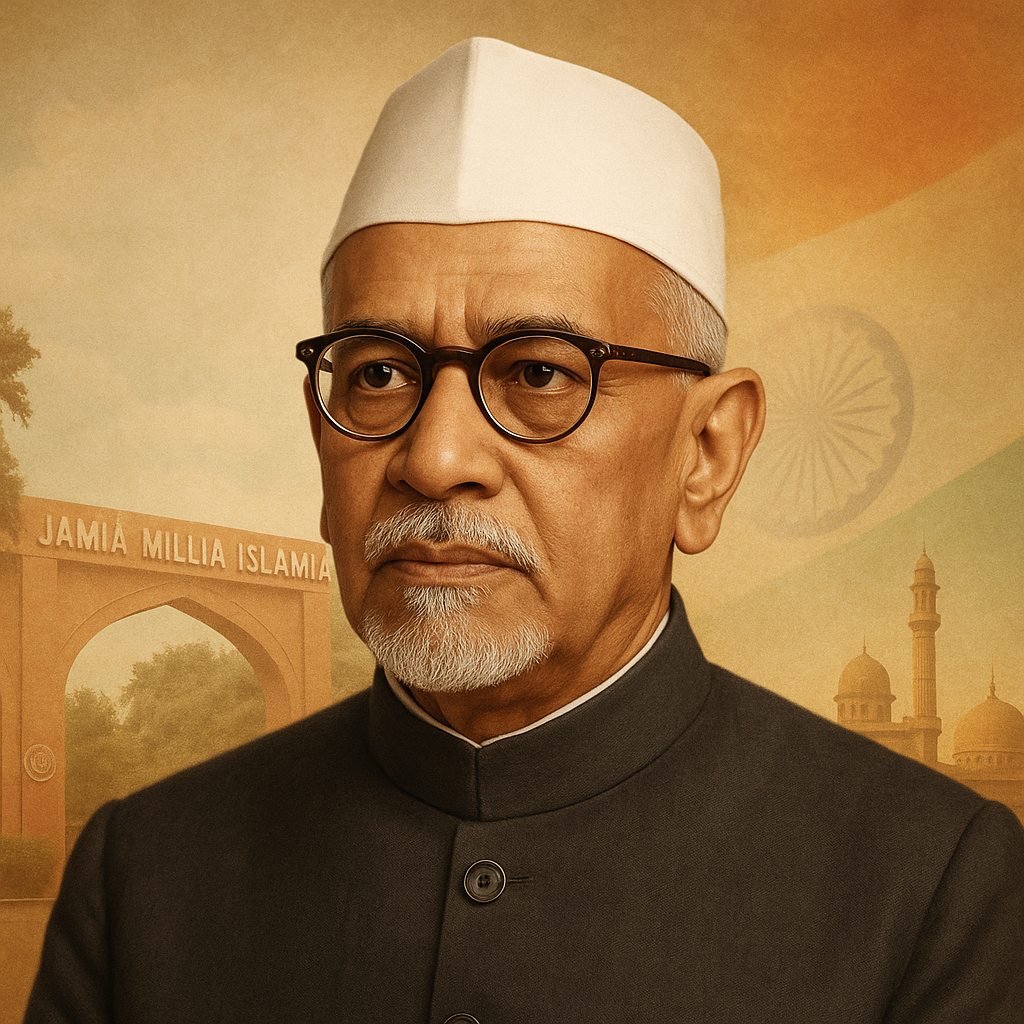
Dr. Zakir Husain Biography
Dr. Zakir Husain was a great educationist, freedom fighter, and politician of India. He served as the third President of India and was the first Muslim President of the country. He is remembered for his remarkable contributions in the field of education, his role in the Aligarh Movement, and the establishment of Jamia Millia Islamia University.
🧾 Biography of Dr. Zakir Husain
Birth and Early Life
- Born: 8 February 1897, Hyderabad (now Telangana, India)
- Family Background: He belonged to a Pathan family. His father’s name was Fida Hussain.
- He lost both parents in childhood and was raised by his relatives.
Education
- Received primary education in Etawah.
- Went to Aligarh Muslim University (AMU) for higher education.
- Went to Germany for further studies at the University of Berlin.
- Later attended the University of Pennsylvania, where he earned a doctorate in Economics.
Contribution to Education
- Played a major role in establishing Jamia Millia Islamia University.
- Believed that education was essential for national reconstruction and promoted culturally rooted education.
- Supported the National Education Plan and was influenced by Gandhiji’s concept of moral education.
freedom struggle and Public Life
- Actively participated in the Indian Independence Movement.
- Became Vice Chancellor of Jamia Millia Islamia in 1948.
- Was elected a Member of the Rajya Sabha in 1957.
- From 1957 to 1962, served as a Member of Parliament and Deputy Chairman of the Planning Commission.
- In 1962, he was appointed Vice President of India.
Presidency
- Became the 3rd President of India in 1967.
- He was the first Muslim President and also the first President to die before completing his term.
Death
- Died on 3 May 1969 in Delhi while still serving as President of India.
Awards and Honours
- In 1963, he was awarded the Bharat Ratna, India’s highest civilian honour.
Features of Dr. Zakir Husain
- Considered education the soul of the nation.
- Lived a life of simplicity, morality, and dedication.
- Stood as a symbol of Secularism, unity, and humanity.
Birth and Early Life of Dr. Zakir Husain
Dr. Zakir Husain was born on 8 February 1897 in a respected Pathan family in Hyderabad (present-day Telangana). His father, Fida Hussain, was a legal advisor, while his mother was a cultured and religious woman. He grew up in a disciplined and values-driven environment.
Childhood Difficulties
- He lost his father when he was just 13 years old.
- Soon after, his mother also passed away.
- He was raised by his elder brother and relatives, yet he remained dedicated and serious in his studies.
Beginning of Education
- Completed early schooling in Etawah (Uttar Pradesh).
- Later, he joined Aligarh Muslim University (AMU), where he began to emerge as a thoughtful and inspiring personality.
Features of Student Life
- Excelled in academics as well as debating, writing, and public speaking.
- Developed a growing interest in the freedom struggle and social reforms.
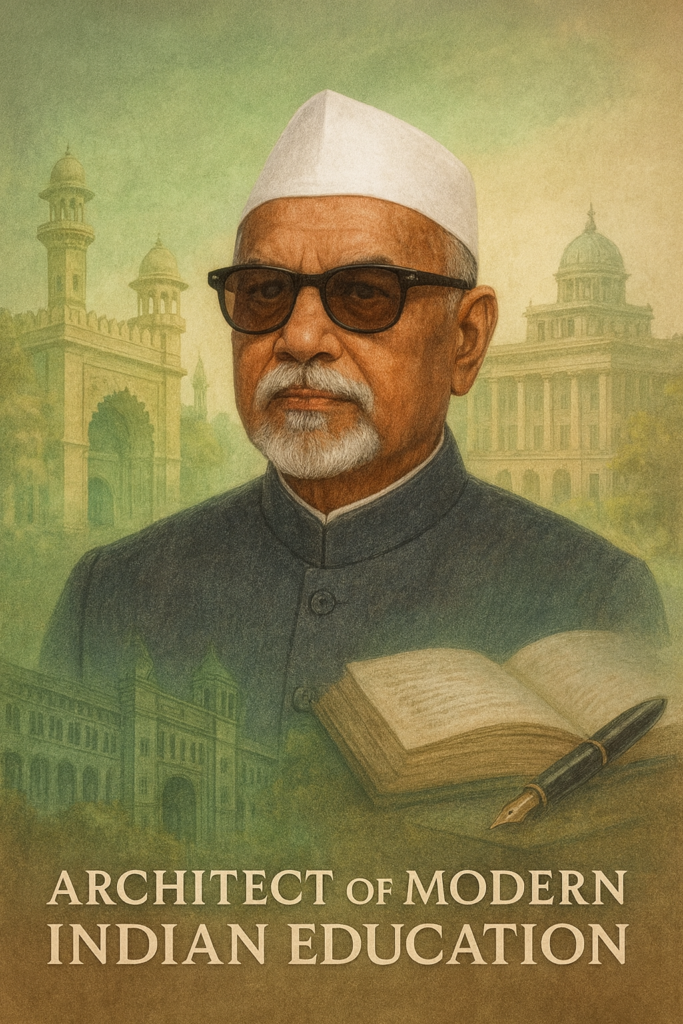
Education of Dr. Zakir Husain
Dr. Zakir Husain’s educational journey was inspiring and idealistic. He not only received higher education but also played a major role in shaping and strengthening India’s education system.
Elementary Education
- His early education took place in Etawah (Uttar Pradesh).
- Later, he studied at Muin-ul-Islam School in Aligarh.
- He was always a sharp, disciplined, and hardworking student.
Higher Education
- Completed his graduation from Aligarh Muslim University (AMU).
- During his studies at Aligarh, he became associated with the Nationalist and Educational Reform Movement.
- In 1920, he left Aligarh University in support of Mahatma Gandhi’s Non-Cooperation Movement.
Education Abroad (Germany)
- In 1923, he went to the University of Berlin, Germany.
- There he earned his doctorate in Economics.
- While in Germany, he also conducted research on Indian culture, education, and language.
Contribution in the Field of Education
- After returning from Germany, he joined Jamia Millia Islamia University, which he and his colleagues had initially helped establish in 1920.
- He became the first Vice-Chancellor of Jamia and developed it into a centre of national education.
- He believed that education was not merely a source of knowledge but a powerful instrument for nation-building.
Educational Philosophy
- He considered education a means of social change and moral upliftment.
- Supported Mahatma Gandhi’s Basic Education (Nai Talim) principles.
- Emphasised the values of Swadeshi, self-reliance, and character building.
Dr. Zakir Husain believed:
“To run a country, we first need an educated society.”
Dr. Zakir Husain’s Contribution in the Field of Education
Dr. Zakir Husain is known as a great reformer and an inspiration in the Indian education system. For him, education was not just a means to secure a degree but a tool for nation-building, moral development, and social upliftment.
Main Contributions
1. 🏫 Establishment of Jamia Millia Islamia (1920)
- Along with leaders like Maulana Mahmud Hasan, Hakim Ajmal Khan, and Dr. Mukhtar Ahmed Ansari, he helped establish Jamia Millia Islamia University.
- The university aimed to promote indigenous education and oppose the British education system.
- He served as Vice-Chancellor and developed Jamia into an ideal educational institution.
2. 🎓 Support for the National Education Policy
- He adopted Mahatma Gandhi’s principles of “Nai Talim” (New Education).
- Believed that education must develop the hands, mind, and heart together.
- Advocated practical, professional, and ethically strong education.
3. 📖 Inclusion of Indianness in Education
- Promoted education rooted in Indian culture, language, and values.
- Emphasised Hindi and Urdu as mediums of learning alongside English.
- Taught students the values of Indianness, goodwill, and service.
4. 🏢 Roles in Other Institutions
- Served as a Syndicate Member at Aligarh Muslim University.
- Was part of many national and international educational commissions and organisations.
5. 🏅 Inspirational Teacher and Administrator
- He was an ideal teacher whose thoughts influenced thousands of students.
- Strongly believed that teachers are the true guides of society and must be properly trained.
🗣️ Thoughts of Dr. Zakir Husain
“The aim of education is not merely to grant degrees but to build character.”
“True education is that which makes a person self-reliant, sensitive, and a responsible citizen.”
Conclusion
Dr. Zakir Husain’s contribution to Indian education has been a milestone in making the system modern, strong, and value-based. He remains an inspiration for teachers, students, and policymakers even today.
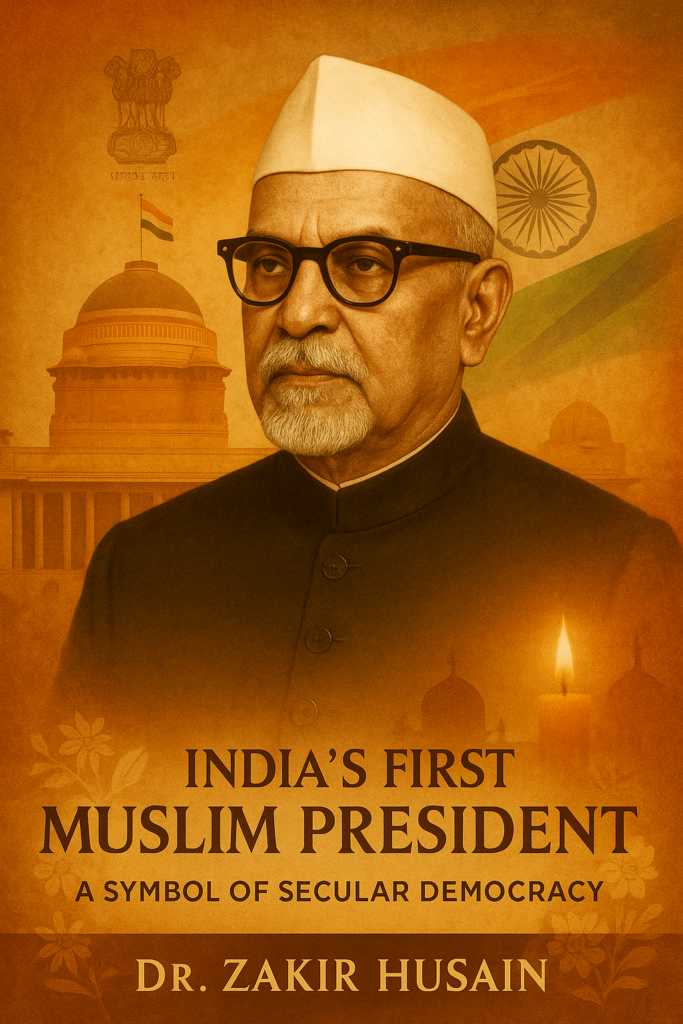
Dr. Zakir Husain and The Indian Freedom Struggle
Dr. Zakir Husain was not only a great educationist but also a true supporter of the Indian independence struggle. Even though he was not directly active in political activities, he played a powerful role in strengthening the freedom movement through academic, social, and ideological contributions.
🏛️ Role in the Freedom Struggle
1. ✊ Non-Cooperation Movement (1920)
- In 1920, when Mahatma Gandhi launched the Non-Cooperation Movement, Zakir Husain left his studies at Aligarh Muslim University to support it.
- This was his first major step in expressing dissent against British rule and supporting the Swadeshi movement.
2. 🏫 Establishment of Jamia Millia Islamia
- During the Non-Cooperation Movement, he, along with other nationalist leaders, founded Jamia Millia Islamia.
- The university was established as an alternative to the British education system.
- It became a platform for imparting Swadeshi, self-reliant, and nationalist education to students.
3. 📚 Education as a Medium of the Freedom Movement
- Zakir Husain understood that India needed not only a political revolution but also an academic and ideological one.
- He transformed education into a soft power tool of the freedom struggle.
- Students were encouraged to develop patriotism, social responsibility, and a spirit of service.
4. 🌍 Strengthening India’s Image Abroad
- While studying in Germany, he often delivered speeches supporting the Indian Independence Movement.
- He informed intellectuals abroad about India’s situation and garnered global support.
5. 🕊️ Symbol of Secularism and Unity
- He strongly supported Hindu-Muslim unity.
- During rising communal tensions, he advocated for peace through education and dialogue.
- He promoted religious tolerance and national harmony.
Dr. Zakir Husain’s Ideology
“Freedom is not only political freedom, but also mental, social, and cultural freedom.”
Conclusion
Dr. Zakir Husain’s contribution to the freedom struggle was not through direct agitation but through education, ideas, and institution-building. He was a freedom fighter who brought revolution through pen and principles, inspiring generations with his intellectual strength.
Public Life of Dr. Zakir Husain
Dr. Zakir Husain was not only an educationist and freedom fighter but also a significant figure in India’s public and constitutional life. He gave new direction to the country's educational, political, and social spheres. His public life reflects simplicity, honesty, and dedicated service to the nation.
Major Events and Roles in Public Life
1. 🏫 Vice-Chancellor of Jamia Millia Islamia
- Played a key role in the establishment of Jamia Millia Islamia in 1920.
- Served as its Vice-Chancellor from 1926 to 1948.
- Transformed Jamia into a centre of national and cultural consciousness.
2. 🇮🇳 Entry into Indian Politics
- After independence, he actively participated in public and political life.
- Was invited to contribute to national policy-making.
3. 🏛️ Rajya Sabha Member (1952)
- Nominated as a member of the first Rajya Sabha in 1952.
- Presented influential ideas on education, culture, and national unity.
4. 📈 Member of the Planning Commission
- Served as Deputy Chairman of the Planning Commission.
- Worked extensively on education and human resource development.
5. 🏛️ Vice President of India (1962–1967)
- Became the second Vice President of India in 1962.
- Maintained the dignity, neutrality, and decorum of the Indian Parliament.
6. 🇮🇳 President of India (1967–1969)
- On 13 May 1967, he became the 3rd President of India.
- He was India’s first Muslim President, admired for his simplicity and scholarship.
- He was the first President who passed away before completing his term (in 1969).
🗣️ Highlights from His Public Life
- Symbol of secularism: Always promoted communal harmony and national unity.
- Ethical Leadership: Lived a life of simplicity, integrity, and values.
- Priority to Education: Continued promoting education even while in politics.
- Support for Democracy: Strong advocate of constitutional and democratic values.
Thoughts of Dr. Zakir Husain
“Only he who keeps alive the spirit of service, sacrifice, and honesty within himself can lead the nation.”
Conclusion
The public life of Dr. Zakir Husain is the story of a visionary who contributed to education, culture, and politics. He set an example of moral leadership and national service. Even today, he remains a role model for Indian democracy and the education system.
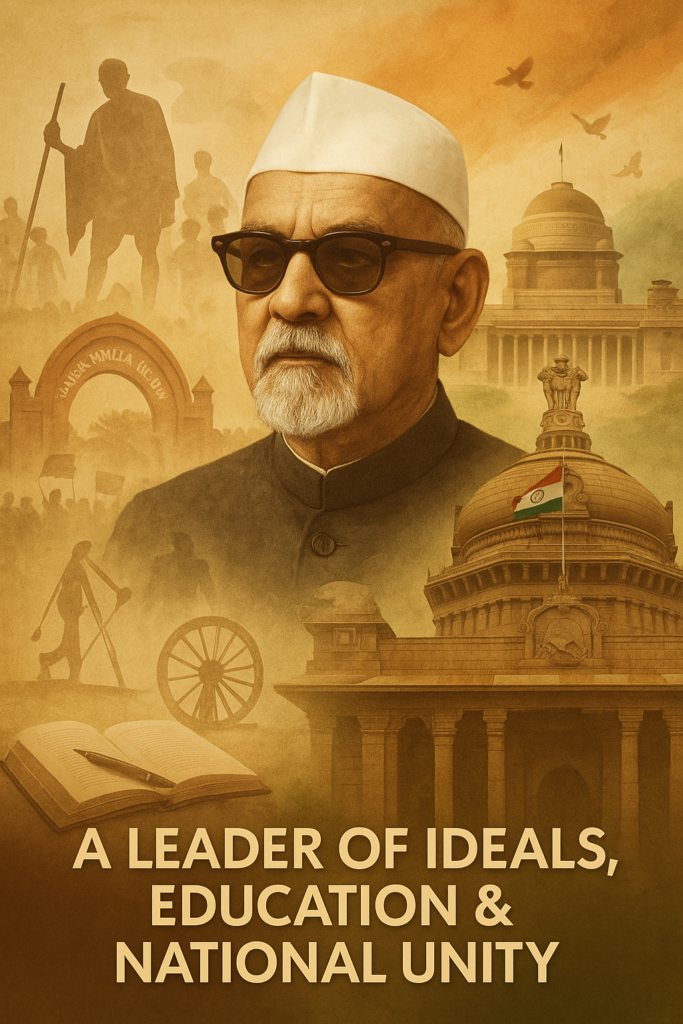
Dr. Zakir Husain’s Presidency (1967–1969)
Dr. Zakir Husain’s journey to the post of President of India was not only a personal achievement but also a symbol of India’s democratic and secular spirit. As the first Muslim President of India, his tenure is remembered for honesty, simplicity, and wisdom.
🏛️ Story of Becoming President
- In 1967, he was nominated as the Presidential candidate by the Indian National Congress.
- On 13 May 1967, he became the third President of India.
- He succeeded Dr. Sarvepalli Radhakrishnan.
Important Facts
| Speciality | Description |
|---|---|
| Assumed Presidency | 13 May 1967 |
| Tenure | 1967–1969 |
| First Muslim President | ✔️ |
| First President to die in office | ✔️ (3 May 1969) |
🧾 Special Work and Vision as President
1. 🕊️ Symbol of Secularism and National Unity
- He gave the message that India respects all religions equally.
- His presidency strengthened religious tolerance and democratic values.
2. 🎓 Emphasis on Education and Morality
- He consistently highlighted the importance of education, ethics, and national service.
- He lived like a teacher even in Rashtrapati Bhavan — simple living, high thinking.
3. 🇮🇳 Serious and Dignified Leadership
- He maintained the dignity of the Presidential office.
- He never showed political bias and followed the Constitution sincerely.
🕯️ Death
- Dr. Zakir Husain passed away on 3 May 1969 while still serving as President.
- He became the first Indian President to die in office.
- The entire nation mourned his death and paid tribute with full state honours.
🗣️ Famous Quote
“I will perform my duties as the President of India as an Indian Muslim, which is a special honour for me.”
Conclusion
Dr. Zakir Husain’s presidency was a shining example of the maturity of Indian democracy. He fulfilled his duties with simplicity, honesty, and dedication, leaving a lasting legacy in the hearts of the people.
Dr. Zakir Husain Passes Away
The death of Dr. Zakir Husain was a moment of deep grief for Indian politics, education, and public life. He passed away during his tenure, becoming the first President of India to die while in office.
Date and Place of Death
- Date: 3 May 1969
- Place: Rashtrapati Bhavan, New Delhi
- Age: 72 years
🩺 Cause of Death
- He had been unwell for some time.
- Died due to a sudden heart attack.
National Mourning
- The entire nation was plunged into grief.
- The Government of India declared state mourning.
- He was buried with full state honours.
- His funeral took place at the Jamia Millia Islamia campus in Delhi — an institution close to his heart.
🕊️ Tributes
- People from all walks of life, including political leaders and students, paid tribute.
- Both national and international communities acknowledged his contributions.
His Legacy
- He proved that honesty, education, and service can elevate anyone to the highest office.
- He remains an inspiration for Indian education and democracy.
Conclusion
Dr. Zakir Husain’s death was a major loss for India, but his ideals, work, and values continue to inspire. He truly understood the dignity of the office of the President.
Features of Dr. Zakir Husain
Dr. Zakir Husain lived a life deeply rooted in education, service, simplicity, and morality. He was not only a visionary educationist and follower of Gandhian values but also a strong pillar of Indian democracy and culture.
Key Features
1. 📚 Education Lover and Ideal Teacher
- He considered education the greatest tool of life.
- For him, education meant character building and nation building.
2. 🧘♂️ Symbol of Simplicity and Morality
- His life was simple, disciplined, and value-oriented.
- Even as President, he dressed simply and avoided showmanship.
3. 🇮🇳 Dedicated to National Service
- His life was devoted to serving the country and uplifting society.
- He saw politics as a means of service, not power.
4. 🕊️ Strong Supporter of Secularism
- He stood firmly for Hindu-Muslim unity.
- Promoted equal respect for all religions.
5. 🌍 Balanced Global Outlook with Indian culture
- Despite studying abroad, he remained deeply rooted in Indian values.
- Combined modern thinking with Indian traditions.
6. 🗣️ Influential Speaker and Thinker
- His speeches were simple, profound, and full of moral strength.
- He inspired students and citizens alike.
7. 🕯️ Faith in the Constitution and Democracy
- As President, he upheld the dignity of the Constitution.
- All his decisions were guided by justice, morality, and constitutional values.
Famous Statement
“Education does not come only from books. It also comes from life experience, service, and self-sacrifice.”
Conclusion
The qualities of Dr. Zakir Husain make him not only a great President and educationist but also an ideal citizen and nation-builder. His life remains a guiding inspiration for all.
Conclusion
Dr. Zakir Husain’s life is a shining example of dedication, integrity, and service to the nation. From his early struggles to becoming the first Muslim President of India, he proved that true leadership is built on education, moral values, and a deep commitment to humanity. His contributions to Jamia Millia Islamia, his reforms in education, his role in the freedom movement, and his dignified public life reflect his vision of a progressive, inclusive, and culturally rich India.
🛒 Buy Now on AmazonHe believed that education is the foundation of nation-building, and he lived by this principle throughout his life. Even as President, he upheld simplicity, honesty, and Secularism. His ideas continue to inspire teachers, students, policymakers, and citizens across the country.
Dr. Zakir Husain remains a timeless symbol of India’s democratic spirit and cultural unity. His life reminds us that great nations are built not only through political power, but through knowledge, character, and a commitment to the welfare of all.
Frequently Asked Questions (FAQs)
1. Who was Dr. Zakir Husain?
Dr. Zakir Husain was a renowned Indian educationist, freedom fighter, and statesman. He served as the third President of India and became the country's first Muslim President in 1967.
2. When and where was Dr. Zakir Husain born?
Dr. Zakir Husain was born on 8 February 1897 in Hyderabad, present-day Telangana, India. Despite facing hardships in childhood, he became one of India's most respected educationists.
3. What was Dr. Zakir Husain's contribution to education?
Dr. Zakir Husain played a vital role in the development of Jamia Millia Islamia University and promoted Gandhian Basic Education (Nai Talim). He believed that education should build character, self-reliance, and responsible citizenship.
4. What role did Dr. Zakir Husain play in India's freedom movement?
He supported Mahatma Gandhi's Non-Cooperation Movement, helped establish Jamia Millia Islamia as a nationalist educational institution, and promoted the ideals of Swadeshi, secularism, and national unity through education.
5. Why is Dr. Zakir Husain remembered in Indian history?
He is remembered for his outstanding contributions to education, public service, secular values, and constitutional leadership. His life symbolized honesty, simplicity, and dedication to nation-building.
6. Which award was conferred on Dr. Zakir Husain?
Dr. Zakir Husain was awarded the Bharat Ratna in 1963, India's highest civilian honour, in recognition of his exceptional contributions to education and public life.
7. When did Dr. Zakir Husain die?
Dr. Zakir Husain passed away on 3 May 1969 while serving as the President of India. He was the first Indian President to die in office and was accorded full state honours.
References
-
🛒 Buy Now on Amazon
- Government of India Archives – Records on Dr. Zakir Husain’s public life and presidency.
- Jamia Millia Islamia University – Historical documents and institutional archives.
- Aligarh Muslim University (AMU) – Educational background and early life records.
- National Portal of India – Biography and contributions of Dr. Zakir Husain.
- Books and Journals on Indian freedom movement and Educational Reforms.