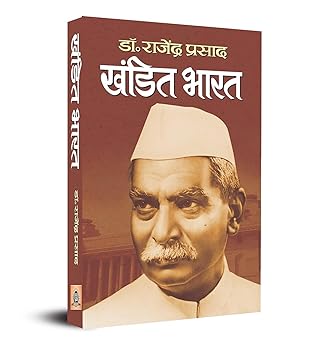
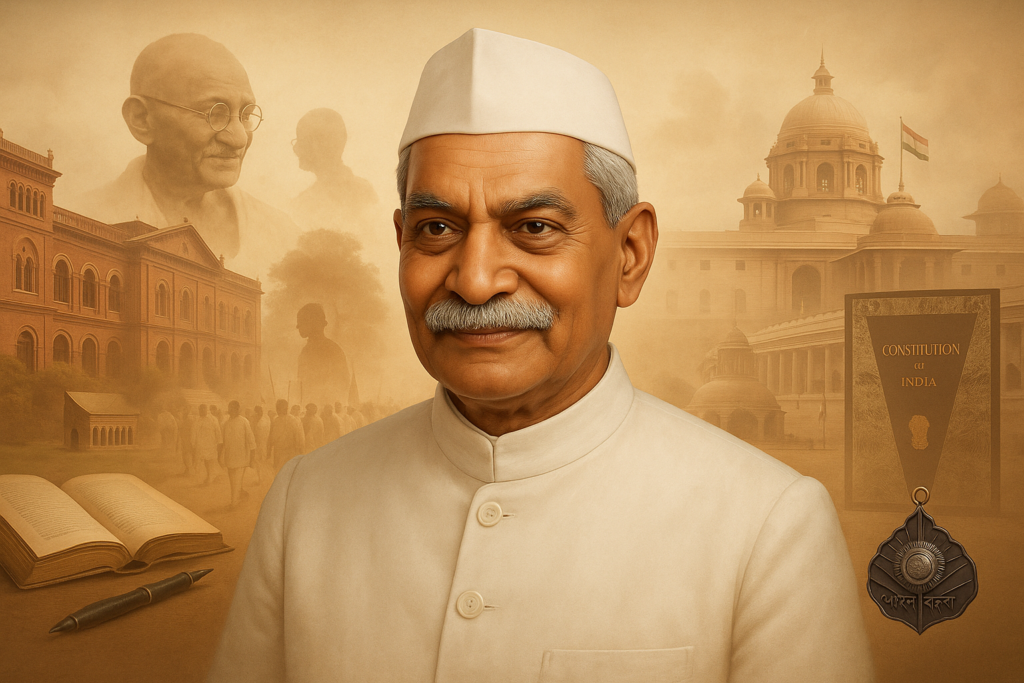
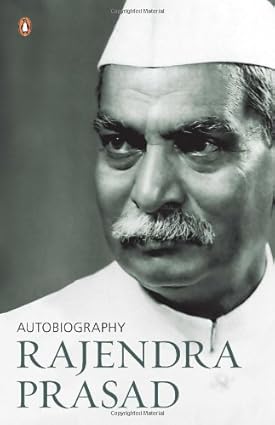
Biography of Dr. Rajendra Prasad
Basic Information
- Name: Dr. Rajendra Prasad
- Birth: 3 December 1884
- Place of Birth: Jiradei, Saran (now Siwan), Bihar
- Death: 28 February 1963
- Father’s Name: Mahadev Sahai
- Mother’s Name: Kamleshwari Devi
- Wife’s Name: Rajvanshi Devi
- Fame: First President of India, Freedom Fighter, Educationist
Early Life and Education
Dr. Rajendra Prasad was born into a traditional Kayastha family. He was an exceptionally brilliant student from childhood. He received his early education in Chhapra and later studied at T.K. Ghosh Academy in Patna. He completed his graduation and law degree from Kolkata University and later obtained a Doctorate in Law.
Contribution to the Freedom Struggle
Deeply influenced by Mahatma Gandhi, Dr. Rajendra Prasad actively joined the freedom movement. He entered politics by joining the Indian National Congress in 1911. He served as the President of the Congress in 1934, 1939, and 1947.
Important Contributions
- Participated in the Civil Disobedience Movement (1930)
- Imprisoned during the Quit India Movement (1942)
- Served flood and earthquake victims in Bengal
- Played a significant role in the Constituent Assembly
First President of India
When India became a republic on 26 January 1950, Dr. Rajendra Prasad became the first President of India. He held this prestigious office from 1950 to 1962. He remains the only President in Indian history to be elected twice.
Retirement and Death
In 1962, he retired from politics and adopted a spiritual way of life. The same year, he was honored with the Bharat Ratna. Dr. Rajendra Prasad passed away on 28 February 1963.
Main Characteristics
- Honesty, simplicity, and humility
- Outstanding author and speaker
- Influential role in the Constituent Assembly
- Major contributions to social service and education
Major Works
- Autobiography
- Constitution of India
- In the Footsteps of Bapu
- Satyagraha
Early Life of Dr. Rajendra Prasad
Birth and Family Background
Dr. Rajendra Prasad was born on 3 December 1884 in Jiradei, a village in the Siwan district of Bihar. His father, Mahadev Sahai, was well versed in Sanskrit and Persian, while his mother, Kamleshwari Devi, was a deeply religious woman whose life was filled with spirituality.
Childhood and Academic Brilliance
He was intelligent, calm, and disciplined from an early age. With a strong interest in studies, he completed his primary schooling in the village and later moved to Chhapra and Patna for higher studies. He studied at the renowned T.K. Ghosh Academy. Afterward, he went to Kolkata University, where he secured the first position in the entrance examination in 1896.
His exceptional talent is reflected in an incident where a teacher, after checking his exam paper, remarked: “The examinee is better than the examiner.” He later completed his law degree and earned a Doctorate in Law.
Foundation of Values
His early life was shaped by strong moral values, religious upbringing, and dedication to education. These qualities laid the foundation for him to emerge as a great leader, educationist, and eventually the President of India.
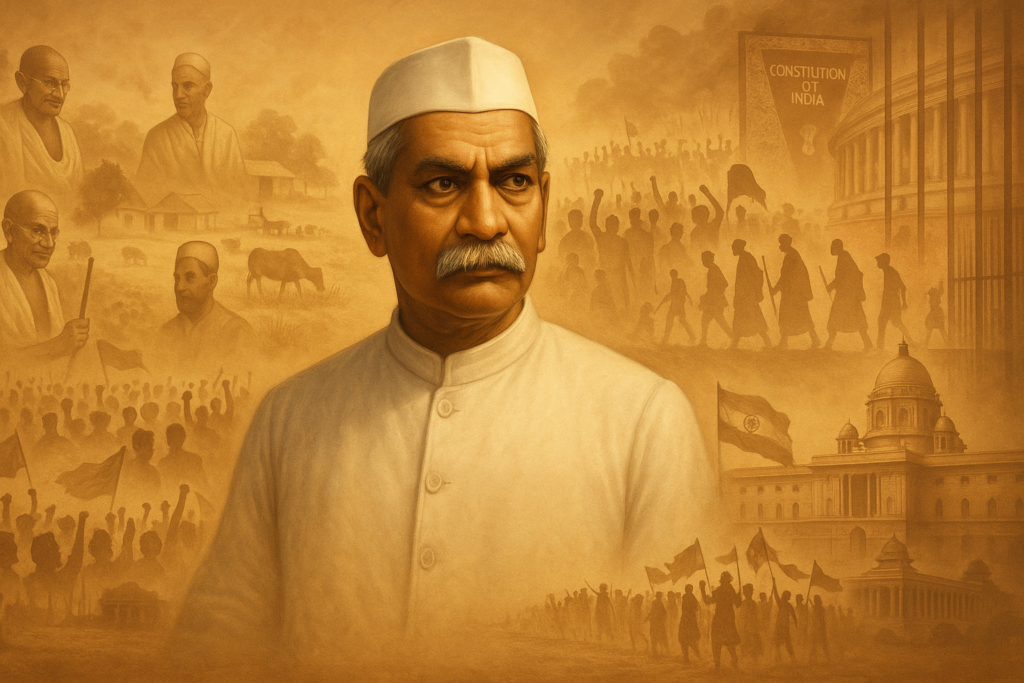
Education of Dr. Rajendra Prasad
Dr. Rajendra Prasad’s education began in his village, Ziradei. From childhood, he was intelligent, disciplined, and deeply dedicated to learning. His father, Mahadev Sahai, was a scholar of Sanskrit and Persian, creating a strong cultural and educational environment at home. His early education took place under traditional Munshi and Maulvi, where he learned Hindi, Urdu, Persian, and Sanskrit through his elder brother.
After primary education, he studied in the district schools of Chhapra and later moved to Patna, where he was admitted to the prestigious T.K. Ghosh Academy. Here too, he excelled in every subject.
Higher Education
- 1902: Passed the entrance examination of the University of Calcutta securing the first position.
- 1905: Completed B.A. (Hons) from Presidency College, Kolkata.
- 1907: Completed M.A. in Economics.
- Later, he pursued law studies and earned both LLB and L.L.D. (Doctor of Law) degrees.
Achievements in Education
- Received several scholarships during his academic journey.
- Consistently secured top ranks in examinations.
- Once, after reviewing his answer paper, an examiner remarked: “The examinee is more knowledgeable than the examiner.”
Dr. Rajendra Prasad’s education not only contributed to his intellectual growth but also shaped his personality and leadership. He believed education to be essential for nation building and dedicated his life to its promotion.
Contribution of Dr. Rajendra Prasad in the Freedom Struggle
Dr. Rajendra Prasad was not only a learned scholar but also a committed patriot who played an active role in India’s Independence Movement. Inspired by Mahatma Gandhi, he devoted a major part of his life to the nation’s freedom.
1. Inspiration from Mahatma Gandhi
In 1917, when Mahatma Gandhi initiated a movement to address the problems of indigo farmers in Champaran, Dr. Rajendra Prasad came in close contact with him. Deeply influenced by Gandhi's principles, he left his successful law practice and joined the freedom movement.

2. Champaran Satyagraha (1917)
He played an active role in the Champaran Satyagraha. This was his first major mass movement where he witnessed the suffering of farmers and opposed British exploitation alongside Gandhiji.
3. Non-Cooperation Movement (1920)
During the Non-Cooperation Movement, he gave up his prestigious positions and participated whole-heartedly. He boycotted government posts and dedicated himself completely to the national struggle.
4. Civil Disobedience Movement (1930)
He violated unjust British laws and actively participated in protests, including those against the Salt Law. His involvement led to his imprisonment.
5. Quit India Movement (1942)
During the Quit India Movement, Dr. Prasad strongly opposed British rule. He was arrested and imprisoned for several months for his participation.
6. Leadership in Congress
He served as the President of the Indian National Congress in 1934, 1939, and 1947. Under his leadership, Congress made several significant decisions that helped pave the way for India's independence.
7. Contribution in the Constituent Assembly
After India gained independence, he became the President of the Constituent Assembly. He guided the constitution-making process with balance, wisdom, and great patience.
Conclusion
Dr. Rajendra Prasad’s contribution to the freedom struggle was invaluable. A devoted follower of Gandhian principles, he symbolized simplicity, service, and integrity. He played a crucial role in laying the foundation of independent India, and the nation continues to honor his legacy with deep respect.
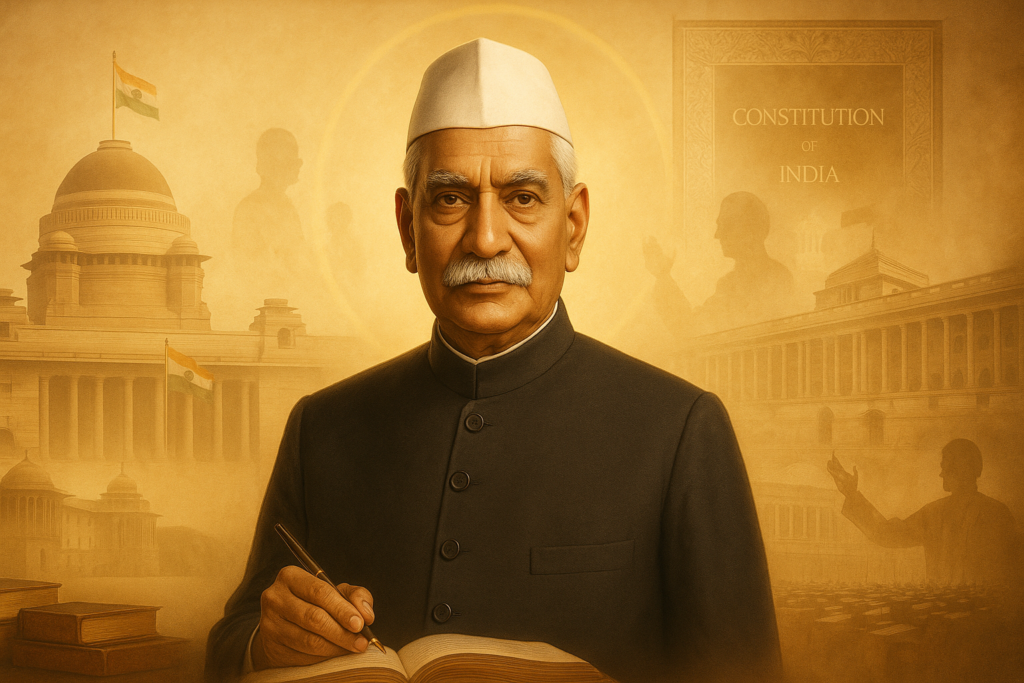
Important Contributions of Dr. Rajendra Prasad
Dr. Rajendra Prasad was a towering personality in Indian history who made remarkable contributions to education, politics, social service, and the Freedom Struggle. His entire life stands as an example of service, sacrifice, and simplicity.
1. Participation in the Freedom Struggle
Dr. Rajendra Prasad actively participated in major national movements such as the Champaran Satyagraha, the Non-Cooperation Movement, the Civil Disobedience Movement, and the Quit India Movement. He dedicated his comfortable life to the cause of freedom and even endured imprisonment for the nation.
2. Leadership as President of the Congress
He was elected President of the Indian National Congress three times (1934, 1939, 1947). Under his leadership, the Congress strengthened the freedom movement and guided the struggle against British rule.
3. Chairman of the Constituent Assembly
After independence, he became the President of the Constituent Assembly. His calm, democratic, and disciplined leadership played a crucial role in completing the constitution-making process successfully.
4. First President of India
When India became a republic on 26 January 1950, Dr. Rajendra Prasad was elected as the first President of India. He served for 12 years (1950–1962) and remains the only President to have been elected twice.
5. Social Service During Natural Disasters
During the 1934 Bihar earthquake and the 1946 Bengal riots, he actively participated in relief and rehabilitation work. His compassionate and humane approach made him a true mass leader.
6. Contribution to Education and Literature
Dr. Prasad was also an excellent writer. Some of his notable works include:
- In the Footsteps of Bapu
- Constitution of India
- Satyagraha
- Autobiography
7. Honours and Awards
In 1962, he was awarded India's highest civilian honour, the Bharat Ratna.
Conclusion
Dr. Rajendra Prasad’s life symbolizes patriotism, service, simplicity, and integrity. His contributions strengthened the foundation of India’s independence, democracy, and constitution. He remains an eternal source of inspiration for generations.
First President of India: Dr. Rajendra Prasad

Dr. Rajendra Prasad became the first President of the Republic of India — a recognition not merely of his position but of his immense contribution to the freedom struggle and nation building.
Background of Becoming President
After India became independent on 15 August 1947, the country needed a constitution. The Constituent Assembly was formed, and Dr. Rajendra Prasad was chosen as its President. With patience, impartiality, and leadership, he completed the entire constitution-making process.
When India was declared a Republic on 26 January 1950, Dr. Rajendra Prasad was unanimously elected the first President of India.
Tenure
- Served from 1950 to 1962.
- The only Indian President to be elected twice.
- Worked closely with Prime Minister Jawaharlal Nehru in nation-building efforts.
Contribution as President
- Guardian of the Constitution: He upheld the spirit of the Indian Constitution and ensured its smooth implementation.
- Symbol of Simplicity and Morality: Even as President, he lived a simple and disciplined life.
- Ethical Leadership: He maintained the dignity of the office and made decisions with fairness and integrity.
After the Presidency
In 1962, he retired from active politics and devoted his time to writing and self-reflection. In the same year, he was honoured with the Bharat Ratna.
Conclusion
Dr. Rajendra Prasad was not only the first President of India but also an ideal statesman who upheld the dignity and ethics of the office. His tenure remains inspirational in the history of Indian democracy. Even today, he is remembered as one of India’s most respected and exemplary leaders.
Retirement of Dr. Rajendra Prasad
Dr. Rajendra Prasad served as the first President of India for 12 years (1950–1962), the longest tenure of any Indian President. During this period, he provided the nation with leadership rooted in fairness, simplicity, and morality.
Retirement from the Post of President
In 1962, after the completion of his second term, he voluntarily resigned from the post of President. He believed that after fulfilling one's duties, a person should retire with dignity and allow the next generation to take responsibility. After retirement, he completely withdrew from active politics and public life.
Life After Retirement
- He moved to Patna and then began living in Sadaqat Ashram, Bihar.
- He devoted his time to spirituality, writing, and meditation.
- His lifestyle remained extremely simple and disciplined.
- He continued to inspire society and youth through his thoughts and guidance.
Death
Dr. Rajendra Prasad passed away on 28 February 1963 in Patna. His death caused deep sorrow across the nation, and he was given a funeral with full state honours.
Conclusion
The retirement of Dr. Rajendra Prasad reflected the same simplicity and ideals that shaped his entire life. He proved that a true leader remains an inspiration even after stepping down from high office. His life continues to symbolize national service, morality, and truth.
Death of Dr. Rajendra Prasad
Dr. Rajendra Prasad devoted his entire life to service, simplicity, and integrity. After retiring from the presidency in 1962, he moved to Sadaqat Ashram in Patna and lived a quiet life focused on spirituality, study, and writing while staying away from politics.
Death
On 28 February 1963, Dr. Rajendra Prasad passed away in Patna at the age of 78. His death was a major loss for the entire nation. The country mourned deeply as it lost a true Gandhian, an honest statesman, and a beloved President.
Funeral
His funeral was conducted with full state honours. Many national leaders, social workers, educationists, and thousands of common citizens gathered to pay their respects. His samadhi is located near Sadaqat Ashram in Patna, where people still visit to honour his memory.
Conclusion
With Dr. Rajendra Prasad’s passing, India lost a great son, an ideal leader, and a true patriot. His life and work continue to inspire the nation, and he holds a permanent, proud place in Indian history.
Salient Features of Dr. Rajendra Prasad
Dr. Rajendra Prasad was a remarkable figure in Indian history whose personality reflected knowledge, humility, simplicity, and patriotism. He was not only India’s first President but also a true Gandhian, an educationist, and a beloved public leader. Some of his key characteristics are listed below:
1. Simple Living, High Thinking
He lived a very simple life. Even as President, he avoided luxury, wore khadi, and often preferred sitting on the ground.
2. Serious Scholar and Brilliant Student
He excelled academically and had deep knowledge of law, economics, and literature. He consistently secured first position in examinations.
3. Truthful and Honest
Truth, integrity, and ethics formed the foundation of his entire life. He never misused the power or position he held.

4. Dedication to the Nation
He went to jail several times during the Freedom Struggle and sacrificed his comfortable life for the nation.
5. Tolerant and Peace-Loving Nature
He respected all viewpoints and always preferred peaceful solutions. He stayed away from controversies and kept national interest above all.
6. Excellent Leadership Skills
Whether as President of the Constituent Assembly or as President of India, he maintained the dignity of his office and guided the country on the right democratic path.
7. Writer and Thinker
Dr. Rajendra Prasad wrote several important books, including:
- In the Footsteps of Bapu
- Autobiography
- Constitution of India
8. Awarded with Bharat Ratna
In recognition of his immense contributions, the Government of India honoured him with the Bharat Ratna in 1962.
Conclusion
The characteristics of Dr. Rajendra Prasad make him an ideal leader, a true patriot, and an inspiring figure. His life continues to serve as a role model and guide for all Indians.