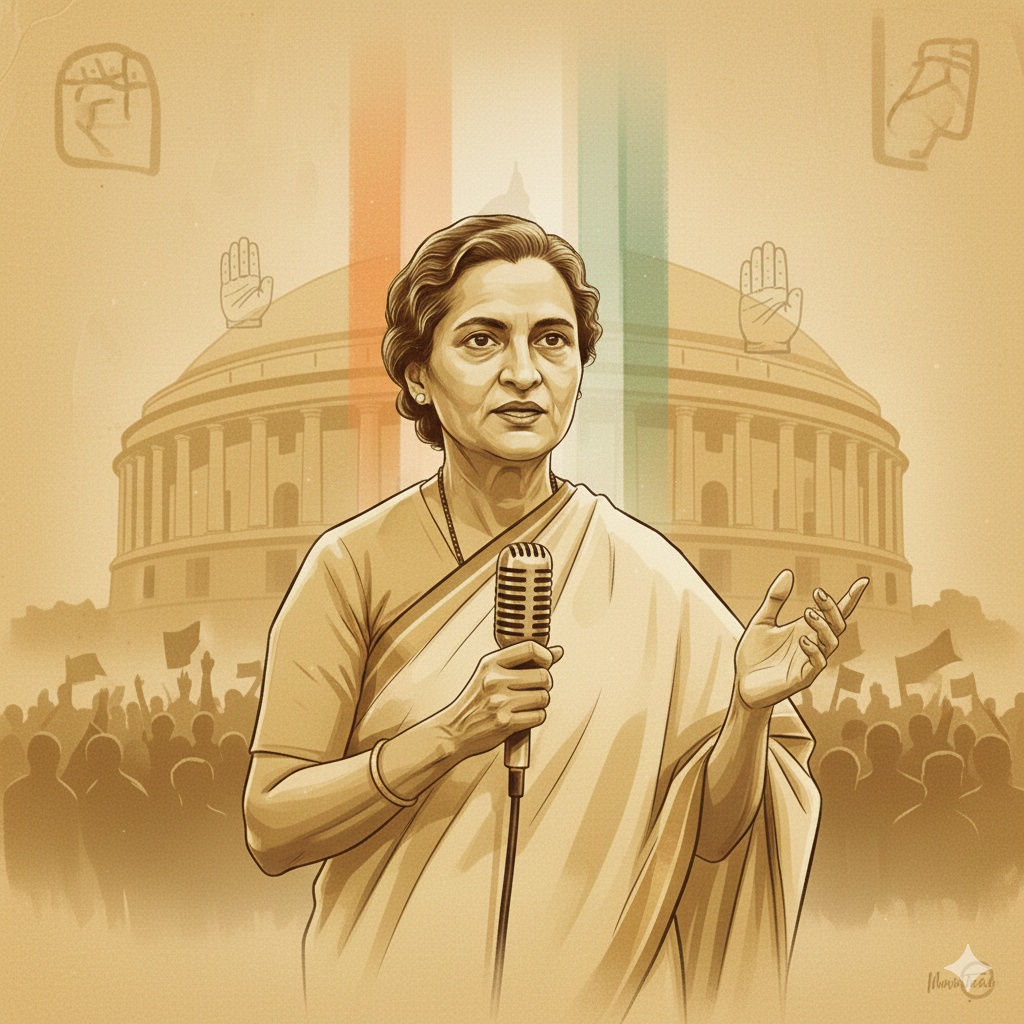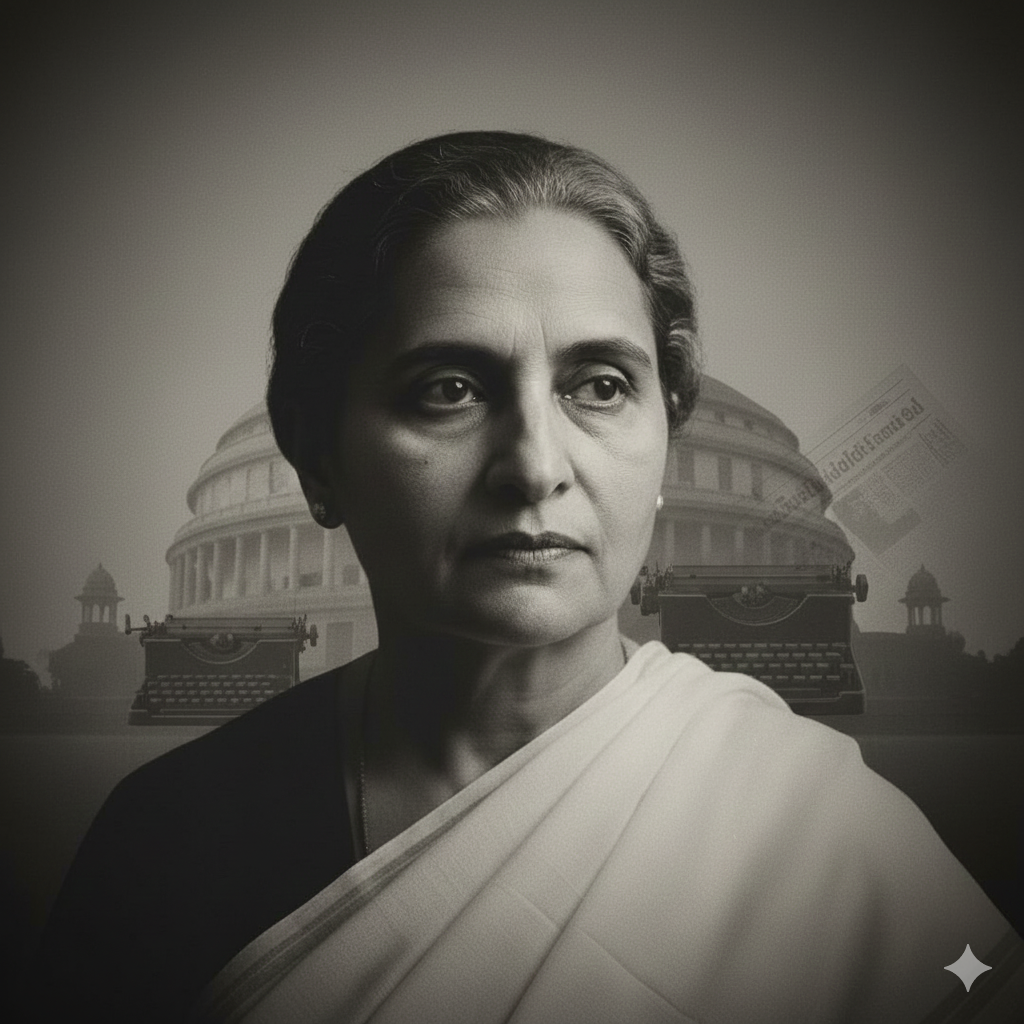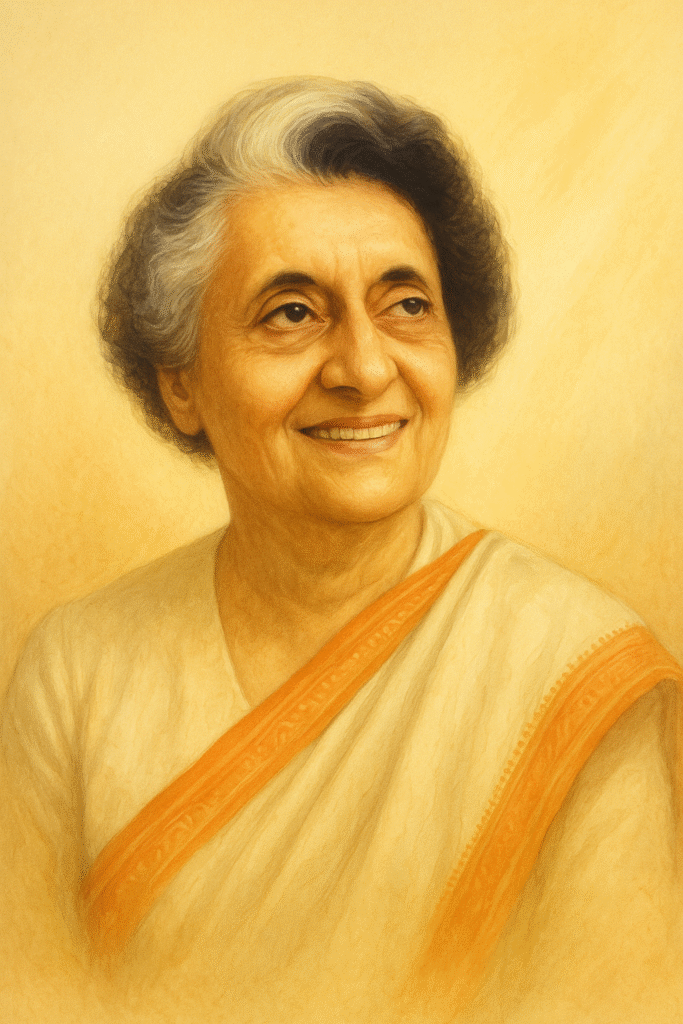
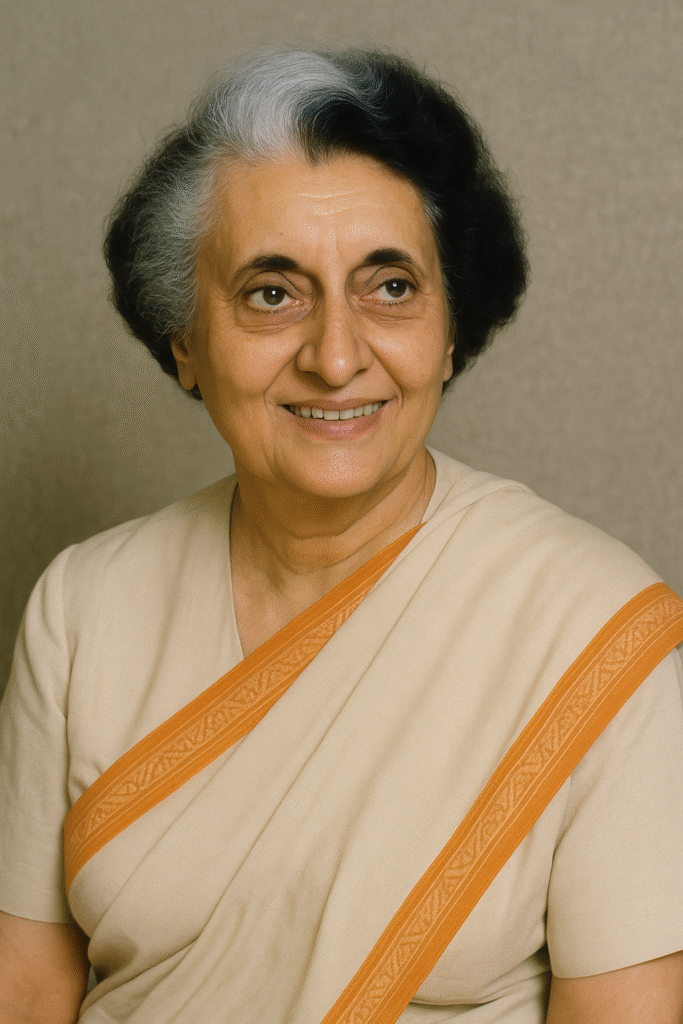
Biography of Mrs Indira Gandhi

Introduction: Indira Gandhi — A Story of Courage and Conviction

The first time I read about Indira Gandhi, I encountered not just a political figure but a person whose decisions echoed throughout the nation. Her voice reached far beyond parliamentary halls — it resonated in villages, classrooms, and kitchens. For me, Indira was more than a prime minister; she became a living question about leadership, resilience, and the moral complexity of power.

In this introduction I want to share a brief moment that shaped how I view great leadership. During a small leadership workshop, a young participant asked, “What does true leadership look like?” I thought of Indira — not only for her achievements, but for the dilemmas she faced, the risks she took, and the ways she balanced conviction with consequence. That exchange convinced me that a biography should do more than list dates and events: it should reveal lessons that readers can apply in their own lives.

Personal Anecdote — A Short Story

After the session, a student approached me, frustrated by the idea that a single person could shape a nation’s destiny. I began recounting small, pivotal moments from Indira’s life — decisions taken under pressure, the solitude of command, and moments when she had to choose between popular consent and what she believed was necessary. The student’s eyes widened as the story unfolded; it was then I realized that narrative and context bring history alive, and that personal reflection helps translate large political events into practical lessons.

Top Amazon Product

Top Amazon Product

Discover this quality product available on Amazon — click below to view the latest price, key features, and customer reviews!

👉 View on Amazon

(Amazon Affiliate Link – Thank you!)

Early Life & Background — The Roots of Indira Gandhi

Indira Priyadarshini Nehru was born on 19 November 1917 in Allahabad (now Prayagraj) into the prominent Nehru family. As the only surviving child of Jawaharlal Nehru and Kamala Nehru, she grew up at Anand Bhavan — a household where political conversation, books, and national purpose were a constant part of daily life. From an early age she was exposed to the sights and sounds of the Indian independence movement: visitors who were leaders of the struggle, discussions about ideas of governance and justice, and the rhythm of a family committed to public life. :contentReference[oaicite:0]{index=0}

Her childhood was shaped by both privilege and hardship. Jawaharlal Nehru’s frequent absences for political work and her mother’s recurring illness left Indira with long stretches of solitude, but also with a strong sense of responsibility toward public service. The family donated their ancestral home to the Congress and moved into a new residence — events that symbolised how personal life and political duty overlapped in the Nehru household. These early experiences planted the seeds of a worldview that combined intellectual curiosity with a deep sense of national duty. :contentReference[oaicite:1]{index=1}

Family, Education, and the Political Landscape

Family: The Nehru household functioned as an informal school of politics. Indira’s upbringing was steeped in the traditions of public duty and debate; she learned to listen to leaders, to observe negotiations, and to understand how personal conviction translated into political action. The prestige and expectations that accompanied the Nehru name offered opportunity, but they also set a high bar of public scrutiny that remained with her throughout life. :contentReference[oaicite:2]{index=2}

Education: Indira’s schooling was eclectic and international. She studied at institutions in India and Europe — including the International School of Geneva and the École Nouvelle at Bex in Switzerland — and later attended schools in Poona (Pune) and at Shantiniketan (Visva-Bharati). After a period in Switzerland caring for her ailing mother, she continued her education in England, attending the Badminton School in Bristol and then Somerville College, Oxford, where she read history. Her formal education was intermittently interrupted by family responsibilities, but the range of intellectual influences—from Indian vernacular culture to European liberal education—broadened her perspective and helped form her political sensibilities. :contentReference[oaicite:3]{index=3}

Political Landscape: Indira came of age during a time of intense political ferment. The struggle for Indian independence, social reform debates, and the emergence of new ideas about statecraft and economic development framed her formative years. The nationalistic fervour of the era, coupled with firsthand exposure to leaders and activists, taught her both the urgency of mass mobilisation and the complexity of governing a diverse nation. In short, she was educated as much by public life as by formal schooling. :contentReference[oaicite:4]{index=4}

Defining Moment / An Inspiring Turn

Among the many formative episodes in her youth, one defining strand is clear: experience of responsibility during personal crisis. When Indira’s mother fell ill and Jawaharlal Nehru was frequently detained or away, Indira stepped into roles that required maturity beyond her years — hosting visitors, managing aspects of family affairs, and confronting the emotional weight of political struggle at home. This early testing ground taught her that leadership often meant quiet endurance, practical organisation, and taking decisions under strain. :contentReference[oaicite:5]{index=5}

Another catalytic moment was her close proximity to the freedom movement’s leaders and debates. Listening to conversations in the drawing rooms of Anand Bhavan and accompanying her father on occasions exposed her to the moral and tactical dilemmas of public life. These experiences crystallised a lesson she carried forward: that public service is not merely the pursuit of policy, but a practice of empathy, sacrifice, and strategic resolve. These early influences — family duty, diverse education, and immersion in a nation-in-the-making — formed the roots from which her political career grew. :contentReference[oaicite:6]{index=6}

Rise in Politics — From Party Stalwart to Chief Minister and Prime Minister

Indira Gandhi’s rise in politics was not a simple inheritance of family prestige; it was the outcome of a sustained effort to forge an independent political identity, navigate internal party dynamics, and respond decisively to national challenges. While her surname opened doors, the road from being a prominent leader’s daughter to becoming the country’s prime minister required strategic choices, visible public work, and political resilience. This section examines her early political engagements, the obstacles she confronted, and the strategies she employed to consolidate power and public trust.

Early Politics, Challenges, and Strategies

In her early years Indira engaged in conventional political work — organising, attending party meetings, and participating in social programmes — but she quickly realised the need to define herself beyond inherited symbolism. The major challenges she faced included: overcoming perceptions tied to her lineage, operating in a predominantly male political arena, and countering critics who questioned her independence and capability. Moreover, she had to balance loyalty to party structures with the need to build a direct connection with the electorate.

Her strategies were multifaceted. She prioritised public outreach — rural visits, speeches, and targeted welfare initiatives — which helped build rapport with diverse social groups. On policy, she emphasised concrete agendas such as poverty alleviation and agricultural reform, translating broad goals into implementable programmes. Organisationally, she cultivated networks within the Congress, aligning with key leaders and building local support bases. Importantly, Indira demonstrated a capacity for timely, decisive action — a trait that often marked turning points in her career.

Another significant tactic was active image-making. She consciously projected an image of accessibility and concern for ordinary citizens, participating in visible public campaigns and using media effectively. This was not merely popularity-building; it was an attempt to create durable political capital that could withstand crises. By turning policy promises into tangible local interventions, she created a credibility that proved decisive in later electoral and intra-party contests.

Turning Points / Lessons

Several critical turning points in Indira Gandhi’s political ascent offer lessons for contemporary leaders:

Building an independent identity: Family legacy can be an entry point, but sustained leadership requires a distinct policy platform and personal credibility. Indira’s adoption of a clear agenda helped differentiate her from mere dynastic symbolism.

Decisiveness under pressure: Leadership is tested in moments of crisis. Indira’s readiness to make tough choices under pressure — often controversial — reinforced her image as a leader who could act rather than hesitate.

Constructing popular support: Grassroots outreach, targeted welfare programmes, and effective public communication were central to her strategy. Popular support is built through consistent, visible work rather than rhetoric alone.

Organisational balance and alliances: Political success depends as much on building coalitions and balancing factional interests as on personal leadership. Indira worked to forge alliances within Congress and to manage competing interests.

Learning from criticism: Effective leaders listen, adapt, and refine strategies based on feedback. Indira’s career shows episodes where critique led to tactical shifts and where stubbornness in other moments produced long-term cost.

When Lal Bahadur Shastri’s untimely death in 1966 led to a leadership vacuum, Indira’s accumulated public credibility, organisational foothold, and strategic clarity positioned her to be chosen as Congress leader and later as India’s Prime Minister. Her journey underscores that leadership is not merely bestowed — it is built through a combination of preparation, popular connection, and the courage to act when stakes are high.

Top Amazon Product

Top Amazon Product

Discover this product available on Amazon — click below to view the latest price, key features, and customer reviews!

👉 View on Amazon

(Amazon Affiliate Link – Thank you!)

Major Policies & Impact — Indira Gandhi’s Transformative Decisions

Indira Gandhi’s tenure as Prime Minister marked a transformative chapter in India’s political and economic evolution. Her policies fundamentally reshaped the structures of governance, agriculture, banking, foreign relations, and national security. While some decisions elevated India’s global stature and strengthened the nation’s internal foundations, others sparked criticism and long-standing debates. This section explores her major policies, the motivations behind them, and their far-reaching consequences—both positive and negative.

Economic Policies, Green Revolution & Poverty Alleviation

1. Nationalisation of Banks (1969):
One of Indira Gandhi’s most far-reaching economic decisions was the nationalisation of 14 major commercial banks. The primary goal was to democratise access to financial resources, reduce the concentration of wealth, and channel credit toward agriculture, small industries, and rural sectors. The policy expanded banking services across rural India and helped weaken monopolistic financial control. Though initially criticised by industrialists and opposition leaders, the reform ultimately expanded credit availability for millions.

2. The Green Revolution:
During the mid-1960s, India faced acute food shortages and was heavily dependent on grain imports. Under Indira Gandhi’s leadership, India accelerated the Green Revolution by adopting high-yielding varieties (HYV) of seeds, promoting fertilisers, improving irrigation, and strengthening agricultural research. The results were transformative: foodgrain production surged, India became self-sufficient in wheat and rice, and famine-like conditions were averted. However, the benefits were regionally uneven, concentrated largely in Punjab, Haryana, and parts of Uttar Pradesh.

3. “Garibi Hatao” (Remove Poverty):
In 1971, Indira Gandhi launched her iconic poverty-alleviation agenda. Beyond being a campaign slogan, it became the foundation of various welfare schemes focused on employment, housing, education, and rural infrastructure. The policies aimed to uplift marginalised communities and reduce socio-economic disparities. Although implementation varied, the approach positioned social justice at the centre of Indian politics.

4. Industrial Regulation and State Control:
To promote self-reliance, Indira Gandhi strengthened government oversight through industrial licensing and restrictions on foreign companies. These policies protected domestic industries and prevented foreign domination. However, they also led to bureaucratic delays, low competitiveness, and what critics later termed the “license-permit raj.”

Foreign Policy

Indira Gandhi’s foreign policy combined strategic clarity, diplomatic firmness, and geopolitical awareness. Her decisions helped reposition India on the world map during the Cold War era.

1. Bangladesh Liberation War (1971):
As violence escalated in East Pakistan (now Bangladesh), millions of refugees sought shelter in India. Indira Gandhi launched intense international diplomacy to highlight the humanitarian crisis. When negotiations failed, she led India into the 1971 Indo-Pakistan War, culminating in the creation of Bangladesh. This victory significantly boosted India’s global standing and is considered one of the most decisive foreign-policy successes in Indian history.

2. Strengthening the Non-Aligned Movement (NAM):
Indira Gandhi reinforced India’s commitment to non-alignment, ensuring India remained independent of both U.S. and Soviet blocs. Her leadership helped amplify the voice of newly independent nations within global forums.

3. Indo-Soviet Treaty of Peace, Friendship and Cooperation (1971):
With growing U.S.–Pakistan–China cooperation, Indira Gandhi secured India’s strategic interests by signing a landmark treaty with the Soviet Union. The agreement ensured diplomatic support and strengthened India’s defence posture during the Bangladesh crisis.

4. Relations with Neighbouring Countries:
She adopted a pragmatic approach to South Asian diplomacy—supporting Bhutan’s development, navigating sensitive relations with Nepal, and maintaining strategic balance in Sri Lanka.

Positive and Negative Impacts & Criticisms

Indira Gandhi’s policies shaped India for generations, generating both praise and substantial criticism.

Positive Impacts:

  • Bank nationalisation expanded rural banking and empowered small entrepreneurs and farmers.
  • The Green Revolution prevented famine and secured India’s food independence.
  • The 1971 Bangladesh victory elevated India’s global influence and regional leadership.
  • Poverty-focused welfare schemes expanded social security and uplifted disadvantaged groups.
  • Her decisive leadership fostered political stability during turbulent global shifts.

Negative Impacts & Criticisms:

  • Excessive state control slowed industrial growth and contributed to bureaucratic inefficiency.
  • Green Revolution benefits remained region-specific, increasing inter-state disparities.
  • Some poverty-alleviation schemes were criticised for being politically driven and poorly implemented.
  • Close alignment with the Soviet Union raised concerns about reduced foreign-policy neutrality.
  • Economic regulations sometimes discouraged innovation and private-sector expansion.

Overall, Indira Gandhi’s major decisions left a deeply mixed yet undeniably powerful legacy. Her policies demonstrated boldness and strategic foresight, reflecting her commitment to national strength and social equity. Whether praised or criticised, her impact on India’s economic direction, diplomatic posture, and political culture remains profound, making her tenure one of the most influential in independent India’s history.

“Indira Gandhi — Leadership Under Pressure (1975–77)”

Personal Struggles, Criticism & Political Pressures — A Complex Phase of Indira Gandhi’s Leadership

Indira Gandhi’s political journey was not only defined by her bold decisions and strong leadership but also by controversies, criticism, and intense political pressure. Her tenure witnessed periods where personal challenges intersected with national crises, shaping both her reputation and India’s democratic landscape. Among these, the Emergency of 1975 stands out as the most debated and sensitive chapter. This section offers a neutral, fact-based overview of the Emergency, the criticisms surrounding it, and its long-term impact on Indian politics.

The Emergency (1975–1977) — A Sensitive and Historic Turning Point

On 25 June 1975, Indira Gandhi’s government declared a national Emergency under Article 352 of the Constitution, citing “internal disturbances” and threats to national stability. The decision came in the backdrop of escalating political protests, economic challenges, and the Allahabad High Court verdict that invalidated her 1971 Lok Sabha election victory. The government argued that extraordinary measures were necessary to maintain order and ensure administrative continuity.

During the Emergency, civil liberties were curtailed, preventive detentions increased, and press censorship was imposed. Many opposition leaders were arrested, and political protests were suppressed. Supporters of the Emergency claimed it brought administrative discipline, curbed strikes, and allowed quicker implementation of government programmes. However, critics argued that it undermined democratic institutions, silenced dissent, and concentrated excessive power in the hands of the executive.

The Emergency remains one of the most controversial periods in India’s post-independence history. Scholars and historians often examine this era to understand the fragility of democratic systems when extraordinary state powers are invoked. While some argue that the government faced genuine crises, others maintain that political insecurity played a key role in the decision.

Public Reaction and Long-Term Implications

Public reaction to the Emergency was deeply divided. Certain sections appreciated the improved law-and-order situation, punctuality in government offices, and some welfare initiatives that moved faster without political disruption. However, a large portion of society strongly opposed the suspension of democratic rights, censorship, and mass detentions. This dissatisfaction eventually manifested in the 1977 general elections, where the electorate voted overwhelmingly against the Congress, resulting in Indira Gandhi’s first major political defeat.

The long-term implications of the Emergency were profound and reshaped Indian politics in several ways:

  • Strengthening of Democratic Safeguards: After the Emergency, constitutional amendments and judicial interpretations placed stronger checks on the misuse of emergency powers, reinforcing civil liberties and the “basic structure” doctrine.
  • Rise of Political Awareness: Citizens became more conscious of democratic rights and the importance of political accountability, leading to increased civic participation.
  • Growth of Opposition Unity: The Emergency united several opposition groups, laying the foundation for coalition politics in later decades.
  • Shift in Perception of Leadership: While some continued to view Indira Gandhi as a decisive leader capable of handling crises, others saw the Emergency as a permanent blemish on her democratic record.

In retrospect, the Emergency stands as both a warning and a lesson: it highlights the need for balance between authority and accountability. For Indira Gandhi, it became a defining moment that shaped her political legacy—revealing both the strength of her administrative will and the vulnerabilities of democratic systems under concentrated power.

Top Amazon Product

Top Amazon Product

Explore this quality product available on Amazon — click below to view the latest price, key features, and customer reviews!

👉 View on Amazon

(Amazon Affiliate Link – Thank you!)

Leadership Style & Traits — The Distinctive Persona of Indira Gandhi

Indira Gandhi's leadership combined personal authority, policy-driven focus, and an ability to connect emotionally with large audiences. She projected a presence that could both comfort and command, and she used that presence to shape public debate and policy priorities. Her style was pragmatic rather than purely ideological: she chose tools that would produce visible results and consolidated political support around concrete outcomes.

Decision-Making Tendencies

Indira tended to take decisive, centralized decisions in moments of crisis and opportunity. She did not shy away from bold moves when the political calculus demanded them, and her willingness to assume responsibility for large policy choices became a hallmark of her tenure. This decisiveness enabled quick policy implementation — especially where coordination across ministries and states was required — but it also meant that consultative processes were sometimes truncated. The net effect was often efficiency under pressure, accompanied by occasional criticisms about the limited scope for broad-based consultation.

Communication Style

Her communication was direct, evocative, and tailored to broad audiences. Indira used simple language and memorable slogans to make complex policies accessible—helping her translate policy ideas into popular narratives. She combined emotional appeal with factual argument, and she understood the symbolic power of imagery and public ritual. Whether speaking to farmers, urban crowds, or parliament, she aimed to convey clarity of purpose and moral urgency, which helped her build rapport across diverse constituencies.

Vision

Indira Gandhi’s vision centered on national self-reliance, social justice, and strong state capacity. She emphasized food security, industrial and agricultural development, and policies intended to reduce inequality. Her long-term outlook prioritized structural changes—such as strengthening public institutions and expanding the state’s role in development—while also seeking short-term wins that demonstrated government effectiveness. The combination of pragmatic short-term action and an overarching developmental vision defined many of her major initiatives.

In summary, Indira Gandhi’s leadership was defined by decisive action, communicative clarity, and a purposive vision for India’s future. Her style shows how personal authority, when combined with policy focus and public communication, can drive large-scale change—yet it also illustrates the trade-offs between centralized decision-making and participatory governance.

“Indira Gandhi — Symbol of Inspiration & Leadership Wisdom”

My Learnings & Personal Inspiration — Lessons from Indira Gandhi

Indira Gandhi’s life is not merely a historical chronicle but a repository of leadership lessons that are directly applicable to personal growth and professional practice. Below I share key takeaways drawn from her decisions, struggles, and public life, followed by short explanations and suggestions for how you might apply them in your own work or leadership context.

Key Learnings

1. Hold a Clear Vision and Persist

One of Indira Gandhi’s consistent strengths was a clear, articulated vision for the nation—whether it was food security, social equity, or national self-reliance. Clarity of purpose simplifies choices and aligns teams. In practice, define a concise vision for any project you lead, communicate it repeatedly, and measure progress against it. Persistence matters: a vision often requires repeated cycles of implementation, learning, and refinement before it bears fruit. Leaders who persist with clarity earn trust and long-term results.

2. Take Decisive Responsibility

Indira demonstrated a willingness to make difficult, sometimes unpopular choices—and to accept responsibility for their outcomes. Decision-making under uncertainty is an essential leadership capability. To emulate this, prepare to gather the necessary facts quickly, consult key stakeholders succinctly, and commit to a course of action. Accept accountability for results and be ready to course-correct. Decisive responsibility builds credibility and differentiates cautious management from authentic leadership.

3. Combine Empathy with Outreach

Her appeal rested partly on an ability to connect emotionally with diverse groups: farmers, workers, and urban voters. Empathy anchored her policies in real human needs. For modern leaders, combine data-driven strategy with active listening—spend time with stakeholders, observe frontline realities, and use those insights to shape interventions. Outreach should be structured and habitual: regular field visits, focused interviews, or customer shadowing yield insights that often change the shape of policy and product design for the better.

4. Learn from Criticism and Adapt

Indira’s career included public criticism and political setbacks, yet many of her effective moves were born from reflection and adaptation. Treat critique as information, not as an attack: parse what’s useful, discard what’s reflexively biased, and adjust systems accordingly. Institutionalize feedback loops—post-mortems, advisory reviews, and stakeholder surveys—so you can convert criticism into iterative improvement rather than reactive defensiveness.

5. Balance Principle with Pragmatism

Her policies often mixed ideological commitments with pragmatic interventions—social justice paired with technical agricultural reforms, for example. Effective leadership balances normative goals with implementable steps. When setting objectives, translate principles into measurable pilot projects that test feasibility, reveal constraints, and create scalable models. This helps maintain integrity while delivering tangible results, preventing good intentions from remaining abstract slogans.

6. Consider Legacy and Long-Term Consequences

Indira’s choices shaped institutions and politics for decades; this underscores the ethical dimension of leadership. Habitually think beyond immediate wins: who benefits long-term, what institutions are strengthened or weakened, and how will decisions affect future stakeholders? Embed a “future-impact” checkpoint in major plans—scenario mapping or a simple pros/cons review that explicitly weighs long-term institutional consequences as part of the decision protocol.

These lessons are practical entry points—each can be turned into an action plan or a habit. Whether you are leading a team, running a project, or shaping public policy, applying these principles can help you make decisions that are principled, actionable, and resilient in the face of complexity.

Top Amazon Product

Top Amazon Product

Discover this quality product on Amazon — click below to view the latest price, key features, and customer reviews!

👉 View on Amazon

(Amazon Affiliate Link – Thank you!)

Legacy & Relevance Today — Indira Gandhi’s Enduring Impact

Indira Gandhi’s tenure left a lasting imprint on India’s political imagination and policy architecture. Her emphasis on food security, state-led development, and social equity reoriented national debates and institutional priorities. Many of the policy tools she popularised—bank nationalisation, targeted rural programmes, and assertive state action in strategic sectors—continue to shape how policymakers frame problems and design interventions. Her leadership also established a template for bold executive action paired with symbolic public outreach, a pattern that remains visible in contemporary political practice.

How Her Influence Appears in Today’s Leaders and Policies

First, the centrality of social welfare in political discourse owes much to the era she helped define. Present-day schemes targeting food distribution, rural employment, and financial inclusion reflect a lineage of policy thinking that prioritises state responsibility for basic economic security. The political logic — that visible welfare measures build durable public support — can be traced in the language and design of many modern programmes.

Second, Indira’s style of political communication—simple slogans, emotive appeals, and frequent direct engagement with diverse constituencies—remains instructive for contemporary leaders. Politicians often use concise, symbolic narratives to translate complex policies into public commitments. The combination of mass outreach and decisive action creates political momentum that modern leaders still seek to replicate.

Third, the institutional lessons from contentious episodes such as the Emergency have led to a stronger sensitivity to checks and balances. Judicial rulings, legislative safeguards, and civil-society vigilance around civil liberties reflect a post-Emergency environment where the boundaries of executive power are more carefully scrutinised. This has influenced how governments calibrate emergency measures and how critics and courts respond.

Fourth, her foreign-policy choices—assertive regional engagement and strategic partnerships—continue to inform India’s diplomatic posture. Contemporary policymakers often balance non-alignment’s legacy with pragmatic partnerships, a duality visible in today’s foreign-policy toolkit.

Finally, Indira Gandhi’s mixed legacy—of transformative successes and contested decisions—serves as a nuanced caution for modern policymakers: decisive leadership can achieve large-scale change, but it must be tempered by institutional safeguards, transparency, and long-term thinking. Her life remains a reference point in discussions about the trade-offs between strong executive action and participatory governance.

Conclusion & A Motivational Call-to-Action

Indira Gandhi’s life was a study in contrasts: bold vision and difficult trade-offs, decisive action and heated controversy, historic victories and enduring lessons. She reshaped India’s institutions, advanced policies that transformed agriculture and banking, and demonstrated how leadership can both solve problems and create new responsibilities. Above all, her story reminds us that leadership is not only about authority — it is about clarity of purpose, readiness to act, and responsibility for consequences.

As you finish reading, take one concrete idea from her life and try it this week: clarify a goal you care about, take one decisive step toward it, and note what you learn. Leadership grows through practice, reflection, and iteration — much like the arc we’ve traced in this biography.

1. What were the key moments that defined Indira Gandhi’s political career?

Major moments include her selection as Prime Minister in 1966, the 1969 bank nationalisation, the Green Revolution that improved food security, and decisive leadership during the 1971 Bangladesh Liberation War. The declaration of the Emergency (1975–1977) and the 1977 election defeat were also turning points that profoundly shaped her legacy and Indian politics.

2. What was the purpose and outcome of the 1969 bank nationalisation?

The 1969 nationalisation of 14 major banks aimed to expand credit access to rural areas, support farmers and small industries, and reduce concentration of financial power. It increased banking outreach and financial inclusion over time, though critics later argued it also contributed to increased regulation and bureaucratic inefficiencies in the financial sector.

3. Why is the Emergency (1975–1977) controversial?

The Emergency involved suspension of certain civil liberties, press censorship, and preventive detentions of many opposition figures. Supporters say it restored administrative order and allowed policy implementation; critics view it as a serious infringement on democratic rights. The period remains central to debates about executive power and constitutional safeguards in India.

4. How does Indira Gandhi’s legacy influence modern Indian policy and leadership?

Her focus on state-led welfare, food security, and financial inclusion influenced later policy frameworks and public programmes. Her communication style and decisive actions also inform contemporary political practice. At the same time, contested episodes like the Emergency continue to remind policymakers of the need for institutional checks and transparent governance.

Top Amazon Product

Top Amazon Product

Discover this quality product available on Amazon — click below to view the latest price, key features, and customer reviews!

👉 View on Amazon

(Amazon Affiliate Link – Thank you!)

References

The following sources provide reliable historical context, factual information, and scholarly insights related to Indira Gandhi’s life, policies, and political era. These references can be used for citation, further reading, or fact verification.

  • Books & Biographies
    • Frank, Katherine. Indira: The Life of Indira Nehru Gandhi. HarperCollins Publishers.
    • Gupte, Pranay. Mother India: A Political Biography of Indira Gandhi. Penguin Books.
    • Malhotra, Inder. Indira Gandhi: A Personal and Political Biography. Hodder & Stoughton.
    • Pupul Jayakar. Indira Gandhi: A Biography. Penguin Books.
  • Academic Journals & Research Papers
    • “Indira Gandhi’s Economic Policies and Their Impact.” Economic & Political Weekly (EPW).
    • “The Emergency Revisited.” Journal of South Asian Studies.
    • “India’s Foreign Policy Under Indira Gandhi.” International Affairs.
  • Government & Institutional Sources
    • Parliament of India – Lok Sabha Debates Archive.
    • Press Information Bureau (PIB) – Historical Press Releases.
    • National Archives of India – Prime Ministerial Records.
    • Election Commission of India – Official Election Data (1967–1980).
  • Newspapers & Media Archives
    • The Hindu – Historical Political Coverage.
    • The Times of India – Archive Reports on the Emergency & Elections.
    • Indian Express – Investigative Articles and Commentary.
    • BBC Archives – South Asia Political Analyses.
  • Online Resources
    • Official Government of India website: india.gov.in
    • United Nations Digital Library – India’s speeches and resolutions.
    • Oxford Bibliographies – Modern Indian Political History.

Leave a Comment

Your email address will not be published. Required fields are marked *

Scroll to Top