
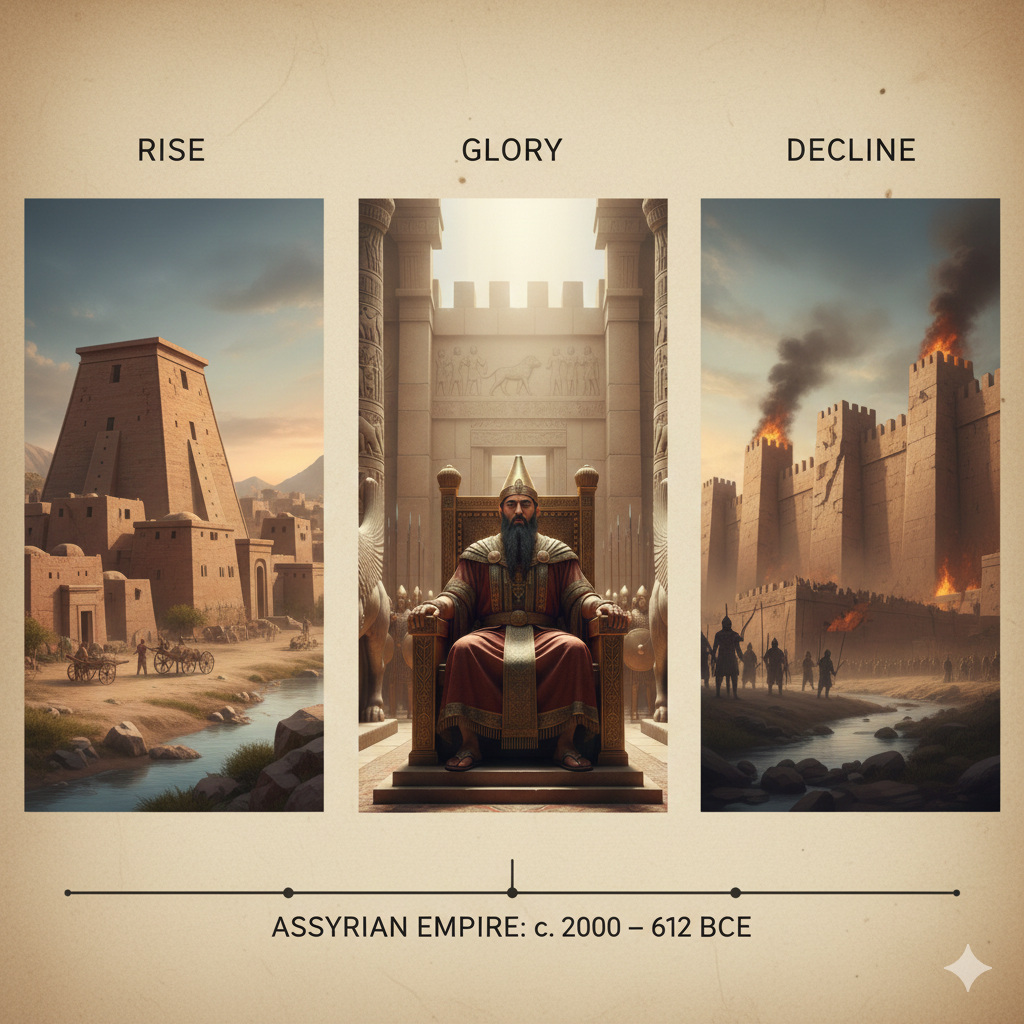
What was the Assyrian Law System?
The Assyrian law system was one of the harshest legal systems in ancient history, known for strict punishments like mutilation, death penalties, and social inequality.
Assyrian Empire
Detailed Description of the Assyrian Empire
Introduction
The Assyrian Empire was a major empire located in ancient Mesopotamia (present-day Iraq), known for its powerful military force, advanced administrative system, and cultural contributions. The empire existed from about 2500 BCE to 612 BCE.
The Rise of the Assyrian Empire
The roots of Assyrian civilization can be traced to the Sumerians and Akkadians. Its primary center was the city of Aššur, situated on the banks of the Tigris River.
Main Periods of the Assyrian Empire
1. Early Assyrian Period (2500 BCE – 1365 BCE)
- Existed as small kingdoms and city-states.
- Flourished in trade and cultural activities.
2. Middle Assyrian Empire (1365 BCE – 912 BCE)
- Military expansion began during this period.
- Aššur-uballiṭ I organized and strengthened the empire.
3. Neo-Assyrian Empire (911 BCE – 612 BCE)
- The most powerful and expansive era of Assyria.
- Legendary rulers included Tiglath-Pileser III, Sennacherib, and Ashurbanipal.
- Military campaigns and administrative reforms expanded the empire greatly.
Main Features of the Assyrian Empire
1. Military Power and Strategy
- Highly organized and powerful army.
- Used iron weapons, cavalry, chariots, and siege warfare techniques.
- Imposed heavy taxes on conquered regions.
2. Administrative Structure
- The empire was divided into provinces governed by appointed officials.
- An efficient tax collection system was established.
- Roads and messenger networks improved administration.
3. Art and Architecture
- Magnificent palaces, temples, and fortresses were built.
- Nineveh and Nimrud became architectural centers.
- Wall carvings depicted war, hunting, and religious scenes.
4. Religion and Culture
- The Assyrians were polytheistic; the chief deity was Ashur.
- Temples conducted rituals and sacrifices.
- The Library of Nineveh, founded by Ashurbanipal, preserved knowledge and literature.
5. Law and Order
- Assyrian laws were strict, with severe punishments.
- Slavery was widespread.
Fall of the Assyrian Empire
In 612 BCE, the Babylonian and Median forces jointly attacked Nineveh, the Assyrian capital, and destroyed it. The main reasons for the fall were:
- Excessive territorial expansion that became difficult to manage.
- Cruelty that caused widespread rebellions.
- Pressure from strong external enemies.

Best Value Amazon Product
Top-rated and well-reviewed product with excellent customer feedback. Check the latest price, deals & availability on Amazon.
👉 View on AmazonConclusion
The Assyrian Empire was one of the most influential empires of the ancient world. It is remembered for its military power, administrative efficiency, architecture, and cultural contributions. Although its ruthlessness and over-expansion led to its downfall, its legacy shaped future civilizations.
The Rise of the Assyrian Empire (Detailed Section)
The Assyrian Empire arose in ancient Mesopotamia, in present-day Iraq. Located around the Tigris and Euphrates rivers, it became renowned for its military strength, administrative efficiency, and expansionist policies.
Early Development of the Assyrian Empire
1. Geographical and Historical Background
The Assyrian homeland was located along the Tigris River, with its main city being Aššur. The region was not very fertile, pushing the Assyrians toward military campaigns and trade.
2. Early Assyrian States (2500 BCE – 1365 BCE)
- Assyria’s early history was connected to Sumerian and Akkadian civilizations.
- The early Assyrians adopted cultural and administrative practices from Sumer and Akkad.
- Aššur developed as a major religious and commercial center.
3. Growth of Cities and Trading Power
- Nineveh and Arbela were major Assyrian cities.
- Trade with Anatolia and other regions strengthened Assyria’s economy.
Middle Assyrian Empire (1365 BCE – 912 BCE)
By this time, Assyria grew into a powerful state with ambitious rulers.
1. Aššur-uballiṭ I (1365–1330 BCE)
- Established Assyria as an independent power.
- Developed diplomatic relations with Egypt and the Hittites.
2. Growth of Military Power
- Army was reorganized.
- Improved chariot and cavalry warfare.
3. Administrative Reforms
- Taxation systems were strengthened.
- Revenue and resource management improved.
Neo-Assyrian Empire (911 BCE – 612 BCE): The Peak
1. Tiglath-Pileser III (745–727 BCE)
- Introduced major military and administrative reforms.
- Divided the empire into smaller, manageable provinces.
- Expanded into Babylon, Syria, and Palestine.
2. Sennacherib (705–681 BCE)
- Made Nineveh the capital and transformed it into a grand city.
- Led campaigns against Babylon and Israel.
3. Ashurbanipal (668–627 BCE)
- Known as one of the most educated Assyrian kings.
- Founded the world-famous Library of Nineveh.
- Expanded the empire as far as Egypt.
Main Reasons for the Rise of the Assyrian Empire
1. Organized and Powerful Army
- Use of iron weapons, cavalry, and chariots.
- Expertise in aggressive warfare.
2. Administrative Reforms
- Empire divided into provinces for better governance.
- Efficient tax and resource systems.
3. Cultural and Technological Progress
- Growth in architecture, art, and literature.
- Collection of thousands of manuscripts in the Library of Nineveh.
4. Trade and Economic Strength
- Long-distance trade boosted economic power.
- Agriculture and industry were improved.
Final Conclusion
The Assyrian Empire rose through military strength, administrative reforms, and expansionist policies. Considered the world’s first true empire, it laid the foundation for modern governance, warfare, and diplomacy. Although its harsh policies contributed to its downfall, its impact remains historically significant.
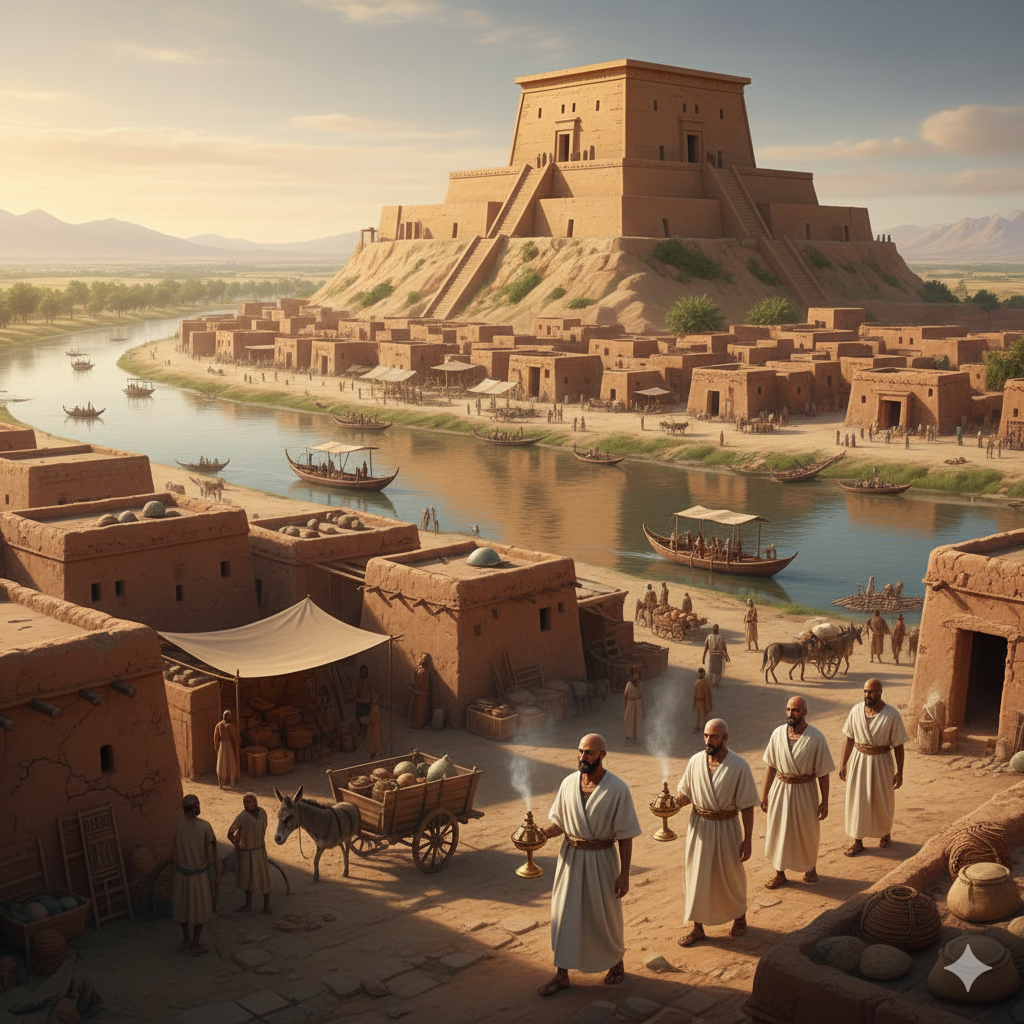
Early Assyrian Period (2500 BC – 1365 BC)
Introduction
The Early Assyrian Period lasted from 2500 BC to 1365 BC. This era marks Assyria’s initial development as a small city-state that gradually formed its own identity. During this time, Assyria was known for its trade and religious activities, while its political and military influence remained limited.
1. Geography and Background of the Early Assyrian State
The territory of Assyria was located along the Tigris River in what is now northern Iraq. The main city was Aššur, which later became the religious and commercial center of the civilization.
- The region lacked rich natural resources, so the Assyrians relied heavily on trade and occasional plundering.
- Assyrian society was influenced by Sumerian and Akkadian civilizations.
2. Assyrian Culture and Society
(a) Religion and Gods
- Assyrians were named after their chief god Aššur.
- The god Ashur was considered supreme, and rulers described themselves as his representatives.
- Other important deities included Inanna (Ištar – goddess of war and love), Adad (god of storms), and Enlil (god of earth and wind).
(b) Social Structure
- Society consisted of kings, nobility, merchants, farmers, soldiers, and slaves.
- The king held religious and administrative authority but had limited power in the early period.
- Merchants played a major role due to the trade-based economy.
3. Business and Economy
Trade was the main foundation of the Early Assyrian economy.
(a) Trade Routes and Centers
- The city of Aššur was a major trading hub, with connections to Anatolia (Turkey), Syria, and Persia.
- Merchants traded copper, tin, textiles, and precious goods.
- Trade routes followed the Tigris and Euphrates rivers.
(b) Taxes and Administration
- Merchants paid taxes regulated by the king and temple authorities.
- Trade contracts were written on clay tablets.
4. Early Assyrian Rule
During this period, Assyrian political power was weak and mainly controlled by local nobility and merchant elites.
(a) Early Rulers and Their Functions
- Information is limited, but early rulers such as Tudiya and his successors are known.
- These early kings were primarily city-state leaders with limited power.
- They supported temples and trade activities.
(b) Law and Justice System
- Assyrian law was influenced by Sumerian and Akkadian legal systems.
- Strict punishments were imposed for crimes.
- Property disputes and trade contracts were legally resolved.
5. Early Assyrian Military Power and Expansion
(a) Early Military Organisation
- The army was small and mainly protected trade routes.
- Initially the Assyrians were peaceful, but later they joined military campaigns.
(b) Beginning of Military Operations
- Assyria began distancing itself from Sumerian and Akkadian dominance.
- After the fall of the Akkadian Empire in 2000 BC, Assyria regained independence and gradually expanded its borders.

Top Rated Amazon Product
Highly rated and well-reviewed product with excellent customer feedback. Check the latest price & availability on Amazon.
👉 View on Amazon6. Decline of the Early Assyrian Period and Transition
By 1365 BC, Assyria remained a regional power with its focus on trade and administration.
(a) Influence of External Powers
- Assyria faced challenges from powers such as the Mitanni Empire, Babylonia, and the Hittites.
- In the 15th century BC, the Mitanni Empire captured and dominated Assyria.
(b) Assyrian Independence and Resurgence
- In 1365 BC, Aššur-uballiṭ I freed Assyria from Mitanni control.
- This event marked the beginning of the Middle Assyrian Empire, a period of military and administrative expansion.
Conclusion
The Early Assyrian Period (2500–1365 BC) laid the foundation for Assyria’s future as a major empire. During this era:
- Aššur became a major center of religion and trade.
- Society was influenced by Sumerian and Akkadian cultures.
- Trade dominated the economy.
- governance was controlled by local elites and merchants.
- The military remained small but gradually developed.
- Assyria struggled under Mitanni control until Aššur-uballiṭ I restored independence.
Overall, this period represents the early formation of Assyria, which later evolved into a powerful military and administrative empire.
Middle Assyrian Empire (1365 BC – 912 BC)
Introduction
The Middle Assyrian Empire spanned from 1365 BC to 912 BC. During this era, Assyria transformed from a regional power into a powerful empire. It established independence, developed an organized administration, and built a strong military system.
Assyrian rulers expanded their territory through aggressive military campaigns and stabilized political structures. They also confronted major rivals such as the Mitanni, Hittites, Babylonians, and Armenian kingdoms.
1. Independence and Revival of Assyria
(a) Struggle and Independence from the Mitanni Empire
- In the Early Assyrian period, the Mitanni Empire dominated Assyria.
- Aššur-uballiṭ I (1365–1330 BC) defeated the Mitanni and declared Assyria an independent state.
- Assyria began diplomatic relations with neighboring states and formed alliances with Babylon.
(b) Development of Administrative and Military Organisation
- administrative reforms improved tax systems and governance.
- A permanent and organized army was formed, becoming the backbone of Assyrian power.
2. Major Assyrian Rulers and Their Contributions
(a) Aššur-uballiṭ I (1365–1330 BC)
- Freed Assyria from Mitanni rule.
- Established diplomatic ties with Babylon and Egypt.
- Restored Assyria as a rising regional power.
(b) Arik-Din-Ilu (1327–1306 BC)
- Led campaigns against neighboring tribes and Babylonia.
- Secured Assyria’s borders.
(c) Adad-nirari I (1305–1274 BC)
- Crushed the Mitanni Empire completely.
- Led successful campaigns against Babylonia and the Hittites.
- Strengthened control and administration in conquered territories.
(d) Shalmaneser I (1273–1244 BC)
- Expanded Assyrian control across northern Mesopotamia.
- Developed major cities like Nineveh and Kalhu.
- Led campaigns against Babylon and other neighboring powers.
(e) Tiglath-Pileser I (1114–1076 BC)
- Brought Assyria to the height of its military power.
- Expanded into Armenia, Syria, and Anatolia.
- Built a naval fleet and transported soldiers to the Mediterranean.
- Contributed to advancements in literature, agriculture, and administration.
3. Middle Assyrian Administration and Society
(a) Administrative Reforms
- A centralized administration was formed.
- The empire was divided into provinces under appointed governors.
- The tax system was strengthened, improving economic stability.
(b) Military Organisation
- A standing army was established consisting of cavalry, chariots, and infantry.
- Iron weapons and improved warfare techniques were adopted.
- Conquered territories were annexed into the empire.
(c) Law and Justice System
- Assyrian rulers enforced strict laws known as the Middle Assyrian Laws.
- Punishments included execution, mutilation, and slavery.
- Women had limited rights and strict social rules.
4. Art, Culture, and Religion
(a) Religious Life
- Aššur was worshipped as the supreme deity.
- Temples and sacred structures were built across the empire.
- Rulers acted as representatives of the god Aššur.
(b) Architecture and Art
- Massive temples, palaces, and fortresses were constructed.
- Cities like Nineveh and Kalhu flourished architecturally.
- Wall reliefs depicted war, hunting, and religious rituals.
(c) Literature and Science
- Tiglath-Pileser I contributed to literary works.
- Progress was made in astronomy, mathematics, and medicine.
5. Fall of the Middle Assyrian Empire
(a) Internal Rebellion and Administrative Weakness
- Governors gained excessive power.
- Dynastic conflicts led to political instability.
(b) External Aggression
- Aramean tribes repeatedly attacked Assyrian borders.
- Babylon and neighboring states increased pressure.
(c) Economic Crisis
- Constant wars drained the economy.
- Loss of trade routes weakened economic stability.
Conclusion
The Middle Assyrian Empire (1365–912 BC) was a transformative era in Assyria’s history. During this period:
- Assyria gained independence from the Mitanni Empire.
- Military and administrative reforms strengthened the empire.
- Rulers like Tiglath-Pileser I expanded the empire significantly.
- The empire developed strict laws and a powerful army.
However, internal conflicts, external invasions, and economic decline weakened the kingdom, leading to the rise of the Neo-Assyrian Empire in 912 BC.
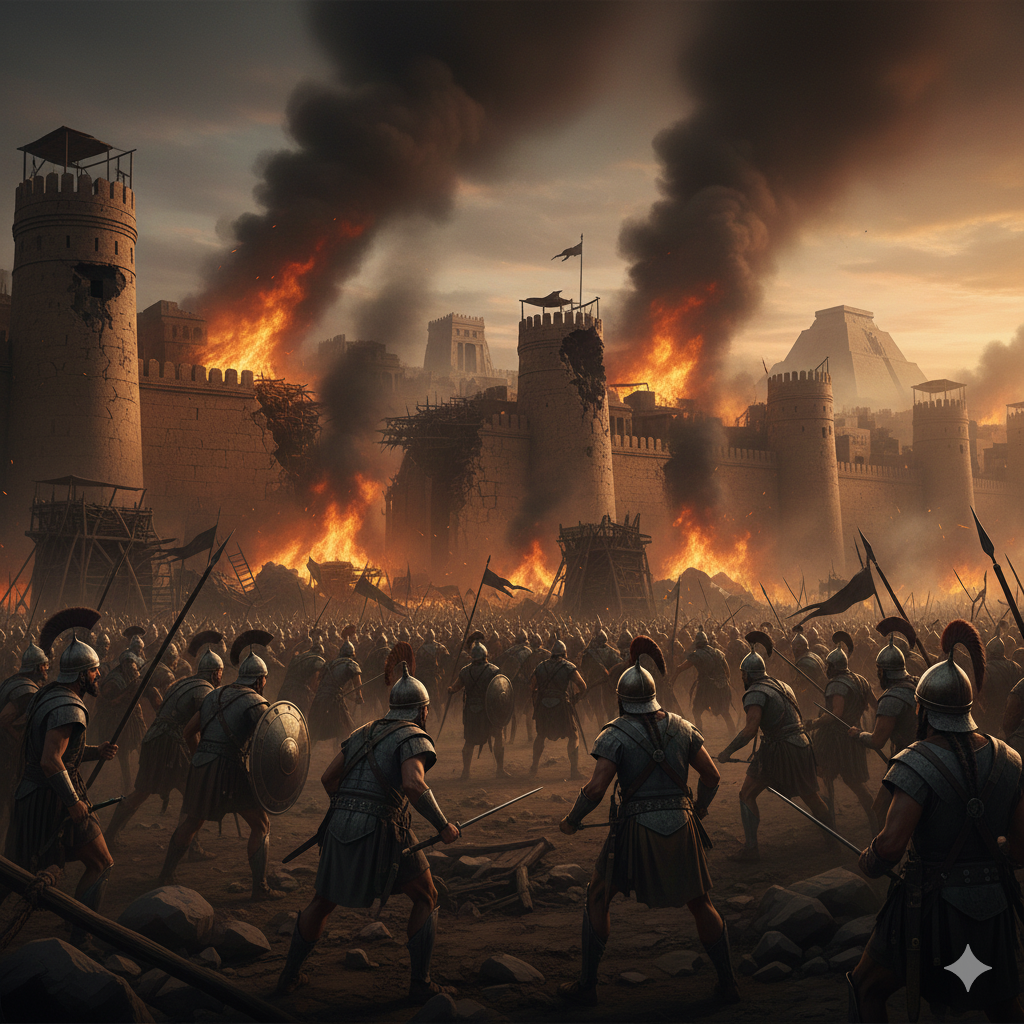
Neo-Assyrian Empire (911 BC – 612 BC)
Introduction
The Neo-Assyrian Empire, which lasted from 911 BC to 612 BC, represents the most powerful and aggressive era of Assyrian history. During this period, Assyria emerged as a global superpower. At its peak, it ruled over Mesopotamia, Egypt, the Levant (modern Syria, Lebanon, Jordan, Israel), and Anatolia (modern Turkey).
This era witnessed immense progress in military strength, administrative reforms, and cultural development. The empire became known for its brutal warfare, strict governance, and magnificent architecture. However, overexpansion and internal revolts ultimately led to its downfall in 612 BC.
1. Rise of the Neo-Assyrian Empire (911–745 BC)
By the end of the Middle Assyrian period, Assyria weakened due to internal conflicts, invasions, and administrative instability. A revival began under King Adad-nirari II in 911 BC.
(a) Early Rulers and Expansion
Adad-nirari II (911–891 BC)
- Strengthened Assyria by defeating Babylon, Aramean tribes, and neighboring kingdoms.
- Reorganized the military and administration.
Tukulti-Ninurta II (890–884 BC)
- Strengthened the army further.
- Improved Trade Routes.
Ashur-nasirpal II (883–859 BC)
- Known for extremely brutal military campaigns.
- Conquered the Levant region.
- Established Kalhu as the capital.
Shalmaneser III (858–824 BC)
- Conquered Syria, Palestine, and Armenia.
- Fought battles with Babylon.
- Created one of the largest armies of the era.
2. Golden Age of the Neo-Assyrian Empire (745–705 BC)
The Neo-Assyrian Empire reached its peak during this era. Tiglath-Pileser III and his successors established complete dominance over the Middle East.
(a) Tiglath-Pileser III (745–727 BC)
- A powerful reformer who reorganized the empire.
- Divided the empire into smaller provinces.
- Conquered Syria, Palestine, and Babylon.
- Created the first professional standing army.
(b) Shalmaneser V (727–722 BC)
- Consolidated control over Babylon.
- Destroyed the city of Samaria in Israel.
(c) Sargon II (722–705 BC)
- Founded the “Sargonic Dynasty”.
- Conquered the Levant and Anatolia.
- Developed Nineveh as a major administrative center.
3. Military Power and Conquests
(a) Features of the Assyrian Army
- The world’s first formal standing army using iron weapons.
- Highly organized military formations.
- Used psychological warfare to spread fear.
- Developed advanced chariot forces, cavalry, and siege engines.
(b) Major Victories
- Conquest of Egypt (671 BC): Ashurbanipal invaded and annexed Egypt.
- Destruction of Babylon and Elam (648 BC): Babylon was completely destroyed.
- Siege of Jerusalem (701 BC): Sennacherib besieged Jerusalem but could not conquer it completely.

Top Rated Amazon Product
Highly reviewed and trusted product with excellent customer feedback. Click below to check the latest price & availability on Amazon.
👉 View on Amazon4. Neo-Assyrian Society and Administration
(a) Administrative Reforms
- The empire was divided into many provinces.
- Governors reported directly to the king.
- A strict and organized tax system existed.
(b) Art and Architecture
- Massive palaces, temples, and fortresses were built.
- Ashurbanipal built the famous Library of Ashurbanipal in Nineveh.
- Walls were decorated with carvings of war, hunting scenes, and royal victories.
(c) Religion and Culture
- Aššur (Ashur) was worshipped as the supreme god.
- The king was considered the representative of God.
- Religious rituals and temple culture were deeply rooted.
5. Fall of the Neo-Assyrian Empire (612 BC)
(a) Reasons for Decline
- Overexpansion: The empire became too large to control.
- Internal Rebellions: Power struggles and revolts weakened the state.
- Invasion of Babylon and Media: In 612 BC, Babylonians and Medes attacked Nineveh and destroyed it.
- Economic crisis: Continuous wars exhausted financial resources.
(b) Last Ruler
Ashur-uballit II (612–609 BC) tried to maintain control by forming a new regime in Harran, but in 609 BC, Babylonians and Medes eliminated the last Assyrian stronghold.
Conclusion
The Neo-Assyrian Empire was the strongest and most influential phase of Assyrian history. During this period:
- The Middle East was conquered through unmatched military might.
- Administrative and military reforms strengthened the empire.
- Art, architecture, and literature flourished.
However, excessive expansion, internal conflict, and invasions led to its destruction in 612 BC, paving the way for Babylonian and Median rule.
Main Features of the Assyrian Empire
The Assyrian Empire was one of the most powerful empires of ancient Mesopotamia, ruling from about 2500 BC to 612 BC. It is remembered for its military strength, organized administration, architectural achievements, and cultural development.
1. Military Power and War Policy
The Assyrians were the first in history to build a formal standing army.
(a) Main Features of the Army
- Iron Weapons: Stronger than bronze weapons, giving an advantage in battle.
- Cavalry & Chariots: Fast-moving units increased speed and attack power.
- Psychological Warfare: Mass executions and slavery were used to terrify enemies.
- Siege Warfare: Advanced techniques like battering rams, siege towers, and tunnels.
2. Administrative Setup
(a) Division into Provinces
- The empire was divided into administrative provinces.
- Each province was ruled by a king-appointed governor.
(b) Tax System and Trade
- A well-structured tax system supported the economy.
- International trade enhanced wealth.
(c) Postal & Communication System
- Fast postal routes linked major cities.
- Road networks improved military and administrative communication.
3. Architecture and Sculpture
(a) Major Cities
- Nineveh, Ashur, and Kalhu were major centers.
- Magnificent palaces, temples, and gardens were built.
- The famous Library of Ashurbanipal was built in Nineveh.
(b) Sculpture and Art
- Stone reliefs depicted battles, hunts, and royal triumphs.
- These artworks symbolized power and pride.
4. Religion and Culture
(a) Major Deities
- Aššur (Ashur) was the supreme god.
- Enlil, Ishtar, and Shamash held great significance.
(b) Rituals and Omens
- Priests interpreted omens and astronomical signs.
- Rituals were central to religious life.
5. Assyrian Society and Lifestyle
(a) Social Classes
- King: Representative of the gods.
- Priests: Conducted rituals and divination.
- Warriors: Held high social status.
- Merchants & Artisans: Key to trade and craftsmanship.
- Farmers & Laborers: Worked in agriculture & construction.
- Slaves: Mostly war captives.
6. Language and Literature
(a) Writing System
- The Assyrian language was a branch of Akkadian.
- Writing was done using cuneiform script.
(b) Knowledge and Literature
- The Library of Ashurbanipal stored thousands of texts.
- It preserved Epic of Gilgamesh and many scientific writings.
7. Economic System
(a) Agriculture & Irrigation
- The economy was based on agriculture.
- Advanced irrigation systems were developed.
(b) Trade & Commerce
- Trade extended to Egypt, Anatolia, India, and Mesopotamia.
- Traded wood, metals, textiles, and spices.
8. Scientific Contributions
(a) Astronomy & Mathematics
- Scholars studied planets and stars.
- Developed multiplication tables and fractions.
(b) Medicine
- Physicians used herbs and medicines.
- Treated wounds and infections scientifically.
Conclusion
The Assyrian Empire was an exceptionally well-organized and powerful civilization. Its greatest strengths were its highly structured administration, unmatched military power, grand architecture, and cultural achievements. Although harsh policies and rebellions led to its fall in 612 BC, its legacy remains immortal in world history.
Military Power and Strategy of the Assyrian Empire
The Assyrian Empire was known for its organized, brutal, and technologically advanced military force. It developed one of the most sophisticated armies of ancient times, using the latest warfare techniques and psychological strategies to expand its empire.
1. Permanent and Organized Army
The Assyrian Empire was the first in history to maintain a standing army. Unlike other civilizations whose armies were raised only during wartime, the Assyrian army remained active throughout the year.
(a) Organization of the Army
- Infantry: Heavily armored soldiers carrying swords, spears, and shields. They formed the backbone of the army.
- Cavalry: Assyria created the world’s first organized cavalry force. Mounted soldiers attacked enemies with great speed and mobility.
- Chariot Force: Chariots drawn by two or four horses carried archers who launched rapid volleys of arrows.
- Expeditionary Force: Assault units that continually invaded and secured new territories.
- Siege Specialists: Experts trained to conquer forts and fortifications.
2. Advanced Weapons and Armor
The Assyrians were among the first to use iron weapons in warfare, giving them a major advantage.
(a) Major Weapons
- Swords: Sharp and durable iron weapons.
- Spears & Javelins: Used for long-range strikes.
- Bows & Arrows: Composite bows with extended range and power.
- Axes & Maces: Effective for close combat.
- Battering Rams: Used to break fortified gates.
(b) Armor & Protective Equipment
- Iron armor for superior protection.
- Wooden and metal shields designed to block arrows and spears.
- Helmets to protect the head.
3. Techniques of Siege Warfare
The Assyrians perfected siege warfare and developed new techniques to conquer mighty cities and forts.
(a) Major Siege Techniques
- Battering Rams: Heavy machines used to smash fort gates.
- Underground Tunnels: Dug to collapse enemy walls.
- Siege Towers & Ladders: Enabled soldiers to scale high walls.
- Use of Fire: Fire and incendiary materials weakened enemy defenses.
4. Psychological Warfare
The Assyrians used brutality as a tool of fear to break the morale of their enemies.
(a) Fear Tactics
- Mass Executions: Defeated populations were often killed publicly.
- Slavery: Captives were enslaved and deported.
- Displaying Severed Heads: Heads of enemies were showcased to spread terror.
- Refugee Flight: Many populations fled in fear even before the Assyrians arrived.
5. Strategies of Military Operations
(a) Strategy-Based Warfare
- Lightning Attacks: Sudden strikes that left enemies no time to react.
- Use of Geography: Terrain and weather were exploited strategically.
- Ambush & Deception: Fake attacks and diversions misled the enemy.
(b) Expansion of Military Operations
- Assyrian armies conquered Mesopotamia, Egypt, the Levant, and Anatolia.
- Local allies were used to control vast territories.
6. Military Leadership and Discipline
(a) Major Military Leaders
- Tiglath-Pileser III: Established the standing army.
- Sargon II: Expanded the empire extensively.
- Sennacherib: Led major campaigns, rebuilt Nineveh.
- Ashurbanipal: Enhanced military operations further.
(b) Discipline and Punishment
- Strict discipline was maintained throughout the army.
- Cowardice or rebellion was punished by death.
7. Influence and Legacy
- Persian, Greek, and Roman armies adopted Assyrian military techniques.
- Modern military strategy also reflects elements of Assyrian war policy.
Conclusion
The Assyrian army was one of the most organized, powerful, and fearsome forces in ancient history. Their technological superiority, siege warfare, psychological tactics, and strict discipline made them unmatched. Although their harsh policies contributed to their downfall, their war strategies influenced future civilizations.
Administrative Structure of the Assyrian Empire

Top Rated Amazon Product
Trusted and highly rated product with excellent customer feedback. Check the latest price, offers & availability on Amazon.
👉 View on AmazonThe Assyrian Empire developed a strong and centralized administrative system. The king served as the supreme authority over military, religious, and judicial affairs. Beneath him were provincial governors, tax collectors, military commanders, and royal officials.
1. King – The Supreme Ruler
(a) Powers of the King
- Supreme Military Commander: Planned and led wars.
- Supreme Judge: Final authority in judicial matters.
- Religious Head: Considered the representative of the god Ashur.
- Public Works: Supervised construction of roads, canals, cities, and temples.
(b) Kings Known for administrative reforms
- Tiglath-Pileser III: Reorganized provinces; strengthened tax collection.
- Sargon II: Improved bureaucratic systems and accountability.
- Sennacherib: Rebuilt Nineveh.
- Ashurbanipal: Established the royal library; promoted knowledge and literacy.
2. Provincial Administration
(a) Organization of Provinces
- The empire was divided into multiple provinces.
- Each province was governed by a royal-appointed governor (Šaknu).
- Provincial authorities enforced royal laws.
(b) Responsibilities of the Governor
- Tax collection
- Military organization and defense
- Maintenance of roads and public works
- Law enforcement and order
- Prevention of rebellions
(c) Purpose of Provincial Division
- Improved local control
- Efficient tax collection
- Direct accountability to the king
3. Taxation System
(a) Types of Taxes
- Land Tax: A portion of crops collected from farmers.
- Trade Tax: Levied on merchants and traders.
- Labor Tax: Mandatory labor service for the state.
- Tribute & Plunder: Taxes and spoils collected from conquered states.
(b) Tax Collection Procedure
- Each province had official tax collectors.
- Military forces enforced tax laws.
- Defaulters were punished harshly.
4. Judicial System
(a) Major Laws & Punishments
- The king acted as the supreme judge.
- Severe punishments were common (“an eye for an eye”).
- Rebellion was punishable by death.
- Strict penalties for theft and murder.
(b) Local Courts
- Courts existed in every province.
- Judges were appointed by the king.
5. Military Administration
(a) Key Features
- Permanent standing army.
- Provincial forces supplemented the central army.
- Strict discipline enforced.
- Use of spies and intelligence networks.
6. Population and Resettlement Policies
(a) Forced Relocation
- Rebellious populations were relocated to weaken opposition.
- Helped spread Assyrian culture.
7. Communication & Trade System
(a) Major Features
- Well-built roads connecting major cities.
- Fast messaging/postal system.
- Outposts to protect Trade Routes.
8. Religious Administration
(a) Key Aspects
- The king was the chief religious authority.
- Temples were under royal supervision.
- High priests were appointed by the king.
- War campaigns were often religiously justified.
9. Capital Cities & Royal Infrastructure
(a) Major Capitals
- Ashur: Early capital.
- Nimrud: Capital under Tiglath-Pileser III.
- Nineveh: Last and greatest capital.
Conclusion
The administrative structure of the Assyrian Empire was centralized, strict, and extremely efficient. Its taxation system, judicial discipline, military organization, and communication network enabled it to remain powerful for centuries. Although its harsh policies contributed to its downfall, the Assyrian administrative model influenced many future civilizations.
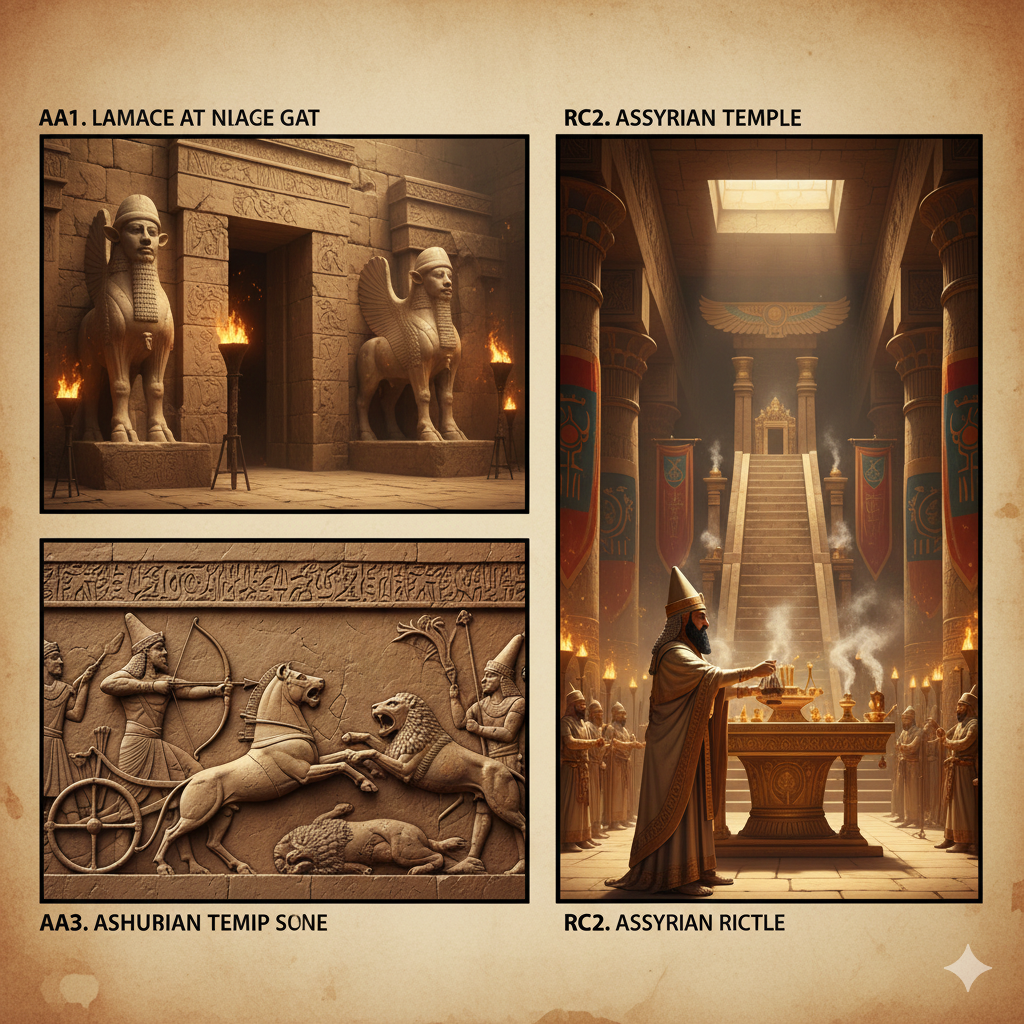
Art and Architecture of the Assyrian Empire
The Assyrian Empire was famous for its gorgeous art and impressive architecture. Their grand palaces, temples, and magnificent statues reflected their power, religious devotion, and military victories. The main purpose of Assyrian art and architecture was to strengthen political authority and religious influence.
1. Main Features of Assyrian Art
Assyrian art focused on scenes of war, divine power, hunting, and royal authority. Through their artwork, kings displayed their bravery and loyalty to the gods.
(a) Key Artistic Features
- Realistic & Detailed Depictions: Sculptures and murals showed detailed clothing, facial expressions, and physical features.
- War & Hunting Scenes: Walls were decorated with images of battles and royal lion hunts.
- Divine Symbolism: Gods, winged creatures, and spiritual beings were commonly depicted.
- Royal Power Display: Giant statues and murals glorified the king’s strength.
2. Major Artworks and Illustrations
(a) Reliefs and Murals
Stone-carved reliefs were central to Assyrian art. These depicted power, warfare, and religious life.
Themes of Major Frescoes
- Military Victory: Depictions of capturing enemies, destroying cities, and triumphs.
- Royal Hunts: Lion hunts symbolized kingly strength.
- Religious Rituals: Scenes of worship, offerings, and ceremonies.
- Social Life & Festivals: Music, dance, feasts, and cultural gatherings.
(b) Sculpture
Assyrian sculptures were large, powerful, and installed in palaces, temples, and city gates.
Major Sculptures
- Lamassu: Winged guardian creature with a human head and bull or lion body, placed at palace entrances.
- Statues of Kings: Royal figures depicted with weapons and ceremonial attire.
- Idols of Gods: Statues of Ashur, Ishtar, Nabu, and other deities in temples.
3. Main Features of Assyrian Architecture
Assyrian architecture symbolized strength, beauty, and protection. Buildings were constructed using mudbrick, stone, and wood.
(a) Architectural Characteristics
- Construction of massive palaces and temples
- High, fortified walls for defense
- Grand entrances decorated with giant statues
- Well-planned city layout with roads, canals, drainage systems
- Decorative wall paintings and carved columns
4. Major Architectural Constructions
(a) Palaces
- Northwest Palace of Nimrud: Built by Ashurnasirpal II with detailed carvings.
- Palace of Sennacherib: Known as “the palace without equal” with hundreds of rooms.
- Palace of Ashurbanipal: Famous for lion-hunt frescoes.
(b) Temples and Ziggurats
- Temple of Nabu: Dedicated to the god of knowledge.
- Temple of Ashur: The most important religious site.
- Ziggurat of Nimrud: A large stepped pyramid for religious rituals.
(c) Urban Planning
- Strong fortifications around cities
- Advanced drainage and sewage systems
- Wide, systematic road networks
- Organized markets and administrative buildings
5. Royal Library of Ashurbanipal
King Ashurbanipal established the greatest library of the empire in Nineveh.
- Contained over 30,000 clay tablets
- Included religious texts, laws, literature, and scientific writings
- Preserved the heritage of ancient Mesopotamia
6. Conclusion
The art and architecture of the Assyrian Empire reflected its strength, religious devotion, and military might. Their palaces, lamassu statues, carved reliefs, and ziggurats stand among the greatest artistic achievements of the ancient world. These masterpieces influenced many later civilizations.
Religion and Culture of the Assyrian Empire
The religious and cultural traditions of the Assyrian Empire were deeply rooted in Mesopotamian civilization. Their religion was polytheistic, involving the worship of many gods. Their culture emphasized strength, military prowess, art, literature, and education.
1. Assyrian Religion
(a) Major Religious Beliefs
- Gods were believed to control all natural and cosmic forces.
- The king was considered the representative of the gods.
- Temples and ziggurats were constructed for worship.
- War and conquest were connected with religious rituals.
Top Rated Amazon Choice Product
Trusted and highly reviewed product with great customer feedback. Check the latest price, deals & availability on Amazon.
👉 View on Amazon(b) Chief Assyrian Gods and Their Roles
| Deity | Role / Characteristics |
|---|---|
| Ashur | Supreme deity, god of war and strength, protector of the empire |
| Enlil | God of creation and wind |
| Marduk | God of Justice and wisdom (Babylonian influence) |
| Ishtar | Goddess of love, war, and fertility |
| Nabu | God of writing and knowledge |
| Shamash | God of the sun and justice |
| Sin | Moon god |
(c) Religious Rites & Worship Practices
- Daily worship and sacrificial practices
- Festivals and large religious ceremonies
- Prophecy and astrology by priests
- Wars were considered divine missions sanctioned by gods
(d) Ziggurats – Assyrian Temple Structures
- Ziggurats were large stepped pyramids built for the gods.
- They symbolized a link between gods and humans.
- Famous ziggurats were built in Nimrud and Nineveh.
2. Assyrian Culture
(a) Language and Literature
- The Assyrian language was a branch of Akkadian.
- Used cuneiform script for writing.
- Literature included state inscriptions, religious texts, and epics.
Famous Texts
- Epic of Gilgamesh
- Tablets from the Library of Ashurbanipal (over 30,000 texts)
- Prophetic and astrological writings
(b) Education and Science
- Royal libraries preserved knowledge.
- Advancements in mathematics and astronomy.
- Priests studied medical, scientific, and dream-interpretation texts.
(c) Art and Music
- War and hunting scenes carved in palace reliefs.
- Giant Lamassu statues in architecture.
- Music and dance were part of festivals and religious ceremonies.
(d) Social Structure
| Social Class | Characteristics |
|---|---|
| King | Supreme ruler; representative of the gods |
| Priests | Led rituals; experts in divination and astrology |
| Royal Officials | Handled administration and taxes |
| Soldiers | Main force of the empire |
| Farmers & Traders | Engaged in agriculture, trade, and craftsmanship |
| Slaves | War captives who performed labor |
(e) Status of Women
- Women’s roles were mostly domestic.
- Upper-class women served as priestesses or held property.
- Some women managed businesses.
3. Festivals and Celebrations
| Festival | Importance |
|---|---|
| Akitu Festival | New Year and harvest festival; dedicated to Marduk |
| Royal Victory Celebrations | Held after military triumphs |
| Religious Rituals & Sacrifices | Offerings made to please the gods |
4. Conclusion
The religion of the Assyrian Empire was centered on the worship of many gods, the construction of ziggurats, and the divine authority of the king. Their culture significantly contributed to art, literature, education, and science. The strong link between military power and religion shaped their society and drove many wars. Although their rigid structure and harsh policies strengthened their empire, they also contributed to its downfall.
References
Top Rated Amazon Product
Trusted and highly rated product with excellent customer feedback. Check the latest price, deals & availability on Amazon.
👉 View on Amazon- Roux, G. (1992). Ancient Iraq. Penguin Books.
- Van De Mieroop, M. (2007). A history of the Ancient Near East ca. 3000–323 BC. Blackwell Publishing.
- Saggs, H.W.F. (1984). The Might That Was Assyria. Sidgwick & Jackson.
- Radner, K. (2015). Ancient Assyria: A Very Short Introduction. Oxford University Press.