
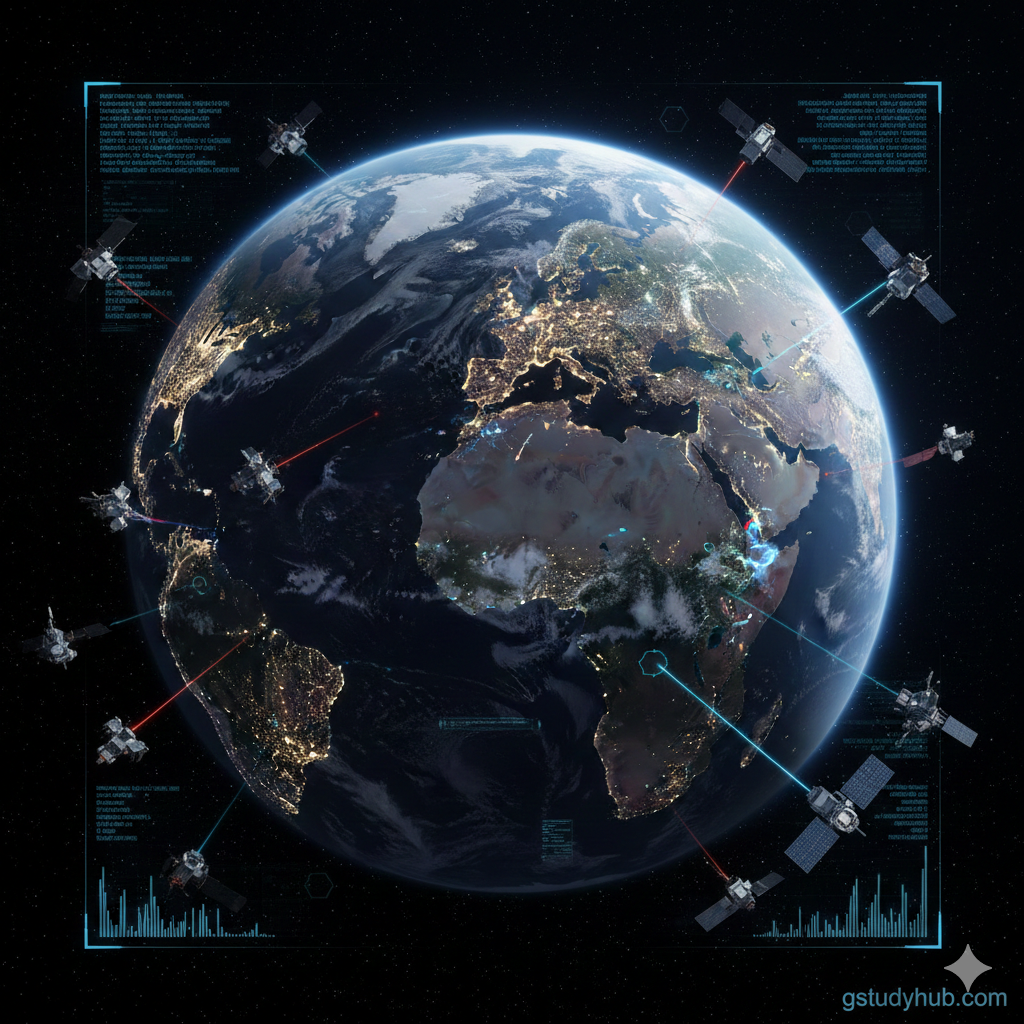
🚀 Space Militarization 2026 – The New Arms Race Beyond Earth
21st Century’s New Battlefield – Space.
What was once celebrated as the ultimate symbol of human curiosity, scientific ambition, and peaceful exploration is now transforming into the most strategic and contested domain of global power politics. The vast, silent expanse above our heads — once romanticized as humanity’s shared frontier — is rapidly becoming the next arena of geopolitical rivalry.
“Next Cold War is Above the Sky.”
This is not jUSt a dramatic phrase. It is a strategic reality shaping the global order in 2026.
🌌 From Peaceful Exploration to Strategic Domination
When humans first stepped on the Moon in 1969, space was portrayed as a triumph of collective human progress. Yet even then, beneath the surface of scientific glory, a fierce geopolitical rivalry simmered between superpowers. The original Cold War extended into orbit — but it was restrained, symbolic, and limited compared to what we are witnessing today.
In 2026, space is no longer merely a laboratory of research stations and exploration missions. It has evolved into the backbone of national security, economic stability, and military supremacy. Every major power now views orbital dominance as essential to maintaining strategic advantage on Earth.
📡 Satellites – The Invisible Spine of Modern Warfare
Modern warfare is no longer fought solely with tanks, aircraft carriers, and infantry divisions. Today’s battlefield is digital, interconnected, and heavily dependent on space-based infrastructure.
Consider this: How does a missile laUNched from thousands of kilometers away strike its target with astonishing precision? How do drones operate across continents in real time? How do militaries coordinate complex operations across land, sea, and air?
The answer lies in satellites.
- 📍 GPS navigation for troop movement and targeting
- 📶 Secure military communications networks
- 🎯 Missile guidance systems and drone control
- 🛰️ Real-time surveillance and intelligence gathering
- ⚡ Early warning systems for missile launches
If a nation’s satellite network is disrupted, jammed, hacked, or destroyed, its military capabilities can collapse instantly. Armies could lose navigation. Missiles could miss targets. Communications could fail. Financial systems could freeze. Civil aviation and shipping could descend into chaos.
In short, disabling satellites can blind a nation without firing a single bullet on its soil.
🔥 Why Space Militarization Is Accelerating in 2026
The year 2026 marks a turning point in orbital geopolitics. Several powerful trends are converging, accelerating the militarization of space at an unprecedented pace.
1️⃣ Technological Revolution:
Artificial Intelligence, hypersonic weapons, quantum communication, and autonomous defense systems have dramatically increased the strategic value of space-based assets. AI-powered satellite constellations now enable faster decision-making and near-instant battlefield awareness.
2️⃣ Rising Geopolitical Tensions:
From the Indo-Pacific to Eastern Europe, global power competition is intensifying. Major powers view orbital superiority as a decisive edge in potential conflicts.
3️⃣ Anti-Satellite (ASAT) Weapons:
Multiple nations have demonstrated the capability to destroy satellites in orbit. These tests send a clear message: satellites are now legitimate military targets.
4️⃣ Expansion of Commercial Space:
Private companies are launching thousands of satellites for broadband internet and global connectivity. While revolutionary for communication, this expansion also blurs the line between civilian and military space infrastructure.
⚔️ The Emergence of Orbital Warfare Strategies
Unlike traditional battlefields, space warfare does not necessarily involve visible explosions or dramatic dogfights. The real danger lies in subtle, strategic disruptions:
- 🛑 Signal jamming and electronic interference
- 💻 Cyberattacks targeting satellite command systems
- 🌠 Kinetic ASAT missiles creating orbital debris
- 🔦 Directed-energy weapons and laser blinding systems
These tools can silently cripple an opponent’s infrastructure. A single satellite strike could generate debris fields, threatening thousands of other spacecraft and triggering a cascade effect known as the “Kessler Syndrome,” potentially rendering entire orbits unusable.
🌍 The Global Civilian Impact
Space militarization is not just a military concern. It affects everyday civilian life across the globe.
- 💳 Banking systems and global financial transactions
- 🚢 International shipping and aviation control
- 🌦️ Weather forecasting and disaster management
- 📺 Satellite television and broadband internet
- 📱 Everyday smartphone navigation services
A serious orbital conflict could disrupt global markets within hours. Stock exchanges could freeze. Logistics chains could collapse. Emergency services could lose coordination. The economic ripple effects would be immediate and catastrophic.
🛰️ Space Commands and Military Doctrines
Recognizing the growing importance of space, major powers have established dedicated Space Commands and integrated space warfare into their defense doctrines. Military planning now assumes that future conflicts will begin in orbit before escalating on Earth.
The first strike in a modern war may not be a missile launched across borders — it may be a cyberattack targeting satellites, a jamming signal disrupting navigation, or a kinetic strike disabling orbital assets.
Control the sky, control the battlefield.
⚡ Conclusion – The Battle Above Defines the Future Below
In the 21st century, warfare has become multi-dimensional. Land, sea, and air are no longer sufficient domains of dominance. Space has emerged as the fourth and perhaps most decisive frontier.
The accelerating militarization of space in 2026 signals a profound shift in global power dynamics. Orbital infrastructure now determines economic resilience, technological leadership, and military effectiveness.
The next Cold War is not just on Earth. It is unfolding silently, strategically, and relentlessly above the sky.
Space is no longer only the realm of stars and exploration. It is the new high ground of global strategy — and the future of geopolitical competition will be written not just on maps, but in orbit.
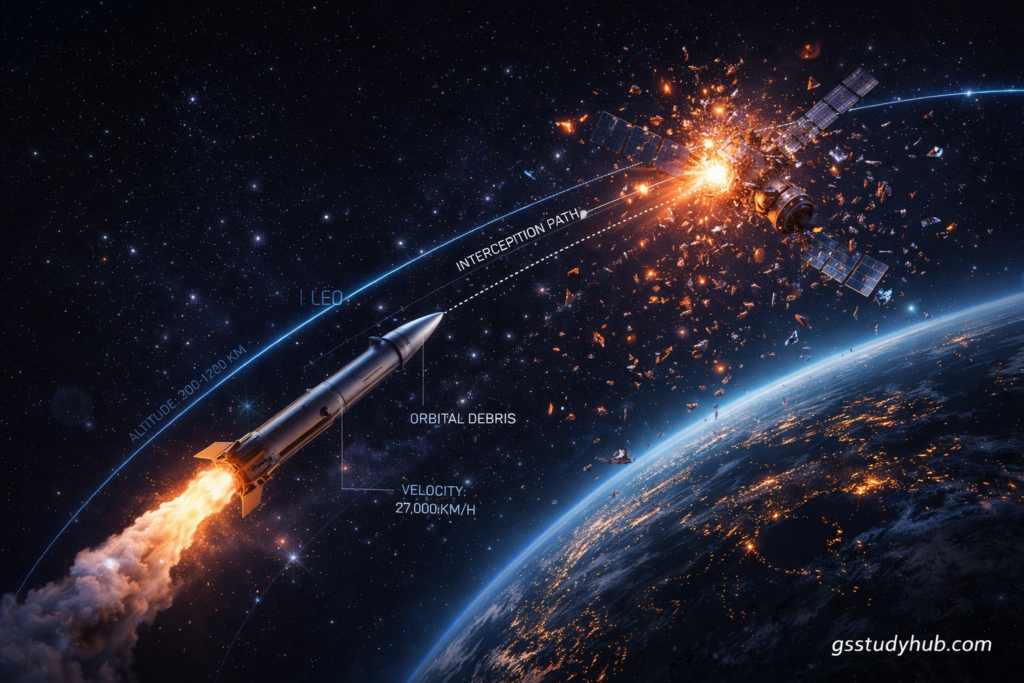
🌍 Global Context: Why Has Space Become a Battlefield?
In the 20th century, wars were fought on land, sea, and air. In the 21st century, a silent yet decisive frontier has emerged — outer space. What was once a symbol of scientific wonder and peaceful exploration is now evolving into a strategic arena of global power competition.
Space is no longer jUSt about exploration — it is about domination, deterrence, and defense.
🚀 1. Space Assets = Backbone of Modern Warfare
Modern warfare is powered not only by soldiers and weapons but by data, precision, and connectivity. All three are made possible by space-based infrastructure.
- 📡 Military commUNication satellites enable secure global coordination.
- 📍 GPS systems provide real-time troop positioning and missile guidance.
- 🛰️ Surveillance satellites offer high-resolution intelligence.
- ⚡ Early-warning satellites detect missile launches.
If these space assets are disrupted, modern armies become blind, deaf, and disconnected. This dependency makes space the strategic high ground of the 21st century.
In fact, many defense analysts argue that future wars may begin in orbit. The first strike might target satellites rather than tanks.
🔄 2. Dual-Use Technology: Civilian + Military Overlap
One of the biggest reasons space has become a battlefield is the rise of dual-use technology. These technologies serve both civilian and military purposes.
For example:
- 📱 GPS helps civilians navigate cities — but also guides precision missiles.
- 🌐 Satellite internet connects rural communities — but can support military communications.
- 🌦️ Weather satellites assist farmers — but also help plan military operations.
Because of this overlap, it becomes difficult to distinguish between civilian and military targets. Destroying a satellite might impact both defense operations and ordinary citizens.
This blurred boundary increases strategic uncertainty and raises ethical and legal challenges under international law.
💰 3. Space Economy and the Race for Dominance
The global space economy is expanding rapidly. From satellite manufacturing to space tourism, from asteroid mining concepts to mega-constellations for internet connectivity — space is now a multi-billion-dollar industry.
Countries view space dominance not just as a military necessity but as an economic imperative.
- 🌍 Control of satellite networks means control over global data flows.
- 📶 Broadband constellations influence digital connectivity worldwide.
- 🛰️ Launch capabilities reflect technological superiority.
Thus, space has become a domain where economic ambition meets strategic rivalry. Dominance in orbit enhances geopolitical influence on Earth.
whoever controls space infrastructure controls the arteries of the global economy.
🌠 4. The Threat of Kessler Syndrome
One of the gravest dangers of space militarization is the risk of Kessler Syndrome.
This theory suggests that if too many satellites are destroyed in orbit, the resulting debris could trigger a chain reaction of collisions. Each collision would create more debris, which would cause further collisions.
Eventually, entire orbital zones could become unusable for decades.
- 🛰️ Communication breakdown
- 🚀 Launch restrictions
- 🌍 Economic disruption
- 📡 Loss of navigation systems
Unlike traditional battlefields, damage in space can have long-term irreversible consequences. Debris travels at extremely high speeds, making even tiny fragments lethal.
A war in space could permanently damage humanity’s access to orbit.
⚖️ International Relations Perspective
From an International Relations standpoint, space has become a new dimension of power politics.
The absence of comprehensive and enforceable global treaties governing space weapons creates strategic ambiguity. While the Outer Space Treaty emphasizes peaceful use, it does not fully address modern military technologies.
This legal grey zone encourages states to develop deterrence capabilities in orbit.
Thus, space is increasingly seen as:
- ⚔️ A domain of deterrence
- 🌍 A platform for strategic signaling
- 📡 A symbol of technological supremacy
🛡️ Security Studies Dimension
Security experts now classify space as the fourth operational domain after land, sea, and air.
Future conflicts may include:
- 💻 Cyberattacks on satellite control systems
- 📡 Electronic jamming of signals
- 🚀 Anti-satellite missile strikes
- 🔦 Directed-energy weapons
This shifts the concept of security from territorial defense to infrastructure protection.
📌 Exam Angle (For Competitive Exams)
GS Paper 3 – Science & Technology:
Questions may focus on space technology, ASAT capabilities, satellite dependence, and space debris management.
International Relations:
Expect discussions on global treaties, power competition, and strategic deterrence in space.
Security Studies:
Space as a new warfare domain, hybrid warfare, and infrastructure vulnerability.
🌟 Conclusion
Space has become a battlefield not because humanity desired conflict there, but because modern civilization depends on it.
The higher the dependency, the greater the strategic competition.
In 2026 and beyond, the global balance of power will increasingly be determined not just by armies on Earth — but by satellites in orbit.
The future of security, economy, and geopolitics is being shaped above the sky.
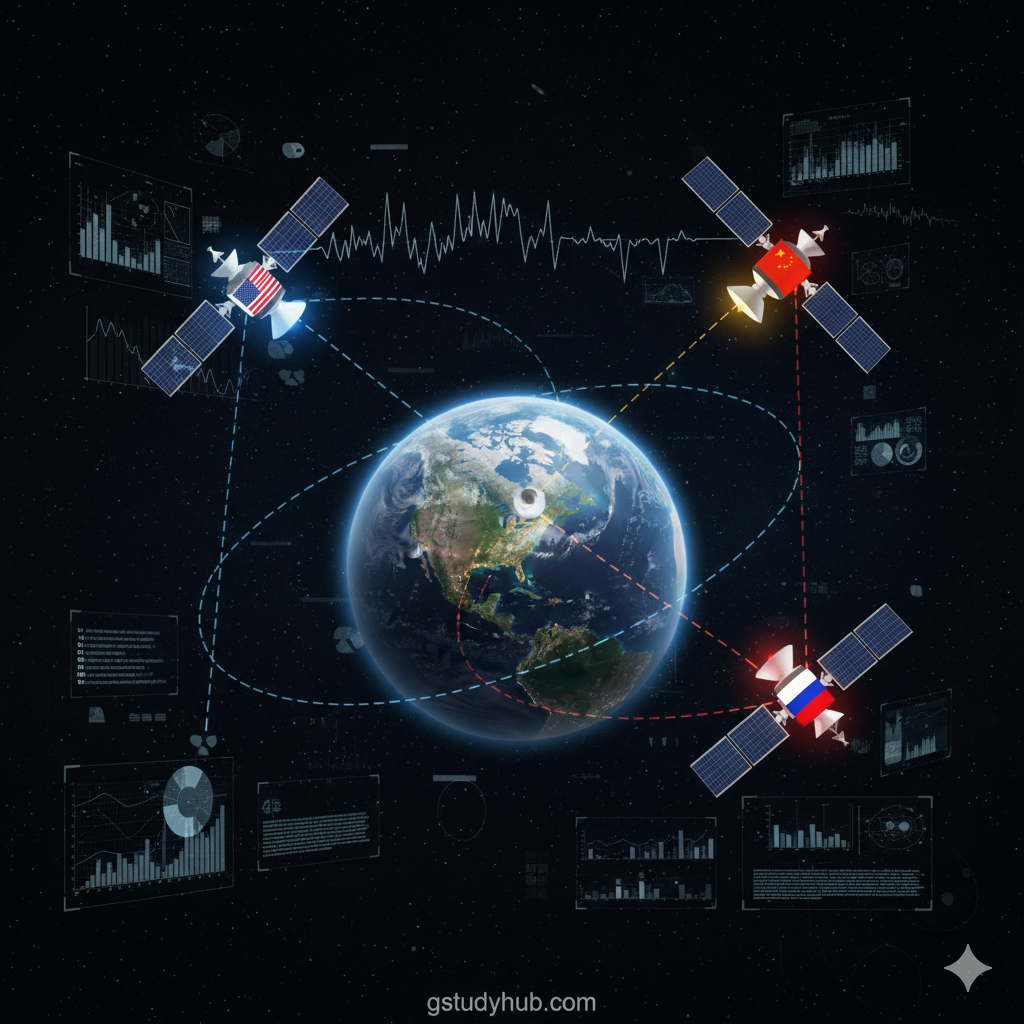
🇺🇸 US Space Force – america’s Grand Strategy for Space Superiority
In the 21st century, the concept of national power has expanded beyond land, sea, air, and cyberspace. A new frontier has emerged — vast, silent, and strategically decisive. In December 2019, the United States made a historic move by officially establishing the UNited States Space Force (USSF), marking the first new branch of the U.S. Armed Forces in over 70 years.
This was not symbolism. It was a declaration that space is now a warfighting domain.
🚀 स्थापना (Establishment) – 2019: A Historic Shift
The Space Force was officially established on December 20, 2019, under the U.S. Department of the Air Force. The decision reflected growing concerns about strategic competition in orbit, particularly with rising powers expanding their anti-satellite (ASAT) capabilities.
Before 2019, U.S. military space operations were handled by Air Force Space Command. However, the rapid militarization of space and the increasing dependency on orbital assets demanded a specialized, independent branch.
The creation of the Space Force signaled three clear realities:
- 🛰️ Space is a contested domain.
- ⚔️ Future conflicts may begin in orbit.
- 🌍 Orbital dominance equals strategic advantage on Earth.
🌌 Core Objective – Space Superiority
The central mission of the Space Force is simple yet profound: Space Superiority.
Space Superiority means ensuring that U.S. forces can operate freely in space while denying adversaries the same advantage. It is not merely about defense; it is about control, resilience, and deterrence.
Control the orbit, control the battlefield.
This objective includes:
- 📡 Protecting communication and GPS satellites
- 🛰️ Monitoring space traffic and debris
- 🚀 Launching resilient satellite constellations
- ⚡ Developing rapid response launch systems
Space superiority ensures uninterrupted intelligence, navigation, missile warning, and global command capabilities.
🛡️ Defensive vs Offensive Capabilities
The Space Force publicly emphasizes defensive operations. However, modern deterrence requires a credible mix of defensive and offensive capabilities.
🔵 Defensive Capabilities
- 🛰️ Hardened and encrypted satellite systems
- 📡 Electronic countermeasures against jamming
- 💻 Cybersecurity for satellite command networks
- 🚀 Rapid satellite replacement launches
🔴 Offensive / Counter-Space Capabilities
- ⚡ Electronic warfare systems to disrupt adversary satellites
- 🛰️ Co-orbital systems capable of close proximity operations
- 💻 Cyber tools targeting enemy space infrastructure
While the U.S. does not openly disclose all offensive tools, strategic analysts widely agree that deterrence requires the capability to respond in kind if orbital assets are threatened.
AI Arms Race: US-China Tech War & Global Power Shift💰 2026 Budget Expansion – Investing in Orbital Power
By 2026, the Space Force budget has significantly expanded compared to its initial years. The funding increase reflects growing geopolitical competition and the urgency to modernize space infrastructure.
Key budget priorities include:
- 🚀 Next-generation missile warning satellites
- 🌐 Proliferated low-earth orbit constellations
- ⚡ Advanced space domain awareness systems
- 🔐 AI-powered threat detection platforms
The 2026 expansion highlights a shift from large, vulnerable satellites to distributed, resilient networks designed to survive potential attacks.
🌏 Strategic Analysis – China & Russia Counter-Strategy
The creation and expansion of the Space Force cannot be analyzed in isolation. It is deeply connected to strategic competition with other major powers.
China’s Strategy:
China has developed advanced ASAT capabilities, electronic warfare systems, and space situational awareness networks. It emphasizes space deterrence as part of its military modernization.
Russia’s Strategy:
Russia has demonstrated kinetic and non-kinetic counter-space capabilities, including satellite inspection technologies and electronic jamming.
Thus, space has become a three-dimensional chessboard of strategic signaling.
Each power invests not only in capability but also in deterrence messaging — signaling readiness without triggering direct conflict.
🌍 NATO Space Doctrine – Collective Defense in Orbit
In 2019, NATO declared space as an operational domain. Since then, NATO’s evolving space doctrine has aligned closely with U.S. strategic thinking.
Under NATO’s framework:
- 🛰️ Space assets are critical to collective defense.
- ⚔️ An attack on space infrastructure may trigger Article 5 considerations.
- 🌐 Intelligence sharing enhances resilience.
The integration of NATO’s space policy with U.S. Space Force operations strengthens transatlantic deterrence in orbit.
⚡ Conclusion – America’s Orbital Doctrine
The United States Space Force represents more than a military reorganization. It embodies a strategic shift recognizing space as the ultimate high ground of modern geopolitics.
In 2026 and beyond, America’s security architecture increasingly depends on orbital resilience.
The next great power competition will not only be measured by armies and navies — but by who commands the silent highways of space.
Space Superiority is no longer optional. For the United States, it is a strategic necessity.
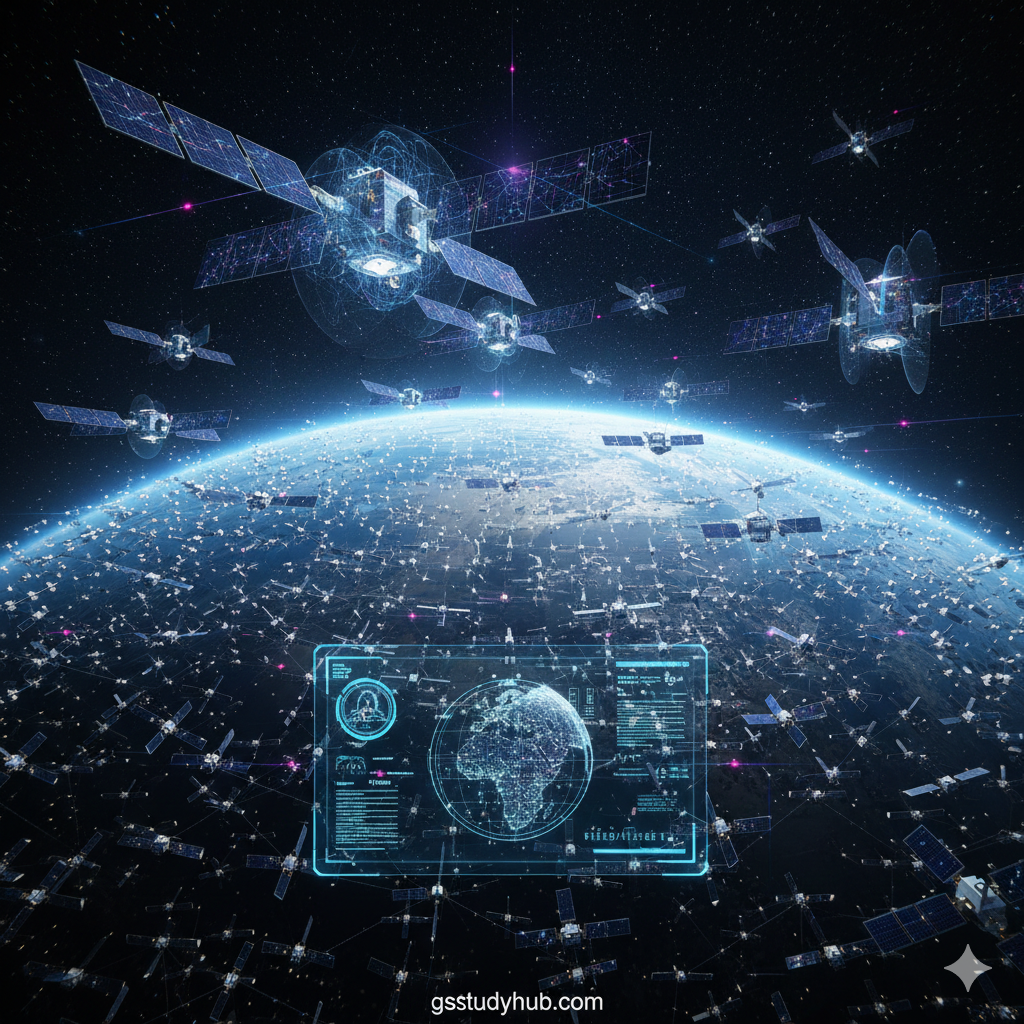
🚀 China–Russia Space Strategy: The Emerging Orbital Axis
In the rapidly transforming strategic landscape of the 21st century, space has evolved from a domain of scientific wonder into a theater of geopolitical competition. Among the most significant developments shaping this new reality is the deepening space cooperation between China and RUSsia. This partnership is not merely symbolic; it reflects a calculated response to perceived Western dominance in orbital capabilities.
If the Cold War defined terrestrial deterrence, the new era defines orbital deterrence.
🛰️ Strategic Convergence in Space
China and Russia share a common strategic objective: reducing U.S. dominance in space and creating a multipolar balance of power in orbit. Both nations have invested heavily in coUNter-space capabilities, advanced launch systems, satellite resilience, and integrated military doctrines.
Their cooperation extends beyond rhetoric. Joint space research initiatives, satellite navigation collaboration, and discussions around lunar research stations demonstrate long-term strategic alignment.
🚀 Direct-Ascent ASAT Tests
One of the most controversial aspects of China–Russia space strategy involves Direct-Ascent Anti-Satellite (ASAT) weapons.
A direct-ascent ASAT missile is launched from Earth to destroy a satellite in orbit. Both China and Russia have conducted such tests in the past, demonstrating their ability to target space-based assets.
- 🚀 Ground-launched missile interceptors
- 🛰️ Kinetic kill vehicles
- ⚡ Capability to disable critical communication satellites
These tests send a clear strategic signal: satellites are vulnerable. Since modern militaries depend heavily on orbital infrastructure, ASAT capabilities serve as powerful deterrent tools.
However, such tests also create dangerous orbital debris, increasing long-term risks for all spacefaring nations.
🌠 Co-Orbital Weapons – Silent Orbital Hunters
Unlike direct-ascent missiles, co-orbital weapons operate within space itself. These systems are launched into orbit and can maneuver close to other satellites.
Such proximity operations can serve peaceful inspection purposes — but they also possess military implications.
- 🛰️ Satellite “inspection” missions
- 🔄 Close-approach maneuvering capability
- ⚡ Potential to jam, disable, or physically damage rival satellites
China and Russia have both demonstrated sophisticated rendezvous and proximity operations. Strategically, these systems create uncertainty, as adversaries cannot easily distinguish between civilian and military intentions.
🔥 Hypersonic + Space Integration
Another critical dimension of China–Russia space strategy is the integration of hypersonic weapons with space-based systems.
Hypersonic glide vehicles travel at speeds exceeding Mach 5 and can maneuver unpredictably. When integrated with satellite-based guidance and early warning systems, they become extremely difficult to intercept.
- 🚀 Satellite-enabled targeting
- 📡 Space-based early warning systems
- ⚡ Faster strike capabilities with orbital data support
This fusion of space intelligence and hypersonic technology enhances strategic deterrence while challenging traditional missile defense architectures.
De-Dollarization 2026: Global Shift⚔️ US–China Tech Rivalry in Orbit
The China–Russia alignment cannot be separated from the broader U.S.–China technological rivalry. Competition spans satellite constellations, AI-enabled space systems, quantum communication, and launch technologies.
The rivalry is not limited to military capability. It also involves:
- 🌐 Satellite internet mega-constellations
- 🔐 Secure space communication networks
- 🤖 AI-powered space situational awareness
This competition reflects a deeper struggle for technological supremacy and geopolitical influence in the 21st century.
📌 UPSC Link – India’s Strategic Perspective
🇮🇳 India–China Border & Space Intelligence
For India, the China–Russia space strategy has direct security implications. Satellite intelligence plays a vital role in monitoring border activities, troop movements, and infrastructure development along the India–China boundary.
Space-based surveillance enhances early warning capabilities and strategic awareness. Therefore, developments in Chinese space military capabilities directly influence India’s defense planning.
🌍 BRICS Strategic Dimension
Within the BRICS framework, China and Russia promote multipolarity and alternative global governance models. Space cooperation among BRICS nations could reshape technological partnerships and reduce dependence on Western systems.
For UPSC aspirants, this topic connects to:
- GS Paper 2 – International Relations
- GS Paper 3 – Science & Technology
- Security & Strategic Studies
🌌 Conclusion – The Orbital Axis of Power
The China–Russia space strategy represents more than military modernization. It symbolizes the emergence of a coordinated approach to challenge U.S.-led dominance in orbit.
Space is becoming the ultimate high ground of multipolar geopolitics.
From direct-ascent ASAT tests to hypersonic integration, the evolving partnership reflects a calculated strategy of deterrence, resilience, and technological assertion.
In the new great power competition, control of orbit may determine influence on Earth.
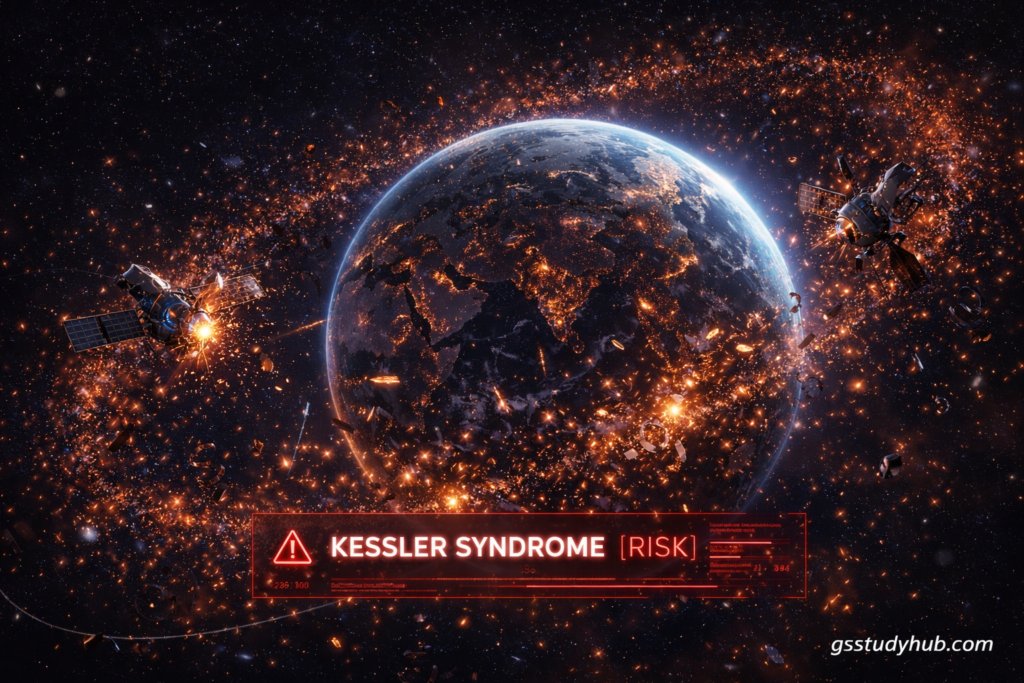
🛰️ Anti-Satellite Weapons (ASAT) – The Deep Technology Behind Orbital Warfare
In the modern strategic environment, satellites are no longer passive instruments floating peacefully in orbit. They are the invisible nervoUS system of global civilization — enabling commUNication, navigation, surveillance, banking, weather forecasting, and military coordination. Because of this dependence, Anti-Satellite Weapons (ASAT) have emerged as one of the most critical and controversial technologies of 21st-century warfare.
Disable the satellite, and you disable the system.
ASAT weapons are designed to disrupt, damage, or destroy satellites in orbit. These systems vary widely in technology, ranging from direct kinetic destruction to invisible cyber infiltration. Understanding their technical depth requires exploring physics, orbital mechanics, and electronic warfare principles.
🚀 1. Kinetic Kill Vehicles (KKVs)
Kinetic Kill Vehicles represent the most dramatic and physically destructive form of ASAT technology. These systems rely purely on velocity and impact energy — not explosives — to destroy a satellite.
The principle is simple but technologically complex:
- 🚀 A missile is launched from Earth.
- 🛰️ It tracks a satellite traveling at ~7–8 km per second in Low Earth Orbit (LEO).
- ⚡ The kill vehicle collides with the satellite at extremely high velocity.
At such speeds, even a small object carries massive kinetic energy. The collision vaporizes or fragments the satellite instantly. No warhead is required — physics does the damage.
However, the destruction generates thousands of debris fragments, posing long-term orbital hazards.
Taiwan Strait Crisis 2026: Next Ukraine?🔦 2. Directed Energy Weapons (Laser Systems)
Directed Energy Weapons use concentrated beams of electromagnetic energy — typically high-powered lasers — to damage or disrupt satellite components.
Instead of physically colliding with the satellite, these systems aim to:
- 🔦 Blind optical sensors
- 🌡️ Overheat solar panels
- 📡 Damage communication receivers
Laser ASAT systems are often considered “non-kinetic” because they may not produce visible debris. However, they can silently degrade a satellite’s capability without creating a debris cloud.
Technically, achieving accurate laser targeting requires:
- 🎯 Precise tracking systems
- 🌌 Adaptive optics to compensate for atmospheric distortion
- ⚡ Extremely high energy output
This makes laser ASAT a sophisticated fusion of optics, power engineering, and space tracking technology.
📡 3. Electronic Jamming
Electronic jamming is a subtler but highly effective form of anti-satellite capability. Instead of destroying the satellite, it disrupts communication between the satellite and ground stations.
Satellites transmit and receive signals on specific radio frequencies. By broadcasting powerful interference signals on the same frequency, a jammer can:
- 📵 Block GPS signals
- 📡 Interrupt military communications
- 🛰️ Disrupt data transmission
Electronic warfare does not create debris or visible destruction, but it can cripple operations instantly.
💻 4. Cyber Attacks on Satellites
Modern satellites are controlled by complex software systems and ground-based command networks. Cyber attacks target these digital vulnerabilities.
Potential cyber strategies include:
- 🔐 Hacking ground control stations
- 🛰️ Injecting malicious code into satellite firmware
- 📡 Spoofing GPS signals
Unlike kinetic attacks, cyber intrusions can remain undetected for extended periods, subtly altering data or degrading system reliability.
📌 Technical Explanation Section
🌍 LEO vs GEO Vulnerability
Satellites operate in different orbital regimes:
- Low Earth Orbit (LEO): 160–2,000 km altitude
- Geostationary Orbit (GEO): ~35,786 km altitude
LEO Satellites:
Travel at extremely high speeds (~7.8 km/s). They are closer to Earth, making them easier targets for direct-ascent ASAT missiles. However, they are often part of distributed constellations, increasing resilience.
GEO Satellites:
Remain fixed relative to Earth’s rotation. They are much farther away, making kinetic interception more challenging. However, they are fewer in number and often carry high-value communication payloads — making them strategically critical.
Thus, vulnerability depends on altitude, speed, and mission importance.
🌀 Orbital Mechanics – The Basics
Orbital mechanics is governed by gravitational physics and velocity. Satellites remain in orbit because their forward speed balances Earth’s gravitational pull.
Key principles:
- ⚖️ Higher altitude = lower orbital speed
- 🚀 Lower altitude = higher orbital velocity
- 🔄 Any impact changes trajectory unpredictably
Intercepting a satellite requires solving complex real-time calculations of trajectory, speed, and interception window.
🌠 Space Debris Impact
One of the most severe consequences of kinetic ASAT use is the creation of space debris. Even a small fragment traveling at orbital velocity carries enormous destructive energy.
- 🛰️ Damage to operational satellites
- 🚀 Threat to future space launches
- 🌍 Risk of cascading collision effects
If debris density increases significantly, it could trigger a chain reaction of collisions — severely restricting humanity’s access to space.
⚡ Conclusion
Anti-Satellite Weapons represent the intersection of physics, cyber technology, electronic warfare, and strategic doctrine.
The battlefield of the future may begin with invisible signals — not visible explosions.
Understanding ASAT technology is essential for grasping the evolving nature of global security. In the age of orbital dependence, space superiority and space security are no longer optional — they are central pillars of national power.
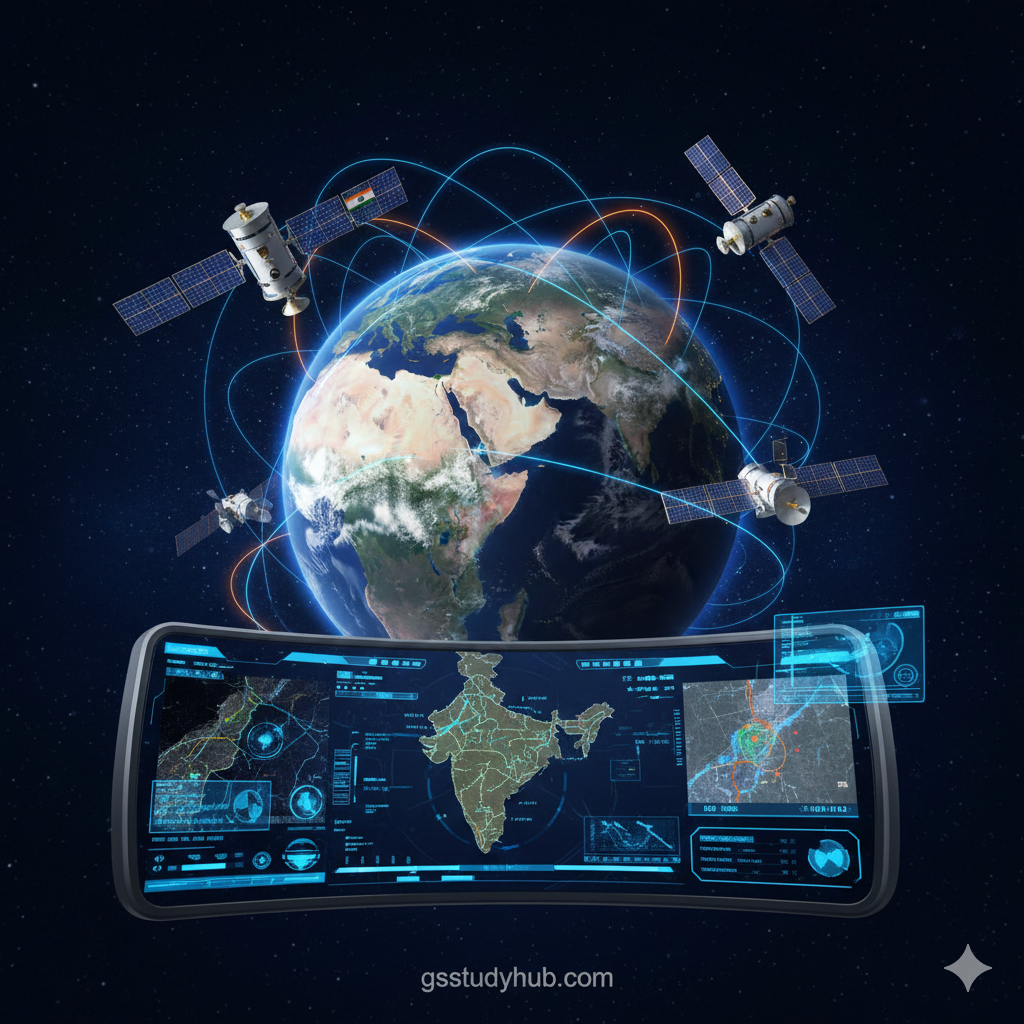
🇮🇳 India’s Position – क्या भारत तैयार है?
As the great powers race to dominate the silent highways of space, a crucial question emerges for India: Is Bharat ready for the new orbital era? Space is no longer a purely scientific playgroUNd. It is now a strategic domain where technological capability, national security, and diplomatic influence converge.
In the 21st century, space power equals strategic power.
🚀 ISRO – From Peaceful Exploration to Strategic Backbone
The Indian Space Research Organisation (ISRO) has long been a symbol of India’s scientific excellence. From launching cost-effective satellites to successful interplanetary missions, ISRO has built a global reputation for reliability and innovation.
However, beyond exploration and communication, ISRO’s satellite network forms the backbone of India’s strategic infrastructure:
- 🛰️ Navigation through NavIC system
- 📡 Secure communication satellites
- 🌍 Earth observation for border surveillance
- 🌦️ Weather monitoring & disaster management
These assets support both civilian development and national security, placing India firmly in the category of space-capable powers.
🛡️ Defence Space Agency – Military Dimension
Recognizing the growing importance of space security, India established the Defence Space Agency (DSA) in 2019. This tri-service organization integrates space capabilities across the Army, Navy, and Air Force.
The DSA coordinates:
- 📡 Military satellite operations
- 🛰️ Space situational awareness
- ⚔️ Counter-space preparedness
There are ongoing discUSsions about upgrading the DSA into a full-fledged Defence Space Command, reflecting India’s recognition that space is a warfighting domain.
🚀 Mission Shakti (2019) – A Strategic Milestone
On March 27, 2019, India successfully conducted Mission Shakti, demonstrating its Anti-Satellite (ASAT) capability. The test involved intercepting a satellite in Low Earth Orbit using a ground-based missile system.
With this achievement, India joined an exclusive group of nations possessing demonstrated ASAT capability.
Mission Shakti was not about aggression — it was about deterrence.
The message was clear: India has the technological depth to defend its space assets if threatened.
🐉 The China Factor
China’s rapid advancement in space militarization significantly influences India’s strategic calculations. From ASAT tests to advanced surveillance constellations, China has integrated space capabilities into its military doctrine.
For India, space intelligence is particularly vital along the India–China border:
- 🛰️ Monitoring troop movements
- 🏔️ Tracking infrastructure buildup
- 📡 Enhancing real-time surveillance
Thus, space capability strengthens India’s border security posture and strategic awareness.
🌍 Space Diplomacy – India’s Soft Power Strategy
Unlike purely militaristic approaches, India balances hard power with diplomacy. Through satellite launches for developing nations and regional cooperation initiatives, India projects itself as a responsible space power.
India’s participation in global discussions on space debris mitigation and peaceful use strengthens its diplomatic credibility.
Strategic restraint + technological capability = credible deterrence.
📌 Exam Link – UPSC Perspective
🔰 Atmanirbhar Bharat in Defence
India’s push for indigenous missile systems, satellite manufacturing, and launch vehicles aligns with the vision of Atmanirbhar Bharat. Developing domestic space-defense capabilities reduces reliance on foreign technology and enhances strategic autonomy.
🤝 India–US Space Cooperation
India’s growing cooperation with the United States in space situational awareness, satellite data sharing, and defense technology reflects deepening strategic ties.
Such cooperation strengthens India’s deterrence posture while preserving independent decision-making.
⚡ Conclusion – Is India Ready?
India stands at a strategic crossroads. With ISRO’s technological excellence, Mission Shakti’s deterrent signal, and the operational framework of the Defence Space Agency, India has laid a strong foundation.
Prepared? Yes. Fully secure? A work in progress.
To remain competitive in the evolving space domain, India must continue investing in resilience, innovation, and strategic partnerships. The future battlefield may be silent and orbital — and Bharat must ensure its satellites shine securely in that vast sky.
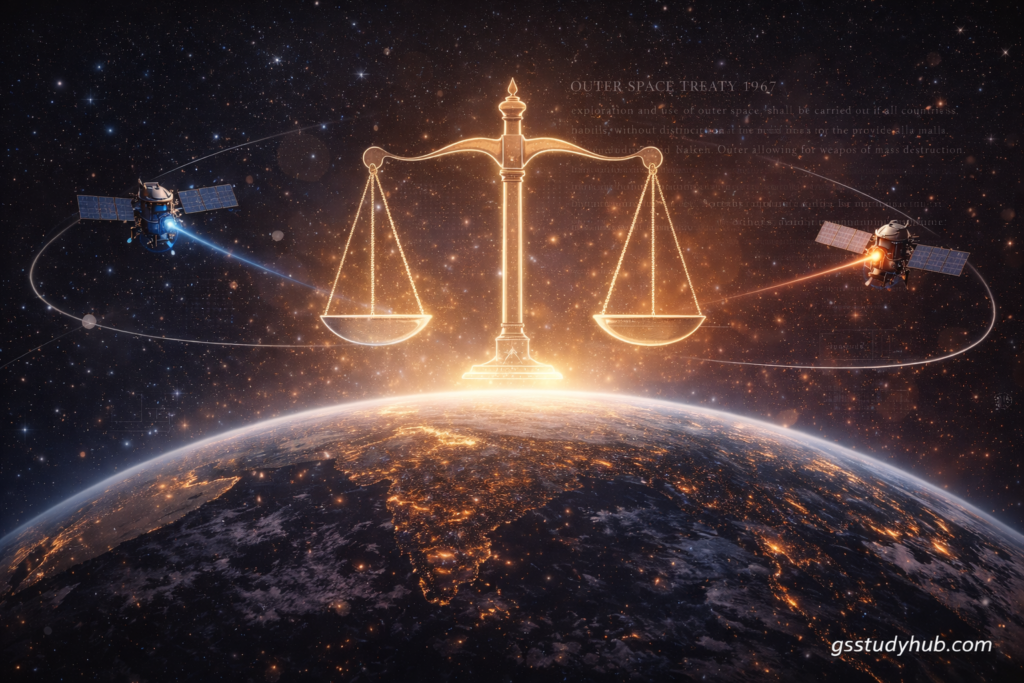
🌍 international law & Space governance – Law Above the Sky
When humanity first looked toward the stars, it saw opportUNity, wonder, and infinite possibility. But as technology advanced and satellites became the backbone of global civilization, space slowly transformed from a realm of exploration into a domain of strategic competition. This transformation created an urgent question for international law: who governs space, and how?
If war moves to orbit, can law follow it?
🚀 The Outer Space Treaty (1967) – Foundation of Space Law
The cornerstone of international space governance is the Outer Space Treaty (1967). Drafted during the Cold War, it sought to prevent the extension of nuclear rivalry into orbit.
Its core principles include:
- 🌌 Space shall be USed for peaceful purposes.
- 🌍 No nation can claim sovereignty over celestial bodies.
- ☢️ No placement of weapons of mass destruction (WMDs) in orbit.
- 🤝 International responsibility for national space activities.
At its heart, the treaty reflects a noble ambition — to ensure that outer space remains the “province of all mankind.” It prevented the deployment of nuclear weapons in space and reduced the risk of catastrophic escalation during the Cold War.
However, the treaty was written in 1967 — long before cyber warfare, ASAT missiles, or mega-constellations existed.
☢️ No Weapons of Mass Destruction in Space
One of the treaty’s most important clauses prohibits placing nuclear weapons or other weapons of mass destruction in orbit. This clause was revolutionary at the time.
Why was this crucial?
- ⚡ Prevented nuclear missiles stationed permanently above Earth.
- 🌍 Reduced the risk of global annihilation from orbital platforms.
- 🕊️ Reinforced the idea of space as a peaceful frontier.
But the treaty does not ban conventional weapons, anti-satellite systems, or electronic warfare tools. This gap creates a significant legal grey area.
⚖️ Legal Grey Areas – The Shadows of Space Law
Modern space conflict does not necessarily involve nuclear bombs. It involves cyberattacks, signal jamming, kinetic ASAT strikes, and directed energy systems. The Outer Space Treaty does not explicitly address these technologies.
For example:
- 🛰️ Is disabling a satellite an act of war?
- 💻 Are cyberattacks on space systems covered by existing treaties?
- 🌠 Who is liable for debris created by ASAT tests?
These unanswered questions create ambiguity. In international relations, ambiguity can either prevent escalation — or encourage strategic risk-taking.
Space law is struggling to keep pace with space technology.
⚔️ Arms Race vs Arms Control
The world now stands at a crossroads between two competing pathways:
Arctic Geopolitics & Energy War🔴 The Arms Race Path
- 🚀 Development of ASAT weapons
- 🔦 Deployment of directed-energy systems
- 🛰️ Militarization of satellite constellations
- ⚡ Hypersonic-space integration
An unchecked arms race in space could increase mistrust, raise debris risks, and destabilize global security.
🔵 The Arms Control Path
- 🤝 Confidence-building measures
- 📡 transparency in satellite launches
- 🌍 International debris mitigation norms
- ⚖️ New legally binding agreements
Arms control does not mean eliminating all military capability. It means establishing rules to prevent catastrophic escalation.
📌 Essay Angle: “Should Space be Weaponized?”
This question strikes at the moral and strategic core of modern geopolitics.
🌍 Argument Against Weaponization
- 🕊️ Space is a shared global commons.
- 🌠 Debris risks threaten all nations equally.
- ⚡ Escalation in orbit could destabilize Earth.
- 🤝 International cooperation is essential for scientific progress.
Weaponizing space could transform it into a permanent battlefield, undermining decades of peaceful exploration.
⚔️ Argument Supporting Defensive Weaponization
- 🛰️ Satellites are critical infrastructure.
- 🛡️ Nations have the right to self-defense.
- ⚖️ Deterrence may prevent aggression.
- 🌍 Absence of preparedness invites vulnerability.
From this perspective, limited defensive capabilities are necessary to ensure national security.
🌌 The Future of Space Governance
As space becomes increasingly crowded with satellites, commercial actors, and military systems, governance must evolve. The future may require:
- 🌐 Updated multilateral treaties
- 📡 Real-time space traffic management systems
- ⚖️ Clear legal definitions of hostile acts in orbit
- 🤝 Greater cooperation among major powers
Without proactive governance, competition may spiral into confrontation.
🌟 Conclusion – Law Above the Sky
The Outer Space Treaty laid a visionary foundation in 1967. It kept nuclear weapons out of orbit and preserved space as a cooperative frontier during the Cold War.
But today’s challenges demand new answers.
The debate over weaponization is not simply legal — it is ethical, strategic, and existential. Space connects every smartphone, every aircraft, every financial system. Its militarization affects all humanity.
The ultimate question remains: Will space become the next battlefield — or remain the shared horizon of mankind?
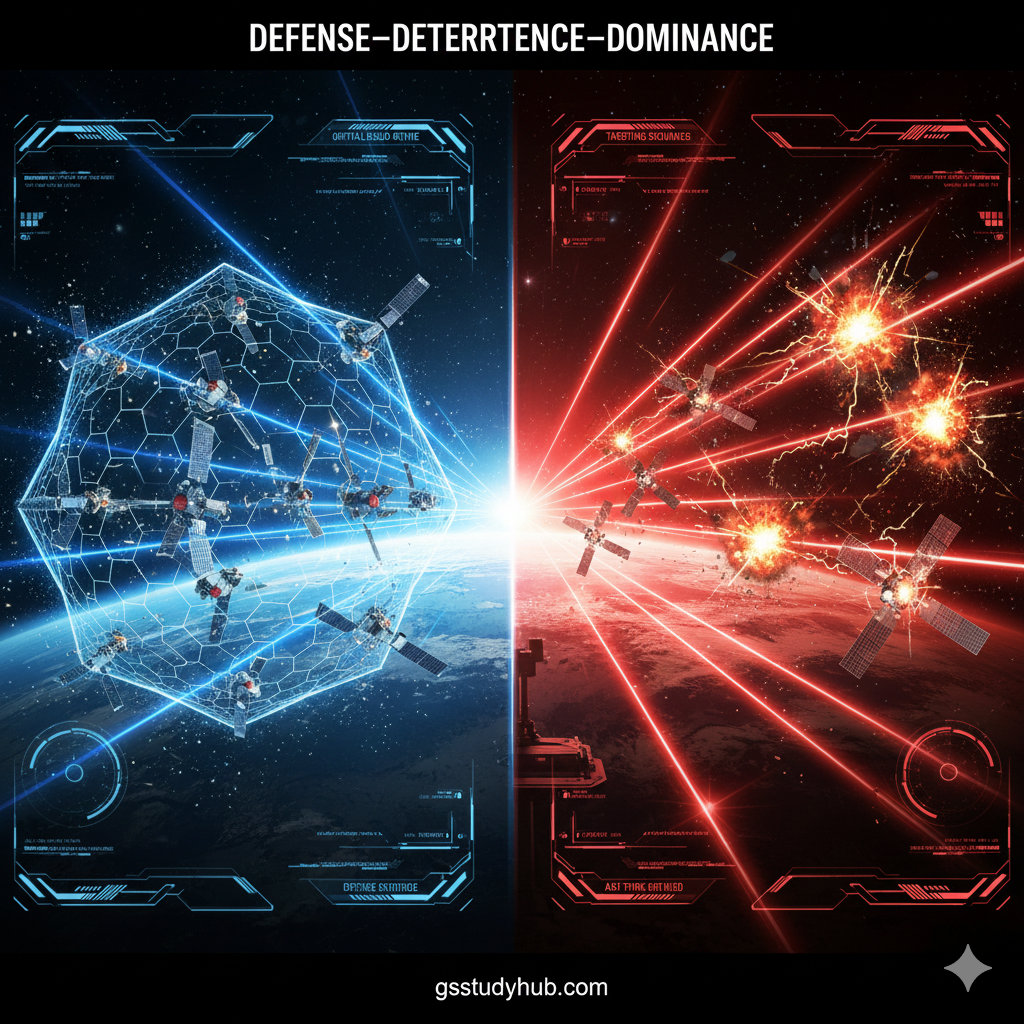
🚀 2026–2035: Future Trends in Space Warfare & Orbital Power
The decade between 2026 and 2035 is poised to redefine the very architecture of global security. Space, once a distant scientific frontier, is rapidly transforming into the most technologically advanced and strategically decisive domain of warfare. The next ten years will not merely witness incremental improvements — they will see a paradigm shift driven by Artificial Intelligence, missile defense innovation, and the growing influence of private space corporations.
The battlefield of the future will not only be digital — it will be orbital.
🤖 AI-Powered Satellite Warfare
Artificial Intelligence is set to become the nervoUS system of future space operations. Between 2026 and 2035, satellites will increasingly rely on AI-driven algorithms for autonomous decision-making, threat detection, and real-time maneuvering.
UNlike traditional satellites that depend heavily on ground-based control stations, AI-enabled satellites can:
- 🛰️ Detect incoming threats automatically
- 🔄 Adjust orbital paths to avoid collision or attack
- 📡 Reconfigure communication networks in milliseconds
- ⚡ Process battlefield intelligence in real-time
Machine learning systems will analyze vast streams of orbital data, identifying anomalies that could signal cyber intrusions, jamming attempts, or hostile proximity maneuvers.
In the coming decade, satellites may not just transmit information — they may think.
AI will also enhance Space Domain Awareness (SDA), allowing faster identification of debris, co-orbital threats, and unusual spacecraft behavior. However, this automation raises strategic risks. Autonomous systems could misinterpret signals, escalating tensions without direct human intervention.
Cyber and Hybrid Warfare in 21st Century🛡️ Space-Based Missile Defense
Missile defense systems have traditionally relied on ground-based radars and interceptors. However, the next generation of missile defense is expected to shift partially into orbit.
Between 2026 and 2035, space-based missile defense could involve:
- 🚀 Orbital sensors tracking hypersonic glide vehicles
- 🌍 Satellite constellations providing global missile warning coverage
- 🔦 Directed-energy platforms in space
- ⚡ Faster interception response times
Hypersonic weapons travel at extreme speeds and maneuver unpredictably, making them difficult to detect using traditional radar systems. Space-based infrared sensors can detect missile launches during their boost phase, providing critical early warning.
However, deploying defensive systems in orbit blurs the line between defense and weaponization. An orbital interceptor designed to neutralize incoming missiles could also target satellites.
In orbit, the difference between shield and sword can be dangerously thin.
🌐 Commercial Satellites in War
One of the most transformative trends of the next decade will be the growing role of commercial satellites in military operations.
Private satellite constellations provide:
- 📡 High-speed broadband connectivity
- 🛰️ High-resolution Earth imagery
- 🌍 Real-time global coverage
- 📊 Data analytics and AI-driven insights
In recent conflicts, commercial satellite imagery has played a major role in intelligence gathering and battlefield transparency. From troop movement analysis to infrastructure monitoring, civilian systems now support military awareness.
Between 2026 and 2035, governments may increasingly integrate commercial satellite networks into defense architecture. This integration improves resilience but also creates new vulnerabilities.
If civilian satellites become military assets, do they become legitimate targets?
🚀 Private Companies & Mega-Constellations (Starlink-Type Systems)
The rise of private space corporations marks a historic shift in power dynamics. Mega-constellations — thousands of interconnected satellites in Low Earth Orbit — are redefining global connectivity.
Starlink-type systems demonstrate how private companies can:
- 🌐 Provide resilient battlefield internet access
- 🛰️ Maintain distributed satellite networks
- ⚡ Rapidly deploy communication terminals
- 🌍 Offer independent intelligence capabilities
These constellations operate in LEO, making them more numerous and harder to disable completely. Even if some satellites are destroyed, the network can continue functioning.
However, private involvement raises profound governance questions:
- ⚖️ who controls operational decisions during war?
- 🏛️ Can governments compel private networks to comply?
- 🌍 Do these companies become geopolitical actors?
Between 2026 and 2035, private corporations may evolve into critical strategic stakeholders — blurring the boundaries between public authority and corporate influence.
🌠 Broader Strategic Implications
The convergence of AI, missile defense, and commercial networks will shape a new strategic environment characterized by:
- ⚡ Faster decision cycles
- 🛰️ Greater orbital congestion
- 🌍 Increased dependency on space infrastructure
- 🤖 Reduced human intervention in crisis moments
At the same time, the risk of miscalculation will grow. Autonomous AI systems might interpret technical anomalies as hostile actions. Commercial satellites might be targeted unintentionally. Orbital debris could multiply due to intensified competition.
The decade ahead will test whether humanity can manage technological acceleration without triggering orbital instability.
🌍 Conclusion – The Orbital Decade
From 2026 to 2035, space will no longer be a secondary theater of strategic affairs. It will be central to deterrence, defense, and diplomacy.
AI will power satellites. Orbital sensors will track hypersonic threats. Commercial networks will influence military outcomes. Private companies will stand beside nation-states.
The future of war will not begin on the ground — it will begin above the sky.
The critical question remains: will technological innovation in orbit enhance global stability — or accelerate a new and unpredictable Arms Race?
🌍 Strategic Analysis Section – The 3-D Framework of Space Power
In the evolving landscape of 21st-century geopolitics, space is no longer a passive arena of exploration. It is a dynamic, competitive, and technologically charged strategic domain. Nations today evaluate their space posture not only through scientific achievements but through a powerful triad of strategic thinking — Defense, Deterrence, and Dominance.
The future of global power will be shaped by how effectively nations balance these three dimensions.
🛡️ 1. Defense – Protecting the Orbital Lifeline
Defense is the foUNdational layer of space strategy. Modern societies rely heavily on satellites for communication, navigation, surveillance, banking, weather forecasting, and national security. Protecting these assets is not optional — it is essential.
A strong defensive posture in space includes:
- 🛰️ Hardened and encrypted satellite systems
- 🔐 Cybersecurity for ground control networks
- 📡 Anti-jamming communication technology
- 🚀 Rapid satellite replacement capability
Defensive resilience ensures that even if some assets are attacked or disrupted, the overall system continues functioning. Distributed satellite constellations in Low Earth Orbit (LEO) represent this philosophy — instead of relying on a few large satellites, nations deploy hundreds of smaller interconnected ones.
Defense is about survival, continuity, and resilience.
⚔️ 2. Deterrence – Preventing Conflict Through Capability
Deterrence is the strategic art of preventing aggression by demonstrating credible response capability. In the space domain, deterrence does not necessarily mean weaponizing orbit aggressively; rather, it means possessing sufficient technological capability to discourage adversaries from hostile actions.
Space deterrence operates through:
- 🚀 Demonstrated ASAT capability
- 🌐 Advanced surveillance networks
- ⚡ Rapid response launch systems
- 🤖 AI-driven threat detection
The logic mirrors nuclear deterrence theory: if an adversary knows retaliation is possible, they may refrain from initiating conflict.
Deterrence in space is about signaling strength without triggering escalation.
👑 3. Dominance – Commanding the Orbital High Ground
Dominance represents the most ambitioUS dimension of the 3-D framework. It implies the ability not only to defend and deter but to shape the strategic environment proactively.
Space dominance may include:
- 🌍 Global satellite coverage
- 🛰️ Superior space situational awareness
- 📡 Advanced missile warning systems
- 🚀 Leadership in launch technology
Dominance does not always mean conflict; it often translates into influence. A nation with superior orbital infrastructure can shape global connectivity, data flow, and economic networks.
who controls the orbital highways controls the digital arteries of the world.
📊 SWOT Analysis – Space Strategy Evaluation
To fully understand the strategic implications of the 3-D framework, we apply the SWOT model — examining Strengths, Weaknesses, Opportunities, and Threats in the space domain.
| Strength | Weakness | Opportunity | Threat |
|---|---|---|---|
|
🛰️ Advanced satellite constellations 🤖 AI-enabled systems 🚀 Strong launch capability 📡 Integrated defense networks |
💰 High development cost 🔐 Cyber vulnerabilities 🌠 Space debris risk ⚖️ Legal ambiguity |
🌍 Commercial partnerships 📈 Expanding space economy 🤝 International cooperation 🔬 Technological innovation |
⚔️ ASAT escalation 🚀 Hypersonic integration 🌌 Orbital congestion 🌍 Geopolitical rivalry |
🌠 Integrating the 3-D Framework
A successful space strategy must balance all three dimensions:
- Defense ensures survival.
- Deterrence ensures stability.
- Dominance ensures influence.
Excessive focus on dominance without strong defensive foundations may provoke Arms Races. Overemphasis on deterrence without diplomatic engagement may escalate mistrust. Ignoring dominance could reduce strategic leverage.
The art of orbital strategy lies in equilibrium.
🌍 Conclusion – The High Value Insight
The 3-D framework of Defense, Deterrence, and Dominance offers a powerful analytical lens to understand future space geopolitics. As satellites multiply and technology accelerates, strategic clarity becomes indispensable.
In the coming decade, nations that master resilience, project credible deterrence, and cultivate responsible dominance will define the balance of power — not just on Earth, but above it.
Space is no longer distant. It is decisive. And strategy, more than ever, must rise to the altitude of ambition.
🌌 ConclUSion – The Final Frontier of Power
As we stand at the crossroads of technological transformation and geopolitical recalibration, one truth shines brighter than any satellite orbiting above us — space is the next strategic high groUNd. What began as a symbol of human curiosity has evolved into the backbone of global power architecture. Communication, navigation, surveillance, finance, disaster management, and modern warfare — all flow through the silent corridors of orbit.
The 21st century will not only be shaped on land and sea — it will be shaped above the sky.
🚀 Space = The Next Strategic High Ground
Historically, whoever controlled the high ground held a decisive military advantage. In medieval warfare, it was the hilltop fortress. In the 20th century, it was air superiority. Today, it is orbital dominance.
Satellites act as the nervous system of modern civilization:
- 🛰️ They guide aircraft and ships.
- 📡 They power internet and global communication.
- 🌍 They monitor climate and disasters.
- ⚔️ They enable precision military operations.
Control over space assets translates into control over information, speed, and precision — the three pillars of modern power.
In the age of digital warfare, altitude equals advantage.
⚖️ Cooperation vs Conflict – The Defining Choice
Yet, the rise of space as a strategic domain presents humanity with a profound dilemma: Will space become a theatre of cooperation — or a battlefield of conflict?
🌍 The Path of Cooperation
- 🤝 Joint space missions and shared research.
- 📜 Strengthened international treaties.
- 🌠 Debris mitigation and orbital sustainability.
- 🌐 Shared satellite data for global development.
Cooperation preserves space as a global commons — a shared heritage of humankind.
⚔️ The Path of Conflict
- 🚀 Anti-satellite weapon deployment.
- 🔦 Directed energy systems in orbit.
- 💻 cyber warfare targeting satellites.
- 🌌 Escalating strategic mistrust.
An uncontrolled Arms Race in space could destabilize not only orbital infrastructure but global peace itself. Debris from kinetic conflicts could linger for decades, threatening all nations equally.
The choice between cooperation and confrontation will define the future of space governance.
🇮🇳 India’s Balanced Approach
Amid this evolving landscape, India presents a model of strategic balance. India recognizes the necessity of preparedness without abandoning the principles of peaceful coexistence.
India’s approach combines:
- 🛰️ Indigenous satellite capability.
- 🚀 Demonstrated deterrence (Mission Shakti).
- 🤝 Space diplomacy with developing nations.
- 📜 Support for responsible space governance.
Rather than pursuing aggressive dominance, India emphasizes credible deterrence + diplomatic engagement. This balanced posture enhances security while preserving moral leadership in global forums.
Prepared yet prudent. Capable yet cautious.
🌠 The Grand Strategic Reality
Between 2026 and 2035, technological acceleration will intensify orbital competition. AI-powered satellites, space-based missile defense, commercial mega-constellations, and hypersonic integration will redefine deterrence structures.
Nations that fail to invest in orbital resilience may find themselves strategically disadvantaged. Yet, those who weaponize space recklessly risk long-term instability.
Power in the future will not be measured only by armies — but by orbital architecture.
🌍 Final Words – The Ultimate Equation
Space is not merely an extension of geography — it is an extension of strategy. The satellites orbiting silently above us form the invisible web that binds the global economy, military readiness, and digital civilization.
“Who controls Space, controls the Future.”
This statement is not a slogan — it is a strategic forecast. The next era of global leadership will be determined not just by territorial control, but by orbital vision, technological mastery, and diplomatic wisdom.
The sky is no longer the limit. It is the arena.
And humanity now faces a defining question — Will space unite us in exploration, or divide us in rivalry?
🚀 Space Militarization 2026 – Frequently Asked Questions (FAQ)
As space transforms into the newest arena of geopolitical rivalry, curiosity and concern naturally rise. What does “space militarization” truly mean? Is war in space inevitable? How does it affect ordinary citizens? This FAQ section answers the most important questions in a clear, exam-friendly, and strategically insightful way.
UNderstanding space militarization today means understanding the future of global power.
❓ 1. What is Space Militarization?
Space militarization refers to the development and deployment of military capabilities in outer space. This includes satellite-based surveillance, communication systems, missile warning networks, and anti-satellite (ASAT) weapons.
It does not necessarily mean placing nuclear weapons in orbit. Instead, it primarily involves strengthening strategic infrastructure in space for defense and deterrence.
❓ 2. Why is 2026 considered a turning point?
The period around 2026 marks intensified global competition in space. Major powers are:
- 🚀 Expanding satellite constellations
- 🤖 Integrating AI into space systems
- 🛰️ Enhancing space situational awareness
- ⚔️ Demonstrating counter-space capabilities
Technological acceleration + geopolitical rivalry = heightened orbital competition.
❓ 3. Which countries are leading the space militarization race?
The primary players include:
- 🇺🇸 United States
- 🇨🇳 China
- 🇷🇺 Russia
- 🇮🇳 India (emerging capability)
These nations invest heavily in satellite networks, missile defense, and anti-satellite technology.
❓ 4. What are Anti-Satellite (ASAT) weapons?
ASAT weapons are systems designed to disrupt, damage, or destroy satellites. They include:
- 🚀 Kinetic kill vehicles
- 🔦 Directed energy lasers
- 📡 Electronic jamming systems
- 💻 Cyber attacks
These tools aim to neutralize critical space assets without necessarily deploying nuclear weapons.
❓ 5. Is space warfare legal under international law?
The Outer Space Treaty (1967) prohibits placing weapons of mass destruction in space. However, it does not fully ban conventional counter-space systems.
This creates legal grey areas, especially regarding cyber attacks, electronic warfare, and ASAT tests.
❓ 6. How does space militarization affect civilians?
Modern life depends heavily on satellites:
- 📱 GPS navigation
- 💳 Digital banking systems
- 📡 Internet connectivity
- 🌦️ Weather forecasting
Any disruption to satellites could impact daily life globally.
❓ 7. What is the difference between militarization and weaponization?
Militarization involves USing space for military support functions (communication, navigation, surveillance). Weaponization involves placing actual weapons in orbit to conduct attacks.
Militarization supports warfare. Weaponization executes warfare.
❓ 8. What is Space Debris and why is it dangerous?
Space debris consists of fragments from destroyed satellites and rocket parts. Even tiny pieces travel at extremely high speeds and can damage operational satellites.
Large-scale debris could trigger a chain reaction known as the Kessler Syndrome, making certain orbits unusable.
❓ 9. Is India prepared for space militarization?
India has demonstrated ASAT capability (Mission Shakti, 2019) and established the Defence Space Agency. While India promotes peaceful space use, it maintains credible deterrence.
India’s approach balances strategic preparedness with diplomatic responsibility.
❓ 10. Will space become the next battlefield?
Space is already a strategic domain. Whether it becomes an active battlefield depends on global governance, diplomatic restraint, and technological control.
The future of space will reflect the wisdom — or rivalry — of humanity.
🌍 Final FAQ Insight
Space militarization is not merely about rockets and satellites. It is about security, technology, power, and responsibility. Understanding these FAQs equips readers with clarity — whether for competitive exams, policy discussions, or strategic awareness.
who controls Space, controls the Future.
📚 References – 🚀 Space Militarization 2026: The New Arms Race Beyond Earth
A comprehensive analysis of Space Militarization 2026 mUSt be groUNded in authoritative, verifiable, and interdisciplinary sources. Because space security intersects with international law, aerospace engineering, military doctrine, geopolitics, and emerging technologies, credible references must come from treaties, government reports, strategic think tanks, academic journals, and space agency publications.
Strategic writing is only as strong as the sources that support it.
1️⃣ Foundational International Legal Frameworks
The cornerstone of global space governance is the :contentReference[oaicite:0]{index=0} (1967). This treaty prohibits the placement of weapons of mass destruction in orbit and establishes outer space as a domain to be used for peaceful purposes. Any discussion on space militarization must begin with this legal framework.
Additional key legal instruments include:
- Liability Convention (1972) – Governs responsibility for damage caused by space objects.
- Registration Convention (1976) – Requires states to register launched space objects.
- UN Committee on the Peaceful Uses of Outer Space (COPUOS) Reports – Guidelines on long-term sustainability of space activities.
These treaties form the legal baseline against which modern military developments are evaluated.
2️⃣ Official Government & Defense Strategy Documents
National defense policies and space command doctrines provide direct insight into how states conceptualize space as a warfighting domain.
- :contentReference[oaicite:1]{index=1} – Official posture statements, budget justifications, and doctrine publications.
- U.S. Department of Defense Space Strategy (2020 and subsequent updates).
- Chinese Defense White Papers outlining military modernization and space integration.
- Russian Ministry of Defense reports on counter-space capabilities.
- Indian Ministry of Defence releases regarding space security and ASAT capability.
These documents clarify the defensive, deterrent, and dominance-oriented objectives of major powers.
3️⃣ Strategic Think Tanks & Security Assessments
Independent research institutions provide high-quality analytical assessments of global space threats and military trends.
- Stockholm International Peace Research Institute (SIPRI) – Military expenditure and space security analysis.
- Center for Strategic and International Studies (CSIS) – Space Threat Assessment Reports.
- RAND Corporation – Research on AI-driven warfare and space deterrence models.
- Secure World Foundation – Annual Global Counterspace Capabilities Reports.
- International Institute for Strategic Studies (IISS) – Military Balance publications.
These sources are widely cited in academic and policy discussions, making them essential references.
4️⃣ Space Agency Technical Data & Orbital Science
Technical validation of space militarization topics requires scientific data from major space agencies.
- NASA – Orbital mechanics fundamentals and debris tracking reports.
- European Space Agency (ESA) – Space debris environment reports.
- ISRO – Annual mission reports and satellite capability summaries.
- U.S. Space Surveillance Network – Orbital object catalog data.
These agencies provide verifiable altitude ranges (e.g., LEO: 160–2,000 km), orbital velocity data, and debris impact studies.
5️⃣ Academic Journals & Peer-Reviewed Research
Academic scholarship offers theoretical depth and long-term strategic perspective.
- International security (Harvard)
- Journal of Strategic Studies
- Space Policy Journal
- Defense & Security Analysis
- Law review articles on international space governance
These journals explore deterrence theory, security dilemmas in orbit, and evolving norms of responsible behavior in space.
6️⃣ Key Historical Milestones Referenced
To contextualize the 2026 landscape, historical developments must be referenced:
- China’s 2007 ASAT test
- India’s Mission Shakti (2019)
- Establishment of the U.S. Space Force (2019)
- NATO recognition of space as an operational domain (2019)
These milestones illustrate the trajectory from symbolic militarization to structured space defense architecture.
7️⃣ Citation Format (For Academic or Policy Writing)
For academic rigor, references may be cited in:
- APA (7th Edition)
- Chicago Style
- MLA Format
- Government White Paper format
Example (APA): United Nations. (1967). Treaty on Principles Governing the Activities of States in the Exploration and Use of Outer Space.
🌌 Final Reference Note
Space Militarization 2026 is not a speculative narrative — it is built upon verifiable defense policies, legal treaties, orbital science, and global strategic analysis. The convergence of AI, ASAT technology, missile defense systems, and commercial satellite networks requires a multidisciplinary evidence base.
In geopolitics, authority comes from accuracy — and accuracy comes from credible references.
who controls Space may control the Future — but who masters the references controls the argument.