
Sri Lanka – A Detailed Introduction
Sri Lanka, officially known as the Democratic Socialist Republic of Sri Lanka, is an island nation located in the Indian Ocean. Situated southeast of India, it is separated from the Indian mainland by the Palk Strait and the Gulf of Mannar. The country holds immense importance due to its history, culture, and natural beauty.
1. General Introduction
Sri Lanka is a South Asian island country with a rich heritage. Historically known as Lanka or Singhal Dweep, the nation finds mention in ancient Hindu texts including the Ramayana.
2. Historical Background
Sri Lanka’s history spans thousands of years. Ancient Sinhalese and Tamil civilizations flourished here. Later, several colonial powers took control of the island.
Key Historical Highlights
- Arrival of the Portuguese – 16th century
- Dutch rule – 17th century
- British rule – 1796 onwards
- Independence from Britain – 4 February 1948
- Renamed from Ceylon to Sri Lanka – 1972
3. Geography and Climate
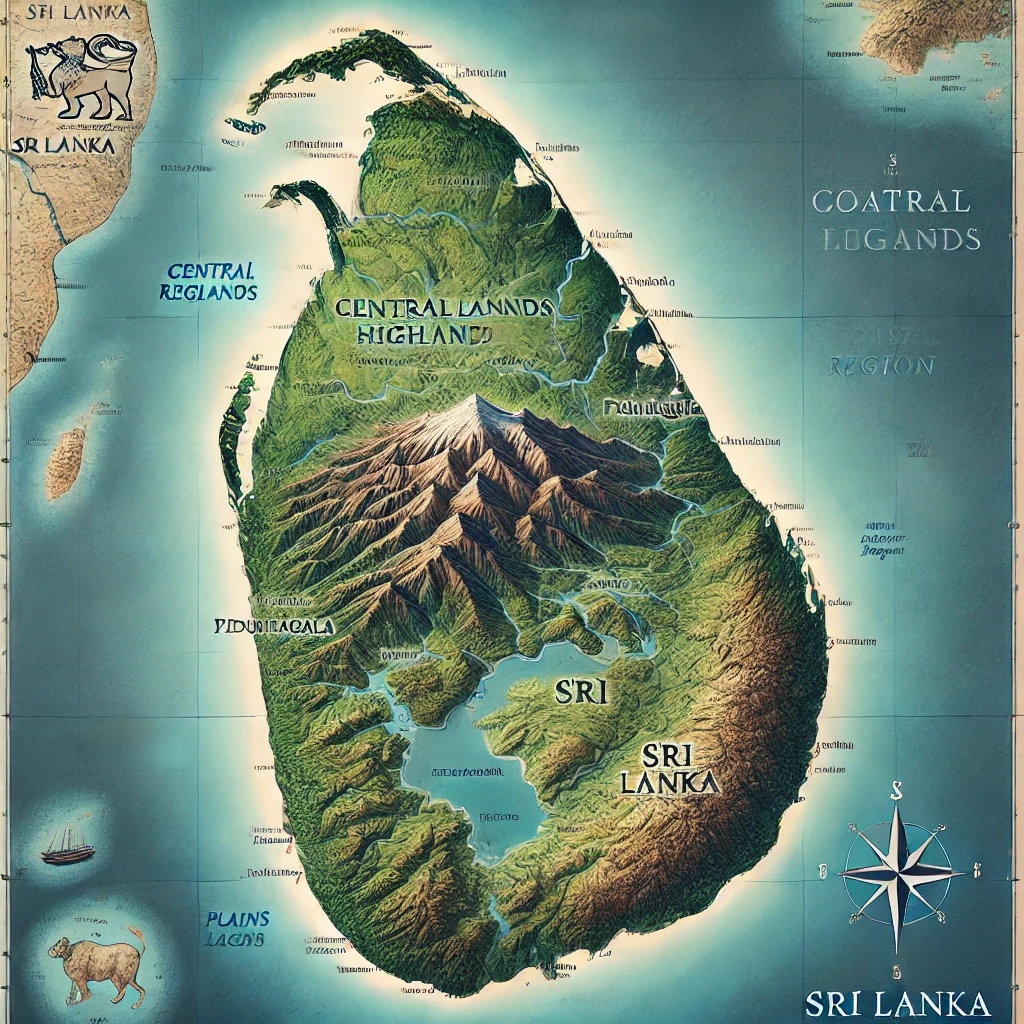
Sri Lanka is an island nation with an area of 65,610 sq km. Its landscape includes mountains, beaches, plains, and tropical forests.
Main Geographical Features
- Central Highlands – Highest peak: Pidurutalagala (2,524 m)
- Extensive coastal belts
- Plains and forest regions
Climate
The country experiences a tropical climate with two major monsoon seasons.
4. Administrative Setup
Government System
- Type: Republican Presidential System
- President: Ranil Wickremesinghe
- Prime Minister: Dinesh Gunawardene
- Parliament: Unicameral (225 members)
- Official Capital: Sri Jayewardenepura Kotte
- Economic Capital: Colombo
5. Economy of Sri Lanka
Major Industries
- Tea
- Textiles
- Tourism
- Gems & Minerals
- Coconut Products & Fisheries
Currency: Sri Lankan Rupee (LKR)
Major Exports
- Tea
- Textiles
- Gems
- Spices
- Rubber
6. Population and Culture
Total Population: approx. 22 million (2024 estimate)
Ethnic Groups
- Sinhalese – 75%
- Tamil – 15%
- Muslim – 9%
- Others – 1%
Religion
- Buddhism – 70%
- Hinduism – 13%
- Islam – 10%
- Christianity – 7%
National Symbols
- National Sport: Volleyball
- Popular Sport: Cricket
- National Flower: Blue Water Lily
- National Animal: Sri Lankan Elephant
7. Important Places & Tourism
Major Tourist Attractions
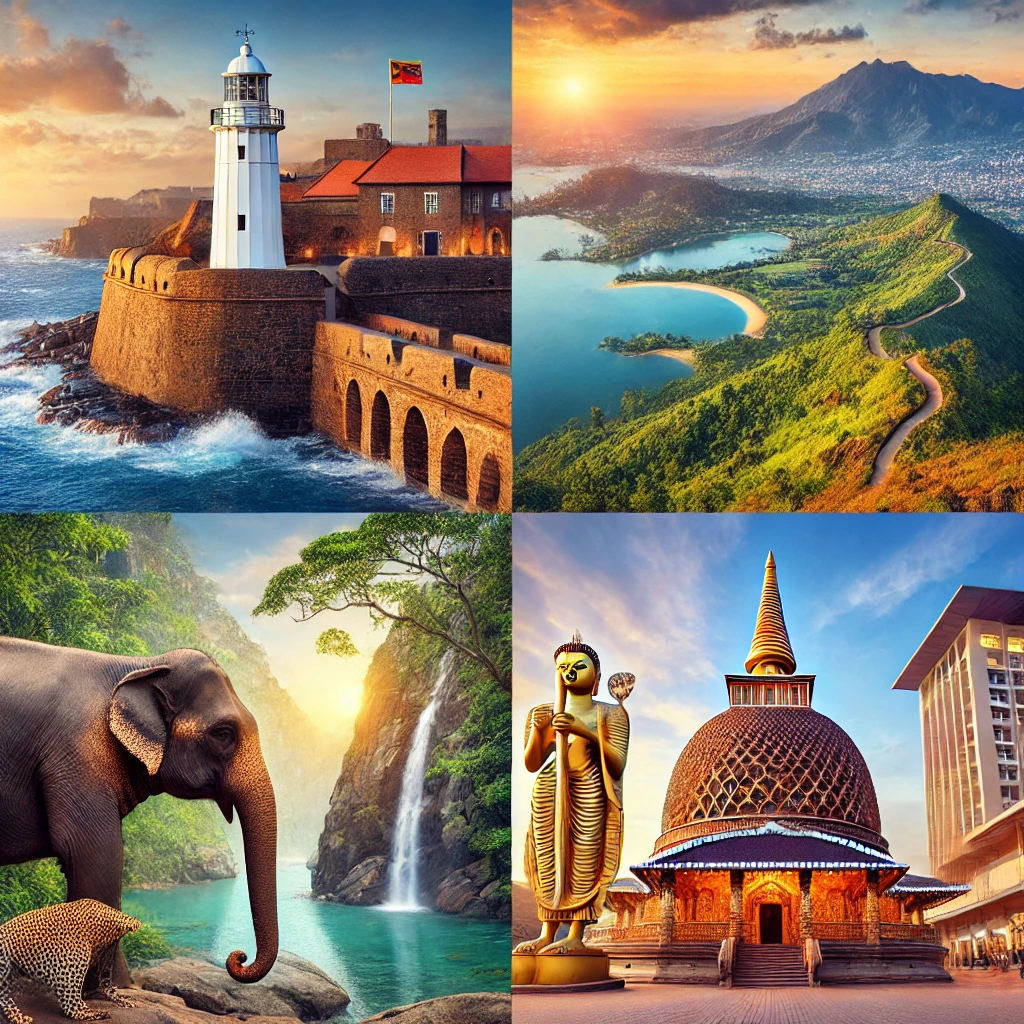
- Sigiriya – Ancient Rock Fortress
- Temple of the Tooth (Kandy)
- Galle Fort – Built by the Dutch
- Adam’s Peak
- Yala National Park
- Gangaramaya Temple (Colombo)
- Nuwara Eliya – Tea plantations
8. Climate & Environment
Main Seasons
- Yala Monsoon – May to August
- Maha Monsoon – October to January
Major Rivers
- Mahaweli
- Kelani
- Walawe
Sri Lanka is home to elephants, leopards, peacocks, and several rare species.
9. Major Challenges
- economic crisis due to foreign debt and inflation
- political instability
- Historical Tamil–Sinhalese ethnic conflict
- Environmental issues: climate change, deforestation, pollution
10. Interesting Facts

Premium Quality Product
High-quality build • Trusted Amazon Brand • Best for daily use
- ✔ Genuine Amazon Product
- ✔ Fast Delivery Available
- ✔ Easy Return Policy
- One of the world’s largest tea exporters
- Sigiriya is a UNESCO World Heritage Site
- Colombo Port is among the busiest in Asia
- World’s first female Prime Minister – Sirimavo Bandaranaike (1960)
- Cricket is the most popular sport
Conclusion
Sri Lanka is a nation blessed with cultural richness, natural beauty, spiritual heritage, and ancient history. From tea gardens and beaches to temples and wildlife, the country offers unique experiences. However, Sri Lanka is currently facing several economic and political challenges. With proper reforms and stability, the country has the potential to regain its prosperity and emerge strong once again.
Historical Background of Sri Lanka
The history of Sri Lanka is shaped by ancient civilizations, dynasties, foreign invasions, and cultural exchanges. Broadly, it can be divided into the Ancient Period, Medieval Period, Colonial Period, and Modern Period.
1. Ancient Period (500 BC – 1200 AD)
(A) Vedic and Ramayana Period
- Sri Lanka is mentioned in the Hindu epic Ramayana.
- The island was considered the kingdom of Ravana.
- According to legend, Lord Rama reached Lanka through the Ram Setu (Adam’s Bridge).
(B) Sinhalese Civilization and the First Dynasty
- The Sinhalese people arrived from India in 543 BC.
- Prince Vijaya established the first Sinhalese kingdom.
- The Sinhalese later adopted Buddhism and laid the foundation of a strong state.
(C) Advent of Buddhism
- In the 3rd century BCE, Emperor Ashoka’s son Mahendra and daughter Sanghamitra brought Buddhism to Sri Lanka.
- During the reign of King Devanampiyatissa (250–210 BC), Buddhism flourished.
- Several monasteries, stupas, and temples were built across the island.
(D) Anuradhapura and Polonnaruwa Kingdoms
- Anuradhapura (377 BC – 1017 AD) was the first major kingdom.
- King Dutugamunu (161–137 BC) defeated Tamil King Elara and unified the island.
- Polonnaruwa (1070–1200 AD) became powerful under King Parakramabahu I (1153–1186).
2. Medieval Period (1200–1500 AD)
(A) Chola and Tamil Rule
- The South Indian Chola Empire invaded Sri Lanka in the 10th century.
- Kings Rajaraja Chola and Rajendra Chola expanded Tamil influence.
- By the 13th century, northern Sri Lanka saw strong Tamil presence.
(B) Re-establishment of Sinhalese Dynasties
- New Sinhalese states emerged in Dambadeniya, Gampola, and Kotte.
- King Parakramabahu VI (1412–1467) reunified Sri Lanka.
3. Colonial Period (1505–1948 AD)
(A) Portuguese Rule (1505–1658)
- Portuguese explorer Lorenzo de Almeida arrived in 1505.
- They captured Colombo Port and began trade operations.
- Conflicts with Sinhalese kings and spread of Christianity followed.
(B) Dutch Rule (1658–1796)
- The Dutch defeated the Portuguese in 1658.
- They controlled the spice and cinnamon trade.
- Canals, forts, and roads were developed during this period.

Best Selling Amazon Product
Premium quality • High customer ratings • Reliable Amazon choice
- ✔ Original & Verified Product
- ✔ Amazon Fulfilled Delivery
- ✔ Easy Return & Refund
(C) British Rule (1796–1948)
- The British defeated the Dutch in 1796.
- In 1815, they captured Kandy, the last Sinhalese kingdom.
- Coffee, tea, and rubber plantations were established.
- Tamil laborers were brought from India, increasing ethnic tensions.
- The Sri Lanka National Congress was formed in 1919, beginning the independence movement.
4. Modern Period (1948–Present)
(A) Independence & Republic (1948–1972)
- Sri Lanka gained independence on 4 February 1948.
- In 1972, it became a Republic with a new constitution.
- The name was changed from Ceylon to Sri Lanka.
(B) Sri Lankan Civil War (1983–2009)
- Tensions escalated between Sinhalese and Tamils in 1983.
- The LTTE demanded an independent Tamil nation.
- The civil war lasted 26 years.
- In 2009, the Sri Lankan Army defeated the LTTE.
(C) Present Era (2010–Now)
- Post-war development began rapidly.
- The 2019 Colombo terrorist attack raised security concerns.
- The 2022 economic crisis led to inflation and unemployment.
- Reforms and international aid were initiated in 2023–24.
Conclusion
The history of Sri Lanka reflects conflict, cultural growth, invasions, and resilience. From ancient Buddhist heritage to colonial struggles and the modern civil war, Sri Lanka has emerged as a significant South Asian nation despite many challenges.
Geography and Climate of Sri Lanka
Sri Lanka, also known as the “Teardrop of India,” is famous for its diverse geographical features, tropical climate, and rich biodiversity.
1. Geographical Location and Size
- Continent: Asia
- Location: South of the Indian subcontinent in the Indian Ocean
- Coordinates: 5°55′–9°51′ N, 79°41′–81°53′ E
- Total Area: 65,610 sq km
- Shape: Tear-drop shaped island
- Nearest Country: India (via the Palk Strait and Gulf of Mannar)
(A) Important Topographical Features
Central Highlands
- Mountainous region in central Sri Lanka
- Highest peak: Pidurutalagala (2,524 m)
- Many waterfalls and dense forests
Fertile Plains
- Rivers deposit fertile soil in northern and eastern plains
- Suitable for agriculture
Coastal Region
- Coastline of about 1,340 km
- Major ports: Colombo, Galle, Trincomalee
Islands
- Mannar Island, Pungeri Island, Jaffna Island
- Ram Setu (Adam’s Bridge) lies in shallow waters between India & Sri Lanka
2. Climate
Sri Lanka has a tropical climate—hot and humid throughout the year.
(A) Major Climatic Regions
- Lowland Tropical Region: Hot and humid plains and coasts
- Highlands: Cool regions like Nuwara Eliya
- Dry Zone: Northern and eastern areas with low rainfall
(B) Main Seasons
- Yala Monsoon (May–August): Heavy rainfall in west & south
- Maha Monsoon (October–January): Rain in north & east
- Hot Dry Season (February–April): High temperatures
(C) Temperature
- Coastal areas: 27–32°C
- Highlands: 15–20°C
- Winter temperatures in Nuwara Eliya can drop to 0°C
3. Rivers and Water Sources
(A) Major Rivers
- Mahaweli River: Longest river (335 km)
- Kelani River: Flows near Colombo
- Kalu Ganga: Southwest river
- Malvathu Oya: Important in Tamil regions
(B) Lakes and Reservoirs
- Parakrama Samudra – Ancient reservoir
- Bolgoda Lake – Largest natural lake
- Beira Lake – Located in central Colombo
4. Natural Vegetation and Biodiversity
(A) Vegetation Zones
- Evergreen rainforests (e.g., Sinharaja Forest – UNESCO site)
- Dry forests in the north and east
- Mangrove vegetation in coastal areas
(B) Major Wildlife
- Sri Lankan elephants
- Sri Lankan leopard
- Nilgiri langur
- Sea turtles
(C) Important National Parks
- Yala National Park
- Wilpattu National Park
- Udawalawe National Park
5. Natural Disasters
- Cyclones
- Floods during monsoons
- Droughts in dry zones
- Tsunamis, especially the 2004 disaster
Conclusion
Sri Lanka’s geography includes lush mountains, scenic beaches, dense forests, and diverse wildlife. Despite natural disasters and climate challenges, the country continues to work towards sustainable development and biodiversity conservation.
Administrative System of Sri Lanka
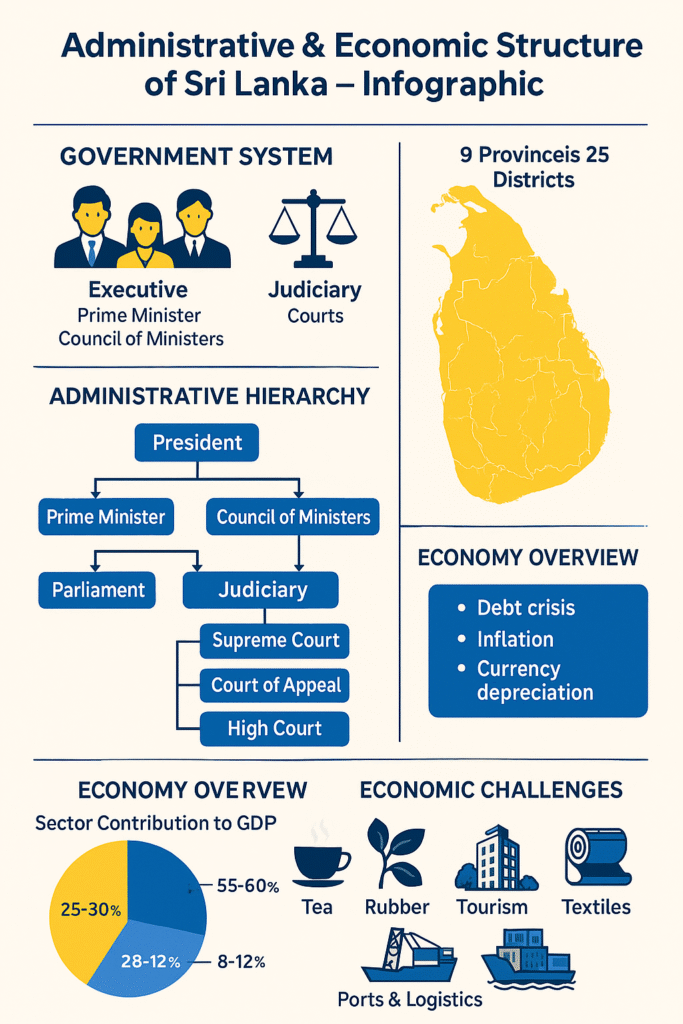
Sri Lanka is a constitutional democracy and a republic where a strong presidential system is in place. Its administrative structure includes the Executive, Legislature, and Judiciary. The system is influenced by British rule and has undergone several reforms.
1. Structure of Government
The government of Sri Lanka is mainly divided into three parts:
- Executive – President, Prime Minister, Council of Ministers
- Legislature – Parliament
- Judiciary – Courts and legal institutions
2. Executive – Government System
(A) President
- The President is the Head of State, Head of Government, and Supreme Commander of the Armed Forces.
- Elected directly by the people for a 5-year term.
- Holds major executive powers, including:
- Appointment of ministers
- Powers to dissolve Parliament
- Decisions on defence and Foreign Affairs
- Proposing constitutional amendments
(B) Prime Minister
- The second most important position after the President.
- Appointed by the President from the majority party in Parliament.
- Acts as a bridge between Parliament and the Government.
(C) Council of Ministers
- Includes Cabinet Ministers, State Ministers, and Deputy Ministers.
- Implements government policies and manages ministries.
- Key ministries include Defence, Finance, Education, Health, Foreign Affairs, Agriculture, Tourism, and Transport.
3. Legislature – Parliamentary System
Sri Lanka has a unicameral legislature called the Parliament of Sri Lanka with 225 members. Members are elected directly by citizens for a 5-year term. Parliament is responsible for law-making, budget approval, and monitoring the executive.
(A) Functions of Parliament
- Making and amending laws
- Overseeing government finances
- Supervising the President and Council of Ministers
- Managing national security and foreign policy issues
(B) Key Positions in Parliament
- Speaker – Presides over parliamentary sessions
- Parliamentary Committees – Review government policies and ministries
4. Judiciary – Judicial System
The judiciary in Sri Lanka is independent and ensures protection of citizens’ rights. It reviews and checks government actions under constitutional law.
(A) Major Courts
Supreme Court
- The highest court in Sri Lanka
- Handles constitutional cases, appeals, and fundamental rights issues
- Headed by the Chief Justice

Top Rated Amazon Product
Durable build • Customer favorite • Excellent value for money
- ✔ 100% Genuine Product
- ✔ Amazon Assured Quality
- ✔ Fast & Secure Delivery
Court of Appeal
- Hears appeals from lower courts
High Court
- Handles serious criminal and civil cases
District & Magistrate Courts
- Manage local-level legal matters and minor cases
(B) Legal System
- Influenced by British, Roman-Dutch, and traditional laws
- Ensures justice through an organized legal framework
5. Administrative Divisions
Sri Lanka is divided into 9 Provinces and 25 Districts.
(A) Nine Major Provinces
- Western Province – Colombo
- Central Province – Kandy
- Southern Province – Galle
- Northern Province – Jaffna
- Eastern Province – Trincomalee
- North Western Province – Kurunegala
- North Central Province – Anuradhapura
- Sabaragamuwa Province – Ratnapura
- Uva Province – Badulla
(B) District Administration
- Each district is headed by a District Secretary.
- Coordinates various departments, councils, and government agencies.
(C) Local Government
- Municipal Councils – For major cities
- Urban Councils – For medium-sized towns
- Village Councils (Pradeshiya Sabhas) – For rural areas
6. Political System and Major Parties
Sri Lanka has a multi-party democratic political system.
(A) Major Political Parties
- Sri Lanka Podujana Peramuna (SLPP)
- United National Party (UNP)
- Sri Lanka Freedom Party (SLFP)
- Tamil National Alliance (TNA)
- Janatha Vimukthi Peramuna (JVP)
7. Law and Civil Rights
- The Constitution of 1978 grants fundamental rights such as freedom, equality, and religious liberty.
- Citizens can file a Fundamental Rights petition in the Supreme Court.
- The Human Rights Commission works to protect human rights in the country.
Conclusion
Sri Lanka’s administrative system is based on a strong presidential model with clear separation among the executive, legislature, and judiciary. Despite political instability and administrative challenges, efforts are continuously made to strengthen democracy, governance, and local administration.
Economy of Sri Lanka
The economy of Sri Lanka is growing and diversifying, primarily driven by agriculture, industry, services, and tourism. Despite being an important South Asian trading hub, the country has recently faced severe economic challenges due to foreign debt and currency devaluation.
1. Structure of Economy
- Agriculture Sector – Tea, rubber, coconut, spices
- Industrial Sector – Textiles, petrochemicals, food processing
- Service Sector – Tourism, IT, banking, logistics
2. GDP and Economic Growth
- Total GDP: approx. $80–90 billion
- Per capita income higher than many South Asian countries but declining recently
- Challenges: foreign debt crisis, inflation, currency depreciation
(A) Sector-wise contribution to GDP
- Service Sector – 55–60%
- Industry Sector – 25–30%
- Agriculture Sector – 8–12%
3. Major Economic Sectors
(A) Agriculture & Plantation Economy
(i) Major Agricultural Products
- Tea – Sri Lanka is the 4th largest global exporter (“Ceylon Tea”).
- Rubber – Used for tyres and industrial products.
- Coconut – Sri Lanka is one of the world’s top producers.
- Spices – Especially cinnamon, cardamom, black pepper.
- Rice – Staple food grown across the country.
(ii) Challenges in Agriculture
- The 2021 ban on chemical fertilizers reduced crop yields.
- Climate change and monsoon fluctuations affect production.
(B) Industry & Manufacturing
(i) Major Industries
- Textile & Apparel – Over 40% of total exports.
- Food Processing – Tea, spices, coconut products.
- Petrochemicals – Crude oil imported for fuel.
- Cement & Construction – Driven by infrastructure growth.
- IT & Software – Growing tech hubs in Colombo.
(C) Service Sector
(i) Tourism
- Famous for beaches, historical sites, National Parks.
- Major tourist sites: Sigiriya, Galle Fort, Kandy, Yala National Park.
(ii) Banking & Finance
- Growing public and private banking networks.
- Colombo International Financial City under development.
(iii) Transport & Logistics
- Colombo Port – One of South Asia’s busiest ports.
- Developed road, rail, and air transport networks.
4. Trade & Foreign Investment
- Major exports: tea, textiles, spices, marine products
- Main trade partners: India, China, USA, UK, Japan
- Free Trade Agreements (FTA) with India and China
5. Economic Challenges & Crisis
(A) Major Economic Problems
- Foreign Debt Crisis – Over $50 billion in debt by 2022.
- Currency Depreciation – Weakened rupee increased import costs.
- Inflation – Exceeded 50% during the peak crisis period.
- Energy Crisis – Severe fuel and electricity shortages.
(B) Improvements & Solutions
- Financial assistance from the IMF and India.
- Tax reforms and public finance restructuring.
- Increased investment in agriculture and industry.
Conclusion
Sri Lanka’s economy rests on agriculture, industry, and services. Despite severe setbacks due to foreign debt and inflation, the government is taking steps toward economic recovery. With the right reforms, Sri Lanka can move toward stability and long-term prosperity.
Population and Culture of Sri Lanka
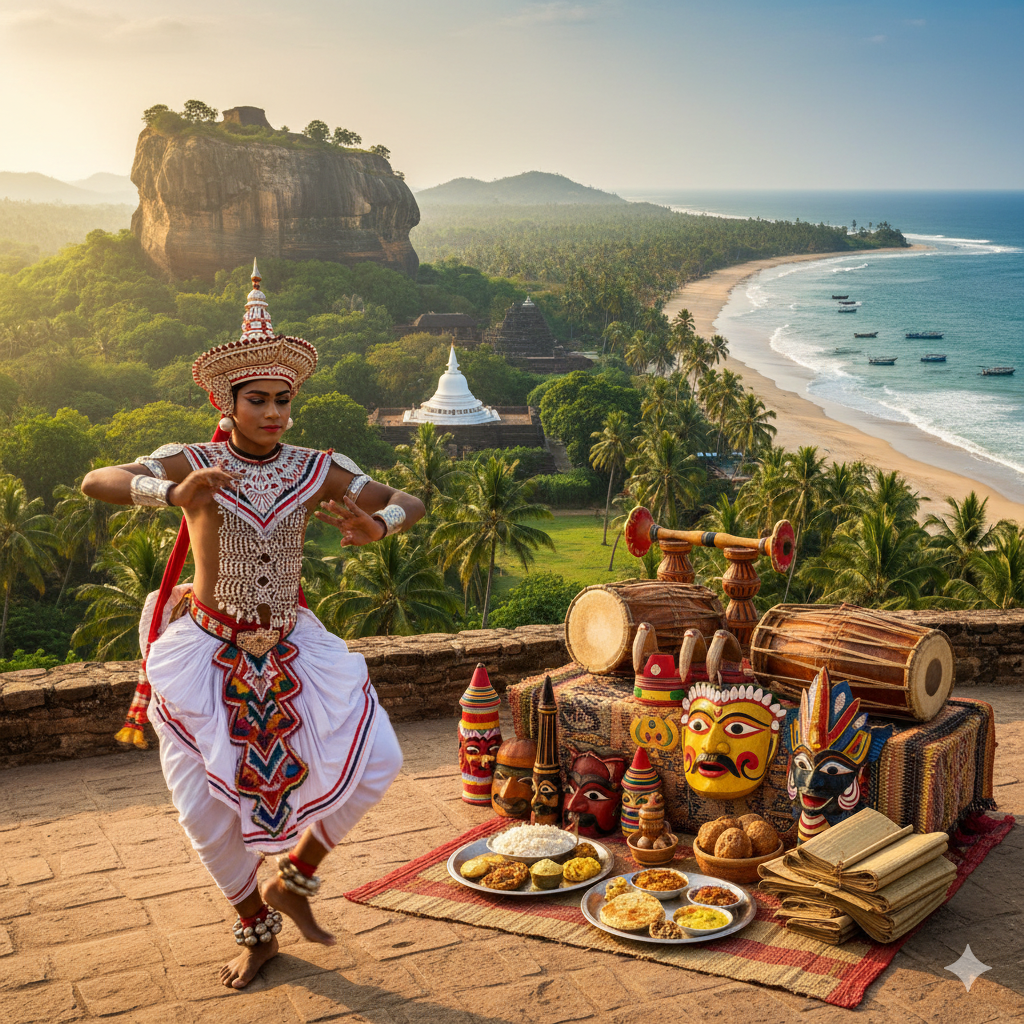
Sri Lanka is a multicultural, multilingual, and multi-religious country made up of diverse communities. Its culture is shaped by Buddhist, Hindu, Muslim, and Christian traditions. Sri Lankan music, dance, art, cuisine, and festivals reflect the country's rich cultural heritage.
1. Population of Sri Lanka
(A) Total Population and Density
- Total Population: Approx. 22 million (2.2 crore)
- Population Density: Around 340 persons per sq. km
- Urban Population: 20–25%
- Rural Population: 75–80%
Major Cities
- Colombo: Capital and largest city
- Kandy: Cultural centre
- Galle: Historical coastal city
- Jaffna: Tamil-majority region
(B) Ethnic Groups of Sri Lanka
Sri Lanka is home to several ethnic groups, each with distinct cultural and linguistic identities.
| Ethnic Group | Percentage | Main Regions |
|---|---|---|
| Sinhalese | 75% | Across Sri Lanka, mainly south & central |
| Sri Lankan Tamil | 11% | Northern & Eastern Provinces |
| Indian Tamil | 4.5% | Tea plantation areas (Kandy, Nuwara Eliya) |
| Muslims (Moors) | 9.5% | Colombo, Eastern Province, Kandy |
| Burghers & Others | 0.5% | Colombo, Galle |
(i) Sinhalese
- Largest ethnic group (75%)
- Religion – Theravada Buddhism
- Language – Sinhala
(ii) Sri Lankan Tamil
- Live mainly in northern & eastern Sri Lanka
- Religion – Hinduism (some Christians)
- Language – Tamil
(iii) Indian Tamil
- Descendants of Indian Tamil labourers brought by the British
- Work mainly in tea plantation regions
(iv) Muslims (Sri Lankan Moors)
- Mainly from the business community
- Religion – Islam
- Languages – Tamil & Sinhala
(v) Burgher Community
- Mixed European (Dutch/Portuguese) and Sri Lankan heritage
- Religion – Christianity
- Languages – English, Sinhala, Tamil
(C) Religions in Sri Lanka
| Religion | Percentage | Main Followers |
|---|---|---|
| Buddhism | 70% | Sinhalese |
| Hinduism | 12% | Tamil |
| Islam | 9.5% | Muslim (Moors) |
| Christianity | 8.5% | Burghers & Tamil Christians |
Buddhism (Theravada) is the main religion. Hinduism is practiced largely by Tamils. Islam is mostly Sunni, and Christianity includes Catholic and Protestant groups.
2. Culture of Sri Lanka
(A) Languages
- Sinhala: Spoken by about 75% of the population
- Tamil: Spoken by around 25%
- English: Widely used in education, business & government
(B) Art and Music
- Kandyan Dance: Traditional Buddhist dance form
- Bharatanatyam: Performed mainly by Tamil communities
- Perahera Festival: Known for elaborate dance and drum performances
- Folk Music: Accompanied by traditional drums and instruments
(C) Food and Cuisine
Sri Lankan cuisine is flavorful, spicy, and influenced by South Indian and Southeast Asian traditions.
- Rice & Curry – Staple food
- Hoppers – Thin rice pancakes
- Kiribath – Coconut milk rice
- Kottu Roti – Stir-fried chopped bread with spices
- Seafood: Fish, prawns, crabs
(D) Major Festivals
- Vesak: Main Buddhist festival
- Diwali: Hindu festival of lights
- Eid: Islamic festival
- Christmas: Celebrated by Christians
- Sinhala & Tamil New Year: Celebrated in April
Conclusion
Sri Lanka’s population and culture reflect its diversity. The coexistence of various ethnic groups, religions, languages, and traditions makes Sri Lanka a culturally rich nation full of vibrancy and heritage.
Important Places and Tourism in Sri Lanka
Sri Lanka is renowned for its natural beauty, historical sites, and religious significance. Known as the “Pearl of Asia,” the country is home to beaches, mountains, forests, temples, and National Parks, making it an ideal destination for travelers.
1. Major Tourist Attractions in Sri Lanka
Tourism in Sri Lanka includes:
- Historical and cultural sites
- Natural and wildlife destinations
- Beaches and coastal attractions
- Religious places
2. Historical and Cultural Sites
(A) Sigiriya – Lion Rock
- One of Sri Lanka's most famous historical sites
- Built as a fortress by King Kashyapa (5th century)
- Features ancient frescoes, water gardens, and the iconic Lion Gate
- Known as the “Eighth Wonder of the World”
(B) Anuradhapura
- Ancient capital and important Buddhist pilgrimage site
- Home to temples, stupas, and sacred relics
- Landmarks include Ruwanwelisaya Stupa and the Jaya Sri Maha Bodhi
(C) Polonnaruwa
- Second oldest city of Sri Lanka
- Known for 11th–12th century temples and ancient ruins
- Major attractions include Gal Viharaya and Rankot Vihara
(D) Galle Fort
- A UNESCO World Heritage Site
- Built by the Dutch during the colonial era
- Showcases a mix of Portuguese, Dutch, and British architecture
3. Natural and Wildlife Tourist Destinations
(A) Ella
- Beautiful hill station known for stunning landscapes
- Famous for Nine Arch Bridge and Little Adam’s Peak
(B) Nuwara Eliya – "Little England"
- Known for tea plantations, cool climate, and waterfalls
- Key attractions include Horton Plains National Park and World's End viewpoint
(C) Yala National Park
- Sri Lanka’s most famous wildlife sanctuary
- Home to elephants, leopards, crocodiles, and many birds
- Best place for wildlife safari
(D) Minneriya National Park
- Known for the annual “Elephant Gathering”
- Popular among bird watchers
4. Beaches and Coastal Tourist Spots
(A) Mirissa
- Famous for whale and dolphin watching
- Beautiful and peaceful beach
(B) Unawatuna
- One of the most popular beaches in Sri Lanka
- Ideal for scuba diving, snorkelling, and water sports
(C) Bentota
- Known for luxury resorts and water sports
(D) Pasikuda & Arugam Bay
- Pasikuda: Calm beaches with crystal-clear waters
- Arugam Bay: One of the world’s best surfing destinations
5. Religious Places in Sri Lanka
(A) Temple of the Tooth (Sri Dalada Maligawa) – Kandy
- Most sacred Buddhist temple in Sri Lanka
- Houses the sacred Tooth Relic of Lord Buddha
- UNESCO World Heritage Site

Popular Amazon Choice
Trusted by buyers • High durability • Worth the price
- ✔ Amazon Verified Product
- ✔ Secure Packaging
- ✔ Easy Returns
(B) Munneswaram Temple
- Ancient Hindu temple dedicated to Lord Shiva
- Believed to be associated with the Ramayana
(C) Nagadeepa Temple
- Important pilgrimage site for both Buddhists and Hindus
(D) Kataragama Temple
- Dedicated to Lord Murugan (Karthikeya)
- Worshipped by Buddhists, Hindus, and Muslims
Conclusion
Sri Lanka is a paradise for travellers with its History, nature, wildlife, beaches, and sacred places. Whether one is interested in culture, adventure, spiritual experiences, or natural beauty, Sri Lanka offers countless attractions and unforgettable experiences.
References

Highly Recommended Product
Strong build quality • Customer trusted • Excellent performance
- ✔ Amazon Assured Product
- ✔ Fast & Reliable Delivery
- ✔ Easy Return Policy
- Official publications and documents from the Government of Sri Lanka
- Information provided by the Sri Lanka Tourism Development Authority
- Archaeological studies related to Anuradhapura, Polonnaruwa, and Sigiriya
- Reports from international organizations such as UNESCO, IMF, and the World Bank
- Official statistics from the Department of Census and Statistics, Sri Lanka
- Publications from the Office of the President and the Parliament of Sri Lanka
- Academic research papers and cultural studies on Sri Lankan society, Religion, and History