
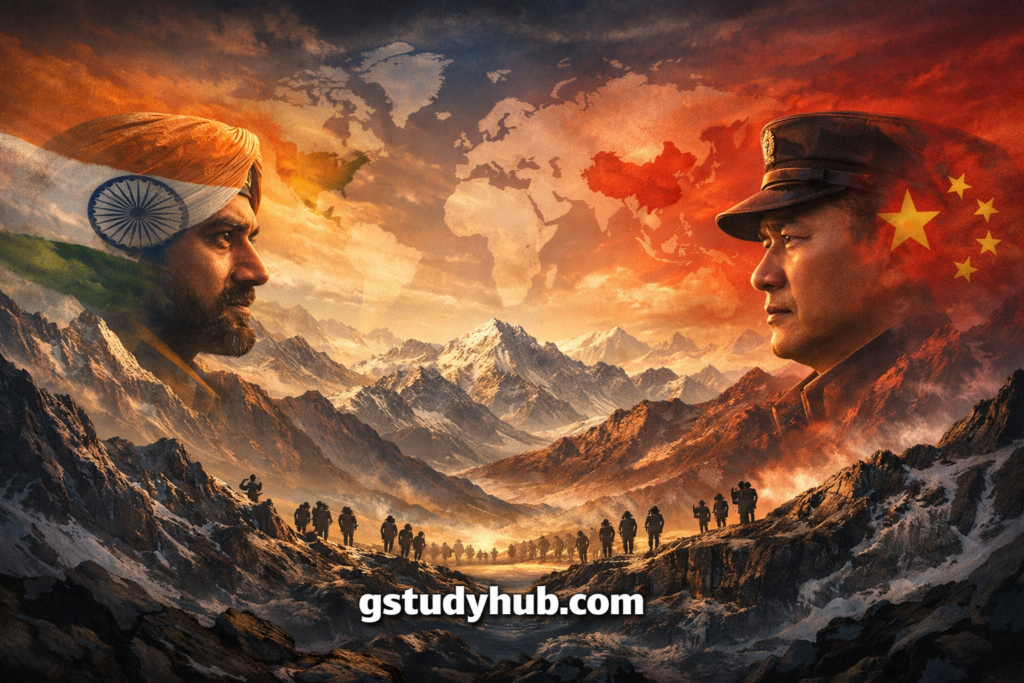
Introduction: Understanding the Complexity of India-China Relations
India-China Relations remain one of the most important topics for UPSC, international relations, and global geopolitics in 2026. India-China Relations represent one of the most complex and strategically significant relationships in contemporary global politics.
India and China are two of the world’s oldest civilizations and today stand as major powers shaping the politics of the 21st century. Their engagement has evolved through phases of cooperation, competition, and confrontation. Border disputes, diplomatic engagement, economic interdependence, and strategic rivalry together make this bilateral relationship one of the most closely examined in global affairs.
Over the decades, the relationship has witnessed periods of dialogue as well as military standoffs, making it one of the most closely watched strategic equations in Asia.
This article is not merely a collection of facts, but a narrative built upon observation, research, and reflection. Through a structured analytical approach, it explains the deeper causes behind border tensions, the role of diplomacy, and the strategic choices shaping the future trajectory of bilateral ties.
To understand India-China Relations is to understand a broader story of power transition, national identity, and balance of power in Asia. How these two countries manage their differences will influence not only bilateral stability, but also the future direction of regional and global order.
If you want to explore this topic deeply, this book is highly recommended.

- Strong & Durable Build
- Easy to Use
- Lightweight & Portable
- Long-lasting Performance
- Great Value for Money
Historical Background of India-China Relations: From Civilizational Ties to Strategic Rivalry
India-China Relations are rooted in thousands of years of civilizational interaction, long before modern nation-states came into existence. The two ancient civilizations influenced each other through trade, religion, philosophy, and cultural exchange. Understanding this historical background is essential for grasping contemporary border disputes and strategic competition.
The history of this bilateral relationship shows that it has never been defined by permanent hostility alone. Instead, it has moved through cycles of cooperation, misunderstanding, and confrontation shaped by changing political realities and national interests.
Ancient Civilizational Connections
In ancient times, India and China were connected through the Silk Route, enabling the exchange of goods, ideas, and beliefs. Merchants, monks, and scholars traveled between the two regions, creating a foundation of mutual awareness and respect. These early interactions established a relationship that was primarily cultural and spiritual in nature.
Buddhism and Cultural Exchange
Buddhism originated in India and later spread to China, becoming deeply integrated into Chinese society. For centuries, this religious and philosophical linkage represented one of the most harmonious phases in India-China Relations.
Independence Era and the Panchsheel Agreement
After India gained independence in 1947 and the People’s Republic of China was established in 1949, both nations sought to redefine their bilateral framework. The 1954 Panchsheel Agreement marked a hopeful period in India-China Relations.
Five Principles of Peaceful Coexistence
The agreement emphasized mutual respect for sovereignty, non-aggression, non-interference, equality, and peaceful coexistence. The slogan “Hindi-Chini Bhai-Bhai” symbolized early optimism between the two countries.
Origins of the Border Dispute
Despite early goodwill, unresolved boundary issues began to strain ties. Colonial-era demarcations and differing historical interpretations created overlapping territorial claims that continue to influence India-China Relations.
Aksai Chin and Arunachal Pradesh
Disagreements over Aksai Chin in the western sector and Arunachal Pradesh in the eastern sector became central to the border dispute. These unresolved issues laid the groundwork for future confrontation.
The 1962 War
The 1962 conflict marked a turning point in India-China Relations. The war shattered mutual trust and fundamentally altered India’s strategic perception of China.
Strategic and Psychological Impact
The war had a lasting psychological impact on Indian policymakers and society. National security and border defense emerged as core priorities in India’s strategic thinking.
LAC (Line of Actual Control) and Post-War Arrangements
Following the war, the Line of Actual Control (LAC) emerged as a de facto boundary, though never formally demarcated. The ambiguity surrounding the LAC continues to generate periodic tensions.
Confidence-Building Measures
Agreements in 1993 and 1996 sought to maintain peace and stability along the border. These diplomatic efforts demonstrate that the relationship is characterized by both competition and dialogue.
Doklam Standoff and Galwan Valley Clash
The Doklam standoff and the Galwan Valley clash highlighted the fragile nature of border stability. These incidents underscored how unresolved territorial disputes continue to affect India-China Relations.
Key Lessons from History
Historical experience suggests that sustainable peace requires realistic diplomacy, strategic clarity, and firm protection of national interests. Learning from the past remains essential for building a stable and balanced future.

India-China Border Dispute and LAC (Line of Actual Control): Roots of Tension
The India-China border dispute remains the most sensitive and enduring challenge in bilateral ties. It is not merely a disagreement over lines on a map, but a question of sovereignty, National security, and strategic influence. The absence of a clearly demarcated boundary and differing perceptions of the Line of Actual Control (LAC) continue to strain relations between the two countries.
Border disputes remain the most sensitive aspect of India-China Relations, particularly along the Line of Actual Control (LAC), where periodic military standoffs highlight the fragile state of trust.
Whenever tensions rise along the border, it becomes evident that the dispute is not a local issue alone. It carries wider implications for regional stability in Asia and significantly influences broader geopolitical dynamics.
What is the LAC (Line of Actual Control)?
The Line of Actual Control (LAC) refers to the de facto boundary separating Indian and Chinese forces. Unlike a formally negotiated international border, the LAC is not clearly defined or mutually agreed upon on maps, which continues to create friction.
The Problem of Ambiguity
Different interpretations of the LAC often bring troops face to face. This ambiguity is a major driver of recurring standoffs and patrol confrontations, keeping tensions alive along the frontier.
Doklam Standoff: A Strategic Warning
The Doklam standoff highlighted the seriousness of border tensions and marked a critical phase in India-China Relations. The dispute involved a tri-junction area between India, China, and Bhutan, demonstrating India’s willingness to defend its strategic interests.
Lessons from Doklam
Doklam showed that border disputes are closely linked to regional security dynamics and cannot be viewed in isolation.
Galwan Valley Clash: A Defining Moment
The Galwan Valley clash marked one of the most serious confrontations between Indian and Chinese troops in decades. The loss of lives on both sides deeply affected public perception and altered the strategic direction of bilateral engagement.
Strategic Shift After Galwan
Following the clash, India significantly strengthened its military presence and infrastructure in Ladakh. This reflects a shift toward a more assertive and preparedness-driven approach.
Ladakh and Arunachal Pradesh: Persistent Flashpoints
Ladakh and Arunachal Pradesh remain major flashpoints in the border dispute. Frequent reports of standoffs and patrol face-offs underline the fragile nature of stability in these sectors.
Military Standoff and Dialogue
Despite military tensions, both countries continue to engage through diplomatic and military-level talks. This dual-track approach reflects an effort to manage competition while preventing escalation.
Impact of the Border Dispute on India’s Policy
The ongoing tensions have reshaped India’s foreign and defense policies. India now emphasizes deterrence, infrastructure development, and strategic partnerships alongside diplomacy.
Key Lessons from the Border Dispute
The border issue demonstrates that sustainable peace requires strategic clarity, strong defense capabilities, and continuous dialogue. A balanced combination of firmness and diplomacy will determine the future stability of India-China Relations.
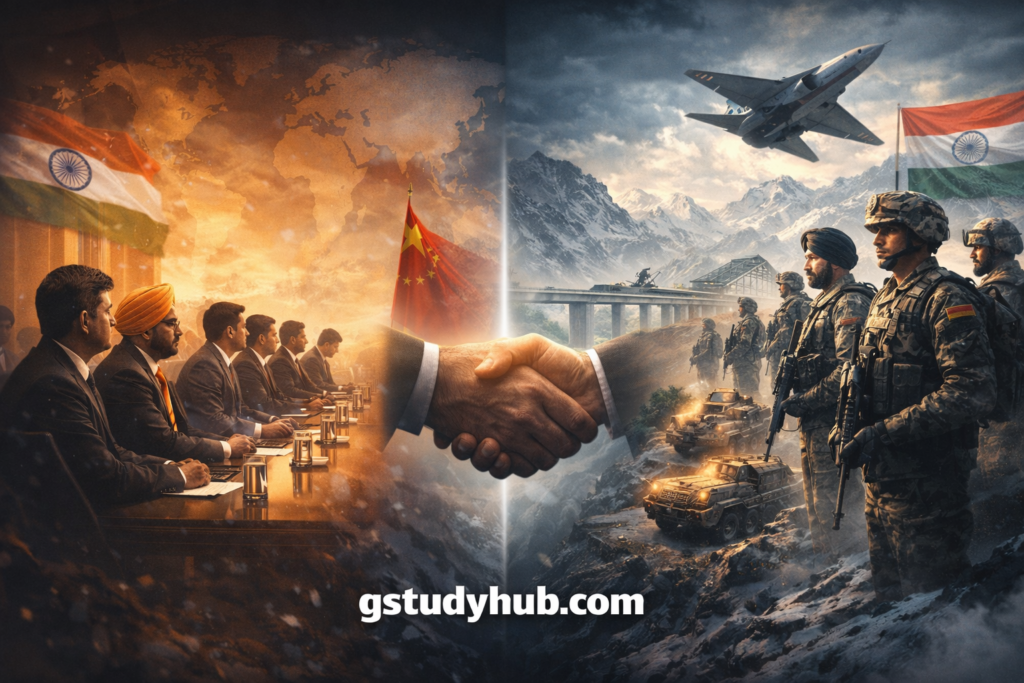
India’s Diplomatic Strategy: Dialogue, Balance, and Strategic Resolve
India’s diplomatic strategy has evolved significantly over time. Today, Indian foreign policy is driven by realism, national interest, and a clear understanding of the balance of power. In the context of India-China Relations, this strategy seeks to protect core interests while avoiding unnecessary escalation.
Diplomatic dialogue has been a crucial mechanism in stabilizing India-China Relations despite recurring tensions along the border.
India believes that diplomacy is not merely about talking, but about advancing national objectives through engagement, deterrence, and strategic clarity. This explains why New Delhi simultaneously emphasizes dialogue and firmness in dealing with Beijing.
Priority on Dialogue and Negotiation
Dialogue forms the first pillar of India’s approach. India consistently maintains that disputes must be resolved through peaceful negotiations and mutual understanding.
Diplomatic and Military-Level Talks
Both countries continue to engage at multiple levels, including foreign ministry consultations, special representative talks, and military commander-level meetings. These channels help prevent crises and sustain relative stability.
Balance of Power and Military Strength
Alongside dialogue, India places strong emphasis on maintaining a favorable balance of power. Credible military capability strengthens its negotiating position within India-China Relations.
infrastructure development in Border Areas
India has accelerated the construction of roads, tunnels, bridges, and airfields along its northern borders. This improves defense preparedness and reinforces long-term strategic commitment.
Multilateral Diplomacy and Global Platforms
India’s diplomatic strategy extends beyond bilateral engagement. Through multilateral diplomacy, New Delhi seeks to create a broader strategic environment that supports regional stability and strengthens India-China Relations.
Quad and the Indo-Pacific Strategy
The Quad (India, United States, Japan, and Australia) and India’s Indo-Pacific strategy reflect a commitment to a free, open, and inclusive region. These initiatives influence the wider strategic balance in Asia.
strategic partnerships and Like-Minded Countries
India has strengthened partnerships with several major powers and regional actors. While not aimed at containment, these ties provide greater leverage and strategic flexibility.
National Interest as the Core Principle
At the heart of India’s diplomatic strategy lies the principle that national interest is paramount. Every engagement and agreement is assessed through this lens.
Key Features of India’s Diplomatic Strategy
India’s approach combines pragmatism, patience, and firmness. This balance enhances its ability to safeguard interests while contributing to stability in India-China Relations.
Lessons from India’s Diplomatic Strategy
Sustainable solutions require a careful blend of dialogue and deterrence. Neither confrontation alone nor accommodation alone can secure long-term stability between the two nations.
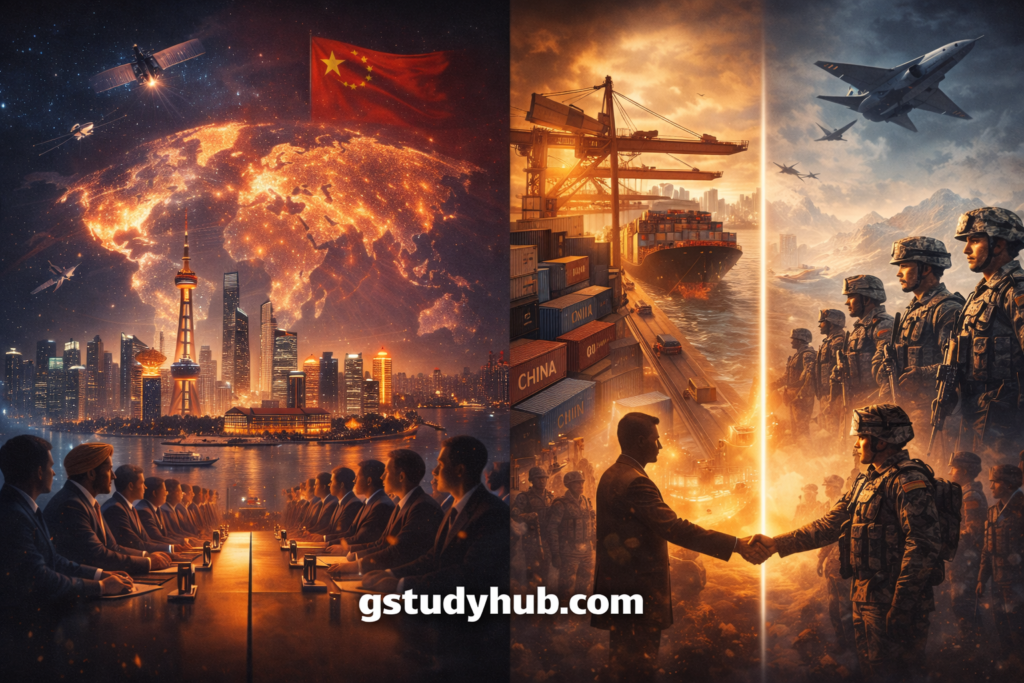
India’s Diplomatic Strategy: Dialogue, Balance, and Strategic Resolve
India’s diplomatic strategy has evolved significantly over time. Today, Indian foreign policy is driven by realism, national interest, and a clear understanding of the balance of power. In the context of India-China Relations, this approach seeks to protect core interests while avoiding unnecessary escalation.
Diplomatic dialogue has been a crucial mechanism in stabilizing India-China Relations despite recurring tensions along the border.
India believes that diplomacy is not merely about talking, but about advancing national objectives through engagement, deterrence, and strategic clarity. This explains why New Delhi simultaneously emphasizes dialogue and firmness in dealing with Beijing.
Priority on Dialogue and Negotiation
Dialogue forms the first pillar of India’s diplomatic strategy. India consistently maintains that disputes must be resolved through peaceful negotiations and mutual understanding.
Diplomatic and Military-Level Talks
Both countries continue to engage at multiple levels, including foreign ministry consultations, special representative talks, and military commander-level meetings. These channels play a vital role in preventing crises and sustaining relative stability.
Balance of Power and Military Strength
Alongside dialogue, India places strong emphasis on maintaining a favorable balance of power. Credible military capability strengthens its negotiating position within India-China Relations.
infrastructure development in Border Areas
India has accelerated infrastructure construction along its northern borders. This improves defense preparedness and reinforces long-term strategic commitment.
Multilateral Diplomacy and Global Platforms
India’s diplomatic strategy extends beyond bilateral engagement. Through multilateral diplomacy, New Delhi seeks to create a broader strategic environment that supports regional stability.
Quad and the Indo-Pacific Strategy
The Quad (India, United States, Japan, and Australia) and the Indo-Pacific strategy reflect a commitment to a free, open, and inclusive region. These initiatives indirectly influence the strategic balance in Asia.
strategic partnerships and Like-Minded Countries
India has strengthened partnerships with several major powers and regional actors. While not aimed at containment, these ties provide greater leverage and flexibility in managing India-China Relations.
National Interest as the Core Principle
At the heart of India’s diplomatic strategy lies the principle that national interest is paramount. Every engagement and agreement is assessed through this lens.
Key Features of India’s Diplomatic Strategy
India’s approach combines pragmatism, patience, and firmness. This balance enhances its ability to safeguard national interests while contributing to stability in India-China Relations.
Lessons from India’s Diplomatic Strategy
Sustainable solutions require a careful blend of dialogue and deterrence. Neither confrontation alone nor accommodation alone can secure long-term stability between the two nations.

- Excellent Build Quality
- Functional & Easy to Use
- Compact & Lightweight
- Great Value for Money
- Trusted by Users
Economic Relations vs Strategic Competition
Economic engagement and strategic competition coexist as parallel realities between India and China. On one hand, both countries are deeply connected through trade and investment. On the other hand, geopolitical rivalry and strategic distrust continue to shape the broader trajectory of India-China Relations. This paradox makes the bilateral relationship uniquely complex in contemporary geopolitics.
Trade interdependence plays a complex role in shaping modern India-China Relations, particularly as economic ties persist despite recurring security tensions.
Economic engagement is often seen as a pathway to stability. However, economic cooperation alone has not eliminated strategic competition or political mistrust between the two nations.
Nature of Economic Engagement
Bilateral trade has grown significantly over the years. China remains one of India’s largest trading partners, yet the asymmetrical structure of trade continues to generate debate in New Delhi.
Challenge of Trade Imbalance
India faces a substantial trade deficit with China. This persistent imbalance raises concerns about economic vulnerability and long-term sustainability.
Economic Dependence vs Strategic Autonomy
India recognizes that excessive economic dependence can create strategic risks. Therefore, New Delhi emphasizes supply chain diversification and domestic manufacturing as part of its broader approach to managing India-China Relations more cautiously.
Make in India and Supply Chain Strategy
Initiatives such as Make in India aim to reduce dependence on external sources and strengthen national resilience.
Technological Competition and the Digital Domain
Technological competition has emerged as a central dimension of strategic rivalry. Sectors such as 5G, artificial intelligence, and digital infrastructure are key areas of contestation.
Digital Security and Data Sovereignty
India increasingly views digital security and data sovereignty as components of National security, influencing regulatory policies and investment decisions.
Geo-Economic Strategy and Global Supply Chains
China uses geo-economic tools to shape global supply chains and expand influence. India, meanwhile, seeks to position itself as an alternative manufacturing and investment destination.
Opportunities for India
Strategic competition creates opportunities for India to strengthen its industrial base and integrate into global value chains, gradually reshaping India-China Relations.
Limits of Economic Cooperation
While economic ties are important, they cannot by themselves resolve deep strategic differences.
Key Lessons
The coexistence of cooperation and rivalry highlights that economic engagement must be balanced with protection of national security and strategic interests in India-China Relations.
Future Outlook and Conclusion: Seeking Stability Through Balance and Dialogue
The future of India-China Relations will be shaped by a combination of competition, cooperation, and cautious engagement. While strategic rivalry and mistrust are likely to persist, the necessity of dialogue and limited cooperation will remain equally important. This dual reality will continue to define bilateral engagement in the years ahead.
In conclusion, India-China Relations represent a complex mixture of rivalry, negotiation, and cautious engagement in the 21st century.
For India, the central challenge is to maintain a careful balance between firmness and flexibility. Its diplomatic strategy must be guided by realism, strategic patience, and an unwavering focus on national interest.
Prospects for Diplomatic Solutions
Sustainable resolution of disputes is possible only through continuous dialogue and negotiation. Military confrontation would impose heavy costs on both sides and undermine regional stability.
Confidence-Building Measures
Regular diplomatic engagement, military-level talks, and confidence-building measures can reduce misunderstandings and prevent escalation.
Strategic Stability and balance of power
Maintaining strategic stability requires India to strengthen both its defense capabilities and diplomatic influence. A credible balance of power is essential for effective deterrence in India-China Relations.
A Strong India, A Secure India
Investments in modern military infrastructure and indigenous defense production will form the backbone of long-term National security.
Impact on Asia and the World
The trajectory of bilateral ties will significantly influence the future of Asia and the broader international order. If managed responsibly, competition can coexist with stability.
A Message for the Youth
India-China Relations are not only a matter for policymakers, but a national concern. An informed and engaged youth population is vital for safeguarding long-term national interests.
Conclusion
The story of India-China Relations reflects both conflict and cooperation. The path ahead will neither be one of perpetual confrontation nor unconditional partnership, but of managed competition supported by pragmatic diplomacy.
If India continues to strengthen its diplomatic strategy, military preparedness, and economic resilience in a balanced manner, it will be well-positioned to protect national interests while contributing positively to regional and global stability.
Frequently Asked Questions (FAQs)
What is the India–China border dispute?
The India–China border dispute refers to disagreements over the alignment of the boundary between the two countries. The core issue revolves around the Line of Actual Control (LAC), which is not clearly demarcated and is interpreted differently by both sides.
What does LAC (Line of Actual Control) mean?
The LAC is the de facto line that separates Indian and Chinese military deployments. It is not a formally agreed international boundary.
Why are India–China relations so complex?
India–China relations are shaped by historical grievances, border disputes, strategic competition, and economic interdependence, making the relationship multidimensional and complex.
Why is the 1962 India–China war important?
The 1962 war was a turning point in India–China relations. It created deep mistrust and continues to influence strategic thinking in both countries.
What is the significance of the Doklam standoff and Galwan Valley clash?
The Doklam standoff and Galwan Valley clash demonstrated that the border dispute remains active and highly sensitive.
What is India’s diplomatic strategy toward China?
India’s diplomatic strategy emphasizes dialogue, peaceful resolution of disputes, and firm protection of national interests.
Is war likely between India and China?
War is not in the interest of either country. Both sides prefer managing tensions through diplomacy and confidence-building measures.
What is the future of India–China relations?
The future of India–China relations is likely to involve managed competition, limited cooperation, and continued dialogue.
References
- Official reports and statements from the Ministry of External Affairs, Government of India.
- White papers and publications of the Ministry of Defence, Government of India.
- Reports and analyses from international strategic and security studies institutes.
- Articles published in reputed global newspapers and news agencies.
- Academic books and research papers on international relations and geopolitics.
- Government documents related to Indian foreign policy and diplomatic strategy.
- Studies on Asia-Pacific security and balance of power dynamics.