Nuclear Non-Proliferation and Strategic Balance: A Journey of Experience, Learning, and Global Peace

Introduction: When Power and Fear Walk Side by Side

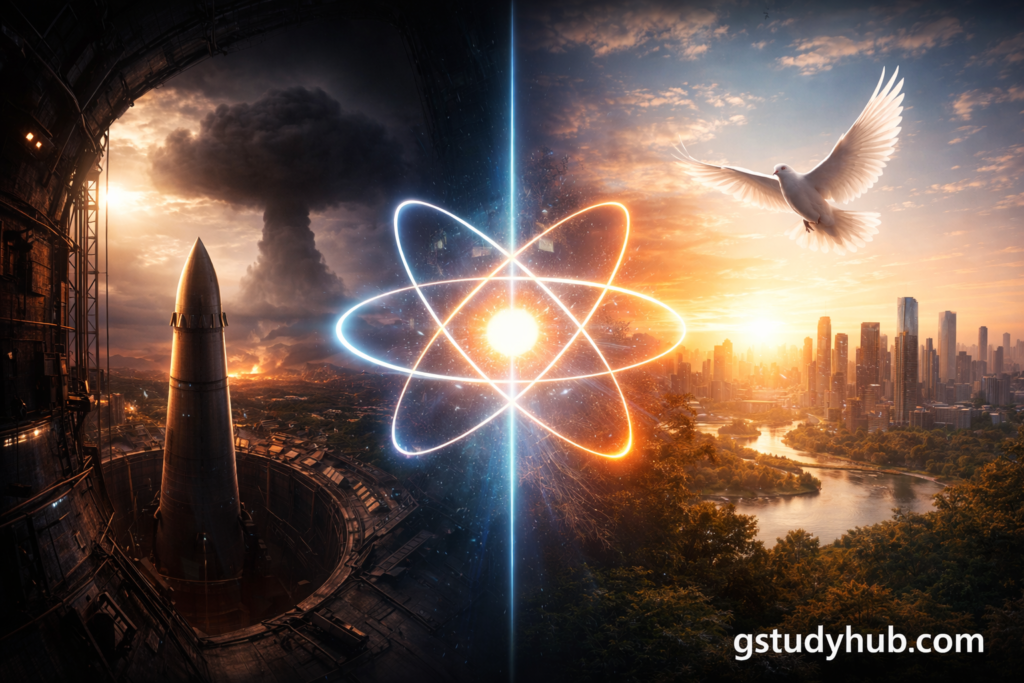
Throughout human history, power has always been both a source of progress and a cause of fear. From the moment humanity learned to control fire to the modern age of nuclear technology, every major breakthrough has carried with it not only new possibilities but also new responsibilities. Nuclear power stands as one of the greatest achievements of human intelligence, yet it is also one of the most dangerous forces ever created by mankind. In this context, Nuclear Non-Proliferation and Strategic Balance have become central pillars of global survival.

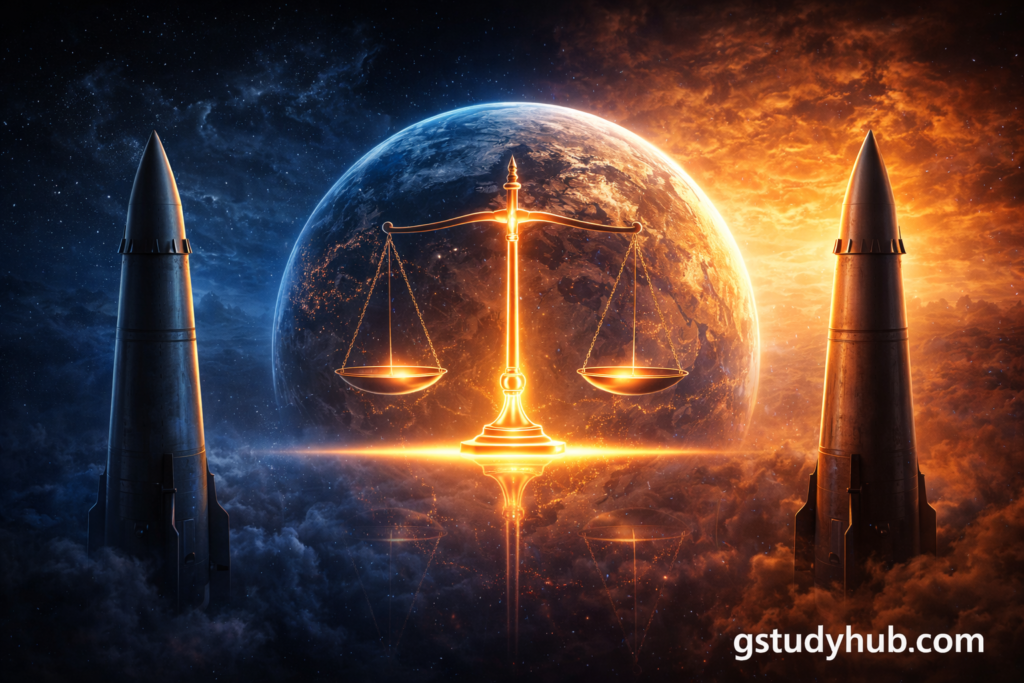
Nuclear weapons are not merely military tools; they are deeply embedded in global politics, diplomacy, and international security structures. On one hand, they provide nations with a sense of protection. On the other hand, they create a constant atmosphere of anxiety, where the fear of catastrophic destruction is never far from reality. This delicate equilibrium between deterrence and destruction is at the heart of Nuclear Non-Proliferation and Strategic Balance.

When I first began studying Nuclear Non-Proliferation and Strategic Balance, I realized that global peace does not depend solely on the number of weapons a country possesses. Instead, it is shaped by political will, ethical responsibility, mutual trust, and the collective desire to prevent unimaginable destruction.

This introduction sets the foundation for understanding why Nuclear Non-Proliferation and Strategic Balance are essential in today’s international system, how strategic balance functions in global politics, and how humanity can move beyond fear toward a future based on cooperation and lasting peace.

Premium Quality Utility Product

★★★★★ (4.7/5 Customer Rating)

Designed for durability, performance, and everyday convenience. A perfect choice for reliable use at an affordable price.

  • Strong & Durable Build
  • Easy to Use
  • Lightweight & Portable
  • Long-Lasting Performance
  • Great Value for Money
👉 Check Price on Amazon
✔ Secure Payment   ✔ Amazon Trusted Seller   ✔ Fast Delivery

What Is Nuclear Non-Proliferation?

Nuclear non-proliferation refers to the global effort to prevent the spread of nuclear weapons and to ensure that more countries do not acquire or develop these highly destructive arms. In the broader framework of Nuclear Non-Proliferation and Strategic Balance, this effort is essential for maintaining long-term global stability.

This concept is based on the belief that the fewer states possess nuclear weapons, the lower the risk of their use. Nuclear non-proliferation is not only about restricting weapons; it also promotes responsible behavior, transparency, and cooperation among nations. These principles form a crucial foundation of Nuclear Non-Proliferation and Strategic Balance in modern international relations.

Another important dimension of nuclear non-proliferation is the recognition of every country’s right to use nuclear energy for peaceful purposes. However, this peaceful use must be strictly separated from military applications, ensuring that Nuclear Non-Proliferation and Strategic Balance are not undermined by hidden weaponization efforts.

Origins of Nuclear Non-Proliferation

At the end of the Second World War, the world witnessed for the first time the devastating power of nuclear weapons. The bombings of Hiroshima and Nagasaki revealed the unimaginable destruction that a single nuclear strike could cause, shaping the early debates around Nuclear Non-Proliferation and Strategic Balance.

In the years that followed, a rapid arms race emerged among major powers, leading to a dramatic increase in nuclear arsenals. This escalating competition highlighted the urgent need for structured frameworks of Nuclear Non-Proliferation and Strategic Balance.

As a response to these concerns, nations began negotiating international agreements aimed at limiting the spread of nuclear weapons and preserving global stability within the broader system of Nuclear Non-Proliferation and Strategic Balance.

Key Objectives of Nuclear Non-Proliferation

  • To prevent the spread of nuclear weapons so that new states do not acquire or develop them, thereby reinforcing Nuclear Non-Proliferation and Strategic Balance.
  • To promote disarmament by gradually reducing existing nuclear arsenals while maintaining Nuclear Non-Proliferation and Strategic Balance.
  • To encourage the peaceful use of nuclear energy for human development and welfare without disturbing Nuclear Non-Proliferation and Strategic Balance.
  • To strengthen international cooperation and trust among nations as a core requirement of Nuclear Non-Proliferation and Strategic Balance.
  • To enhance global peace and security for present and future generations through sustainable Nuclear Non-Proliferation and Strategic Balance.

The Concept of Strategic Balance

Strategic balance refers to a distribution of power within the international system in which no single country becomes so dominant that it can attack others without fearing serious consequences. Within the broader framework of Nuclear Non-Proliferation and Strategic Balance, this equilibrium is considered essential for reducing the risk of catastrophic conflict.

In international politics, strategic balance is often viewed as a practical mechanism for preserving peace. Its purpose is not to encourage unlimited arms accumulation, but to ensure that the cost of aggression remains so high that no state finds it rational to initiate conflict. This logic lies at the core of modern deterrence doctrines and global security architecture.

The concept also acknowledges a hard reality: until complete disarmament becomes achievable, balanced power may serve as a temporary foundation for preventing chaos and maintaining order in a competitive world shaped by strategic competition and nuclear capabilities.

Deterrence Theory

Deterrence theory is based on the idea that the most effective way to prevent war is to convince a potential adversary that any attack will result in devastating retaliation. In other words, fear is used as a tool to discourage aggression — a principle closely connected to Nuclear Non-Proliferation and Strategic Balance.

When two or more states possess comparable destructive capabilities, they understand that a war would bring unacceptable losses to all sides. This shared awareness strengthens strategic restraint within the broader non-proliferation regime and international stability framework.

However, deterrence does not guarantee absolute security. Miscalculations, technical failures, or misinterpretations can still threaten the fragile structure of global nuclear stability.

Power Balance vs. Morality

A fundamental question remains: can lasting peace be achieved solely through the balance of weapons? Even within the framework of Nuclear Non-Proliferation and Strategic Balance, moral responsibility must complement strategic calculation.

When nations rely exclusively on military strength, peace becomes a condition of necessity rather than a shared aspiration. Sustainable strategic stability requires ethical commitment alongside deterrence.

Therefore, strategic balance should be understood as a temporary safeguard within the wider global security structure, while the ultimate goal must be to build a world where peace arises from mutual understanding rather than the threat of destruction.

My Experience and Lessons Learned

For me, nuclear non-proliferation and strategic balance are not merely abstract theories found in textbooks. They are ideas that gradually shaped my understanding of the world through reading, watching documentaries, and closely following global events. Over time, I realized that this subject is not limited to politics or military strategy, but is deeply connected to the survival and future of humanity itself.

Whenever I heard news about nuclear tests or threats, I initially perceived them as routine political statements. However, as I learned more about the destructive capacity of nuclear weapons, it became clear that behind these words lies a force capable of wiping out entire cities within moments.

This realization taught me that knowledge is not only about collecting information, but also about developing responsibility. The more I understood the consequences of nuclear power, the stronger my sense of moral obligation became.

High Quality Everyday Use Product

★★★★★ (4.7/5 Customer Rating)

A durable and reliable product made for daily needs. Great build quality and excellent value for money.

  • Strong & Durable Build
  • Easy to Use
  • Lightweight & Portable
  • Long-Lasting Performance
  • Great Value for Money
👉 Check Price on Amazon
✔ Secure Payment   ✔ Amazon Trusted Seller   ✔ Fast Delivery

The First Realization

My first real awakening came when I learned that a single nuclear weapon has the potential to affect not just one city, but generations of human lives through long-lasting environmental and health impacts. At that moment, I understood that something so powerful cannot be viewed merely as a weapon; it must also be seen as an immense responsibility.

I began to question the true purpose of scientific and technological advancement. If progress is meant to improve human life, then its greatest achievements should never become instruments of mass destruction.

Humanity vs. Power

Within me, a constant struggle emerged between humanity and power. On one side, nations seek strength to protect themselves. On the other, humanity asks whether we are losing our compassion and ethical values in the pursuit of dominance.

My conscience reminds me that real power does not lie in the ability to threaten others, but in the capacity to protect life and preserve dignity. If humanity becomes the foundation of our policies, we may no longer need fear as the basis of peace.

This is my greatest lesson: power has meaning only when it is guided by compassion, wisdom, and responsibility.

Benefits of Nuclear Non-Proliferation

Nuclear non-proliferation is not merely a policy aimed at limiting weapons; it represents a broader vision for safeguarding the future of humanity. By restricting the spread of nuclear arms, the international community seeks to create a safer, more stable, and more peaceful world. The benefits of nuclear non-proliferation extend far beyond national borders and affect all of humankind.

  • Promoting Global Peace
    When the spread of nuclear weapons is controlled, the likelihood of large-scale war decreases significantly. Fewer weapons mean reduced tensions and greater opportunities for dialogue and cooperation among nations.
  • Reducing the Risk of Terrorism
    Non-proliferation efforts help ensure that nuclear materials and technologies do not fall into the wrong hands. This lowers the chance that terrorist groups could acquire or use weapons of mass destruction.
  • Protecting Human Life and Resources
    The use of nuclear weapons causes immediate mass casualties and long-term damage to the environment, public health, and future generations. Non-proliferation minimizes these dangers and helps preserve human and natural resources.
  • Encouraging Economic and Social Development
    When nations invest in education, healthcare, and infrastructure instead of arms races, societies become more prosperous and resilient.
  • Building International Trust
    Compliance with non-proliferation agreements strengthens confidence among states and enhances diplomatic relationships.

Challenges and Contradictions

Nuclear non-proliferation and strategic balance are essential for global security, yet they are also complex and full of contradictions. While these concepts aim to promote peace and stability, their practical implementation faces numerous obstacles. Competing national interests, power rivalries, and rapid technological change make the process extremely difficult.

Premium Daily Utility Product

★★★★★ (4.7/5 Customer Rating)

Built for durability and everyday convenience with strong performance and excellent value for money.

  • Strong & Durable Build
  • Easy to Use
  • Lightweight & Portable
  • Long-Lasting Performance
  • Great Value for Money
👉 Check Price on Amazon
✔ Secure Payment   ✔ Amazon Trusted Seller   ✔ Fast Delivery

Political Self-Interest

Every nation has its own security concerns, regional ambitions, and strategic objectives. At times, national interests are placed above global peace, weakening non-proliferation efforts. Powerful states often seek to preserve their military advantages, while weaker states may pursue nuclear capabilities in order to achieve strategic parity.

Such political self-interest deepens mistrust among nations and undermines the effectiveness of international agreements.

Lack of Trust

Mutual trust is the foundation of successful non-proliferation, yet it remains one of the greatest challenges. Many states fear that if they reduce their arsenals, others may exploit their vulnerability.

As a result, countries hesitate to be fully transparent and may secretly maintain or expand their capabilities, increasing global tension and instability.

Technological Proliferation

Rapid technological advancement has made nuclear non-proliferation even more complicated. Today, knowledge and equipment related to nuclear technology are more accessible than ever before.

In addition, emerging capabilities such as cyber technologies, artificial intelligence, and advanced missile systems add new layers of complexity to nuclear strategies, making control and verification increasingly difficult.

Despite these challenges, sustained international commitment to non-proliferation remains essential to prevent humanity from moving closer to catastrophic destruction.

Role of Developing Countries

The pursuit of nuclear non-proliferation and strategic balance is not solely the responsibility of major powers. Developing countries also have a vital role to play in shaping a more stable, fair, and peaceful global order.

Developing nations often represent regions where limited resources, urgent development needs, and security challenges coexist. Because of this, they tend to understand the harmful consequences of arms races more clearly and place greater emphasis on peaceful and cooperative solutions.

These countries can raise strong voices in support of nuclear non-proliferation at international forums and help ensure that global rules are applied fairly and without double standards.

In addition, developing nations can strengthen strategic balance by promoting regional cooperation, adopting confidence-building measures, and encouraging the peaceful use of nuclear technology for development purposes.

When developing countries collectively stand for peace, disarmament, and cooperation, they make a powerful contribution toward creating a more just and stable international system.

Future Direction: The Need to Think Beyond Weapons

If humanity truly seeks a safe and peaceful future, it must learn to think beyond the mere balance of weapons. History shows that lasting peace cannot be built on fear alone, but on mutual understanding, cooperation, and trust among nations.

Nuclear non-proliferation and strategic balance may serve as temporary safeguards, but long-term peace requires countries to redirect their resources and priorities away from arms races and toward human development.

Best Value Utility Product

★★★★★ (4.7/5 Customer Rating)

A practical and reliable product made for daily use. Strong build quality and great performance at an affordable price.

  • Strong & Durable Build
  • Easy to Use
  • Lightweight & Portable
  • Long-Lasting Performance
  • Great Value for Money
👉 Check Price on Amazon
✔ Secure Payment   ✔ Amazon Trusted Seller   ✔ Fast Delivery

Education and Awareness

It is essential to educate future generations about the real consequences of war and violence. Through education, young people can develop values of peace, tolerance, and global citizenship.

When individuals understand the devastating impact of nuclear weapons, they are more likely to stand firmly in support of peace and disarmament.

Diplomacy and Dialogue

Conflicts are best resolved not through weapons, but through dialogue and diplomacy. Regular communication, confidence-building measures, and transparency between nations can significantly reduce global tensions.

The goal of diplomacy should not only be to settle disputes, but to create an environment in which war becomes unthinkable.

This is the true future direction — a world where security is based not on the threat of destruction, but on humanity, cooperation, and shared responsibility.

Conclusion: Peace Is a Choice

This article seeks to highlight that nuclear non-proliferation and strategic balance are not merely policy concepts, but profound ideas connected to the future of humanity itself. History has repeatedly shown that war brings destruction, while peace creates opportunities for societies to grow and flourish.

The future of nuclear non-proliferation and strategic balance will determine the trajectory of global peace and security.

The existence of nuclear weapons reminds us of a difficult reality — we possess the power to destroy ourselves, but we also possess the ability to save ourselves. That ability lies in choosing peace.

Peace should not be seen as a condition forced by fear, but as a conscious and courageous decision. It is a choice that must be made collectively by nations, leaders, and ordinary citizens alike. When we choose humanity over hatred, cooperation over competition, and compassion over domination, we lay the foundation for a better world.

Ultimately, peace is not a distant dream. It is a living possibility embedded in our thoughts, our policies, and our actions. All we need is the courage to choose it.

What Can You Do?

Nuclear non-proliferation and global peace are not the responsibility of governments and international organizations alone. Every individual can contribute, in small but meaningful ways, to creating a safer and more peaceful world.

Learn and Share Knowledge
Educate yourself about nuclear non-proliferation, strategic balance, and global security, and share accurate information with others.
  • Adopt Peace-Oriented Values
    Promote tolerance, dialogue, and non-violence in your daily life.
  • Encourage Dialogue
    Engage in respectful discussions with people who hold different viewpoints and seek peaceful solutions.
  • Raise Awareness Among Youth
    Help cultivate values of peace, humanity, and global citizenship in younger generations.
  • Support Peaceful Policies
    Advocate for policies and initiatives that promote disarmament, cooperation, and international understanding.
  • Remember, meaningful change often begins with a single individual. When each of us takes responsibility for our part, peace can become not just a hope, but a reality.

    Frequently Asked Questions on Nuclear Non-Proliferation and Strategic Balance

    What is the main purpose of Nuclear Non-Proliferation and Strategic Balance?

    Nuclear Non-Proliferation and Strategic Balance aim to prevent the spread of nuclear weapons while maintaining deterrence stability between major powers.

    Why is Nuclear Non-Proliferation and Strategic Balance important in international relations?

    Nuclear Non-Proliferation and Strategic Balance are essential because they reduce the risk of large-scale war and promote global security cooperation.

    Do nuclear weapons guarantee world peace?

    Sustainable peace depends on effective nuclear non-proliferation and strategic balance policies rather than fear-based deterrence alone.

    What role do developing countries play in nuclear non-proliferation?

    Developing countries can support nuclear non-proliferation by advocating fair global rules, promoting regional cooperation, and encouraging the peaceful use of nuclear technology.

    How can ordinary citizens contribute to global peace?

    Ordinary citizens can contribute by spreading awareness, adopting peace-oriented values, supporting peaceful policies, and engaging in constructive dialogue.

    Is complete nuclear disarmament possible?

    Complete nuclear disarmament is a challenging goal, but it can be gradually achieved through continuous international cooperation, trust-building measures, and effective diplomacy.

    References

    The ideas, facts, and analysis presented in this article are informed by a wide range of books, research papers, official documents, and reputable sources, including:

    • United Nations documents related to the Nuclear Non-Proliferation Treaty (NPT)
    • Official reports of the International Atomic Energy Agency (IAEA)
    • Research journals on global security, nuclear policy, and strategic studies
    • Books and academic articles on nuclear weapons, disarmament, and international relations
    • Reputable international news organizations and analytical reports
    • Scholarly materials on diplomacy, international politics, and security studies

    These references are intended to provide readers with credible pathways for further study and deeper understanding of the subject.

    Leave a Comment

    Your email address will not be published. Required fields are marked *

    Scroll to Top