
Monsoon Pattern of India: My Understanding, Learnings & Impact on Our Climate
India’s monsoon pattern is not just a climatic event; it is a powerful natural rhythm that shapes our agriculture, lifestyle, and the way we perceive seasons. The word “monsoon” comes from the Arabic word “mausim”, meaning season. Over the years, experiencing these patterns closely has helped me understand how deeply they influence our environment and daily life.
Main Types of Monsoon in India
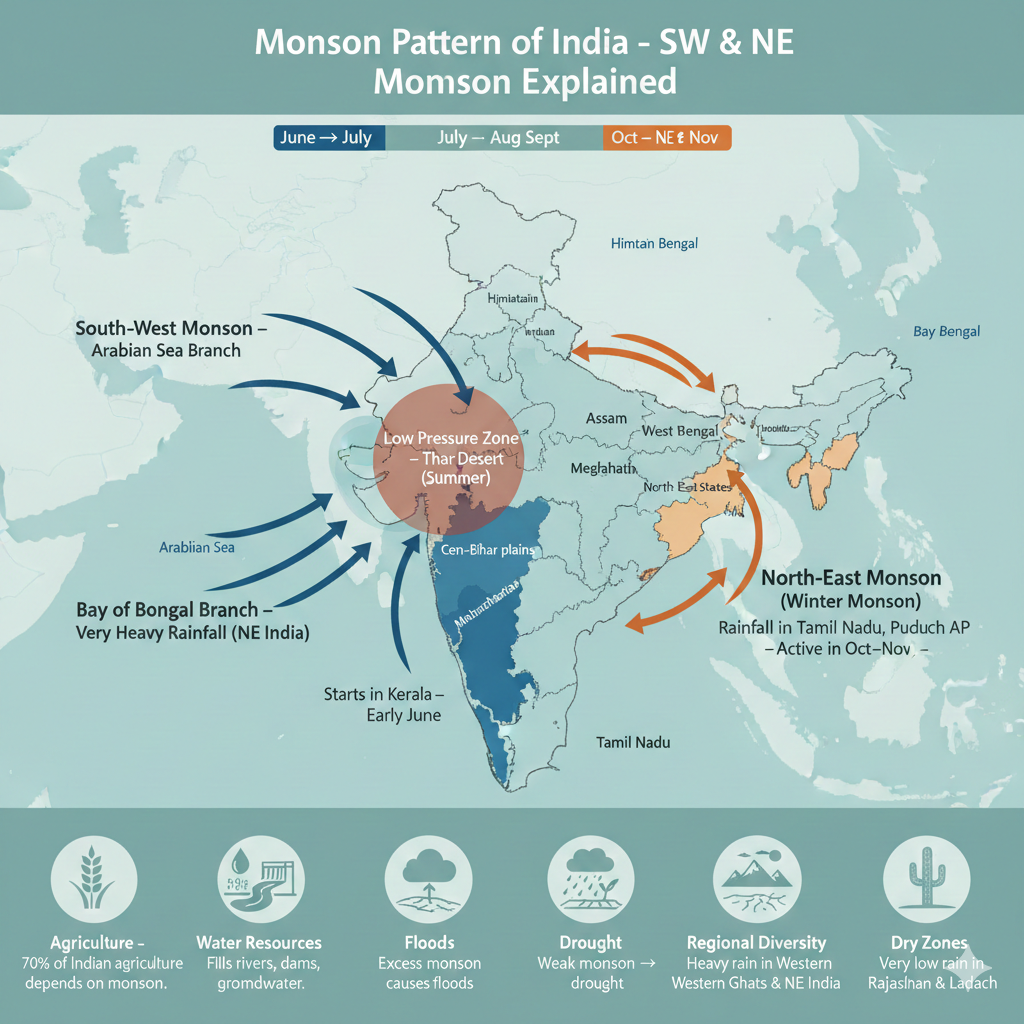
The monsoon of India is mainly divided into two major categories: South-West Monsoon and North-East Monsoon. Each has its own timing, characteristics, and effects.
1. South-West Monsoon (Summer Monsoon)
This is the most significant phase of monsoon in India. It brings widespread rainfall and marks the beginning of the agricultural cycle.
Key Features
Arrival
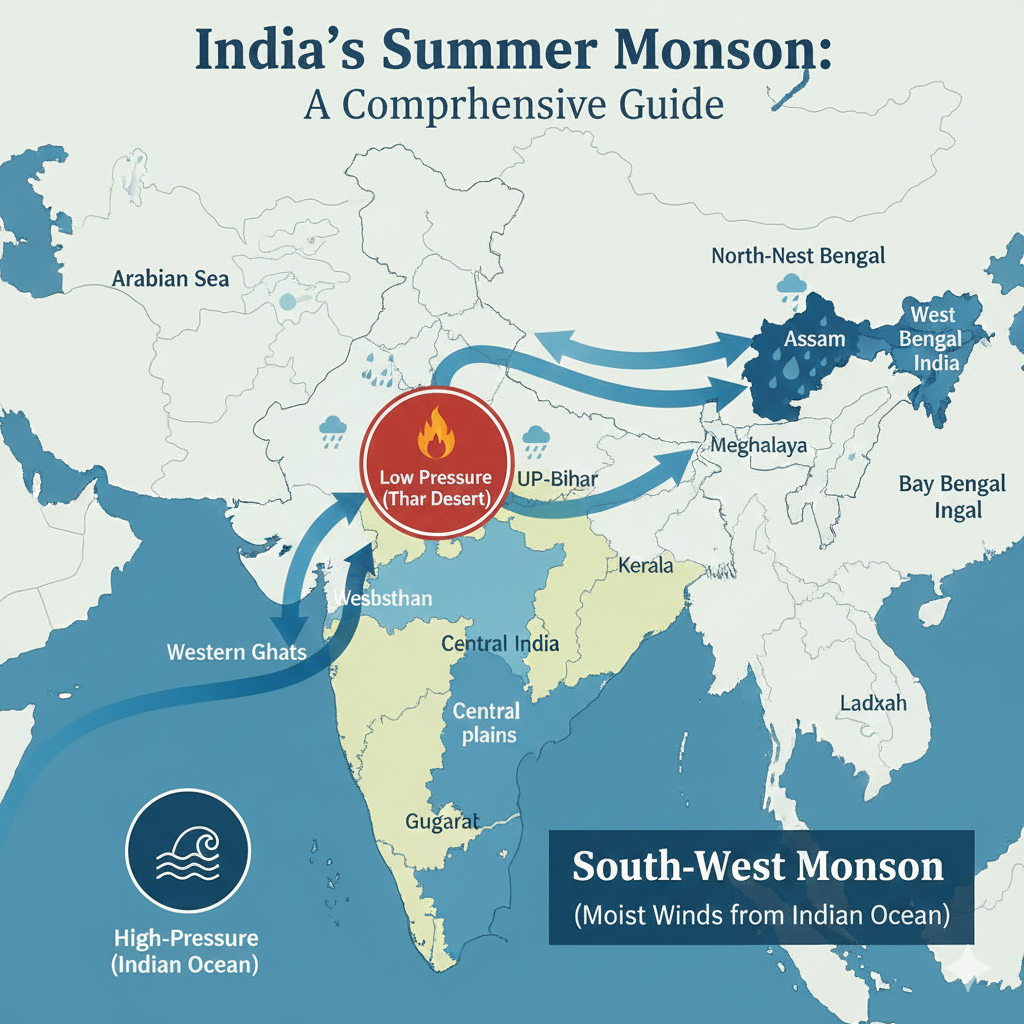
- The South-West monsoon typically enters the Kerala coast in the first week of June.
- After its arrival, it spreads across the country, bringing rainfall to most regions.
Reason
- During summer, a low-pressure area forms over the northwestern region (Thar Desert).
- Moisture-rich winds from the Indian Ocean are pulled towards northern India, causing widespread rainfall.
Distribution of Rainfall
- Heavy rainfall occurs in the Western Ghats, Northeast India, and the Gangetic Plains.
- Some parts of Rajasthan and Gujarat receive comparatively less rainfall.
Duration
This monsoon remains active from June to September.
2. North-East Monsoon (Winter Monsoon)
After the retreat of the South-West monsoon, the North-East monsoon sets in. It mainly affects the southeastern parts of India.
Key Features
Arrival
- It becomes active during October and November after the withdrawal of the South-West monsoon.
- It primarily influences Tamil Nadu, Andhra Pradesh, and parts of South India.
Reason
- During winter, a high-pressure zone forms over North India.
- Winds move toward the Bay of Bengal, gather moisture, and cause rainfall in southeastern India.
Distribution of Rainfall
- Mainly occurs in Tamil Nadu, Puducherry, and southern Andhra Pradesh.

Role and Impact of Monsoon
Agriculture
Nearly 70% of India’s agriculture depends on monsoon rains. A timely monsoon ensures a good harvest, while delays or deficiencies can lead to drought-like conditions and crop losses.
Water Level of Rivers
Monsoon rains replenish rivers and reservoirs which are essential for irrigation, hydropower generation, and drinking water supply.
Natural Disasters
Excessive monsoon rainfall can lead to floods, landslides, and soil erosion, especially in hilly areas.
Diversity
Monsoon impact varies widely across India—while the Western Ghats and Northeast India receive extremely heavy rainfall, arid areas like Rajasthan get minimal precipitation.
Conclusion
India’s monsoon is much more than a seasonal event—it is the foundation of our climate, economy, and cultural life. Though its pattern is often irregular and complex, understanding the monsoon helps us prepare better for both opportunities and challenges. It maintains ecological balance and remains deeply rooted in the cultural and social fabric of India.
Frequently Asked Questions (FAQ)
1. What are the two main types of monsoons in India?
The two main types are the South-West Monsoon and the North-East Monsoon.
2. When does the South-West monsoon arrive in India?
It usually arrives in the first week of June at the Kerala coast.
3. Which states receive rainfall from the North-East monsoon?
Tamil Nadu, Puducherry, and southern Andhra Pradesh receive major rainfall from this monsoon.
4. Why is the monsoon important for Indian agriculture?
Around 70% of Indian agriculture depends on rainfall for irrigation, crop growth, and water availability.
5. What problems are caused by heavy monsoon rains?
Heavy monsoon may lead to floods, landslides, and soil erosion in many regions.
Winter Monsoon in India (North-East Monsoon)
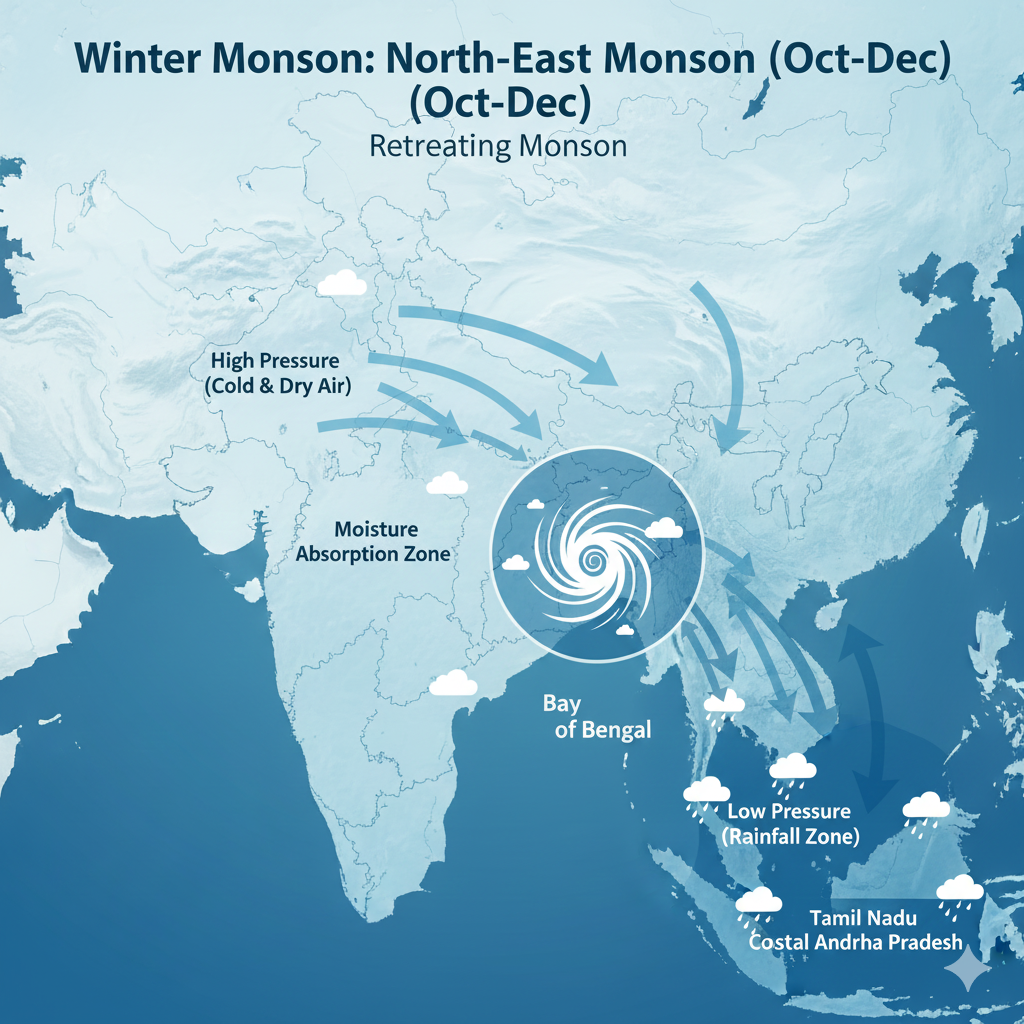
The winter monsoon, also known as the North-East Monsoon, is the second major component of India’s climate system. Active from October to December, it is the primary source of rainfall for South India. It is also referred to as the retreating monsoon. Let us understand its causes, characteristics, and effects in detail.
Cause and Process of Winter Monsoon
High Pressure Area in North India
During winter, the sun's rays shift toward the Southern Hemisphere. As a result, temperatures drop in North India, forming a high-pressure zone in the region.
Direction of Winds
Due to the high-pressure system, winds start blowing toward the southern part of India. These winds blow from the north-east to south-west, which is why they are known as the North-East Monsoon.
Moisture from the Bay of Bengal
While moving across the Bay of Bengal, these winds absorb moisture. When they reach the eastern coast of South India—mainly Tamil Nadu and Andhra Pradesh—they cause rainfall.
Characteristics of the Winter Monsoon
Main Impact Areas
The winter monsoon significantly affects:
- Tamil Nadu
- Puducherry
- Andhra Pradesh
- Southern Karnataka
In North and West India, this monsoon appears mostly as dry, cold winds.
Distribution of Rainfall
- Tamil Nadu receives about 50–60% of its annual rainfall from the winter monsoon.
- Cyclones and low-pressure systems may bring heavy rainfall to the east coast.
Cyclonic Effect
This season often witnesses cyclones forming in the Bay of Bengal, resulting in:
- Heavy rainfall
- Flooding
- Coastal erosion

Duration and Intensity
The winter monsoon is active from mid-October to December. Its intensity varies from year to year depending on atmospheric and oceanic conditions.
Effects of the Winter Monsoon
Impact on Agriculture
In Tamil Nadu and Andhra Pradesh, Rabi crops such as:
- Paddy
- Sugarcane
- Pulses
depend heavily on this monsoon. A weak monsoon can negatively affect agricultural output in these regions.
water resources
The winter monsoon helps fill reservoirs and lakes in South India, ensuring water availability for:
- Irrigation
- Domestic use
Natural Disasters
Due to cyclones and heavy rainfall, the region may face:
- Floods
- Coastal erosion
- Waterlogging in rural and urban areas
Dry Winds in North India
During this season, North and West India experience cold, dry winds, making the winter months harsh.
Winter Monsoon and Indian Climate
Rainfall in Tamil Nadu
Tamil Nadu is the only state that receives the majority of its rainfall from the winter monsoon, making it vital for the region’s agriculture and water supply.
Impact on the Himalayas and North India
The Himalayan range deflects cold, dry winter monsoon winds southwards. This results in extremely dry and cold winter conditions in northern India.
Impact on Northeast India and Western Ghats
The winter monsoon has minimal impact on Northeast India and the Western Ghats.
Conclusion
The winter monsoon plays a crucial role in the climatic and agricultural systems of southern India, especially Tamil Nadu and Andhra Pradesh. It forms the basis of agriculture, water supply, and local climate patterns in these regions. Accurate forecasting and efficient management of the winter monsoon are essential for ensuring economic and social stability.
Frequently Asked Questions (FAQ)
1. What is the winter monsoon?
The winter monsoon, or North-East Monsoon, is active from October to December and is the major source of rainfall for South India.
2. Which states receive rainfall from the North-East Monsoon?
Tamil Nadu, Puducherry, Andhra Pradesh, and parts of Karnataka receive rainfall from this monsoon.
3. Why does the winter monsoon bring rainfall to South India?
Winds absorb moisture from the Bay of Bengal and release it as rainfall when they reach the eastern coast.
4. How does the winter monsoon affect agriculture?
Rabi crops like paddy, sugarcane, and pulses in Tamil Nadu and Andhra Pradesh depend heavily on it.
5. What natural disasters are associated with the winter monsoon?
Floods, cyclones, and coastal erosion are common during this season.
Role and Impact of Monsoon in India
The monsoon plays a crucial role in shaping India’s climate, economy, and social life. It is a natural boon that directly influences agriculture, water resources, biodiversity, and the livelihood of millions. Let us explore the role and impact of monsoon in detail.
Role of Monsoon
Contribution to Agriculture
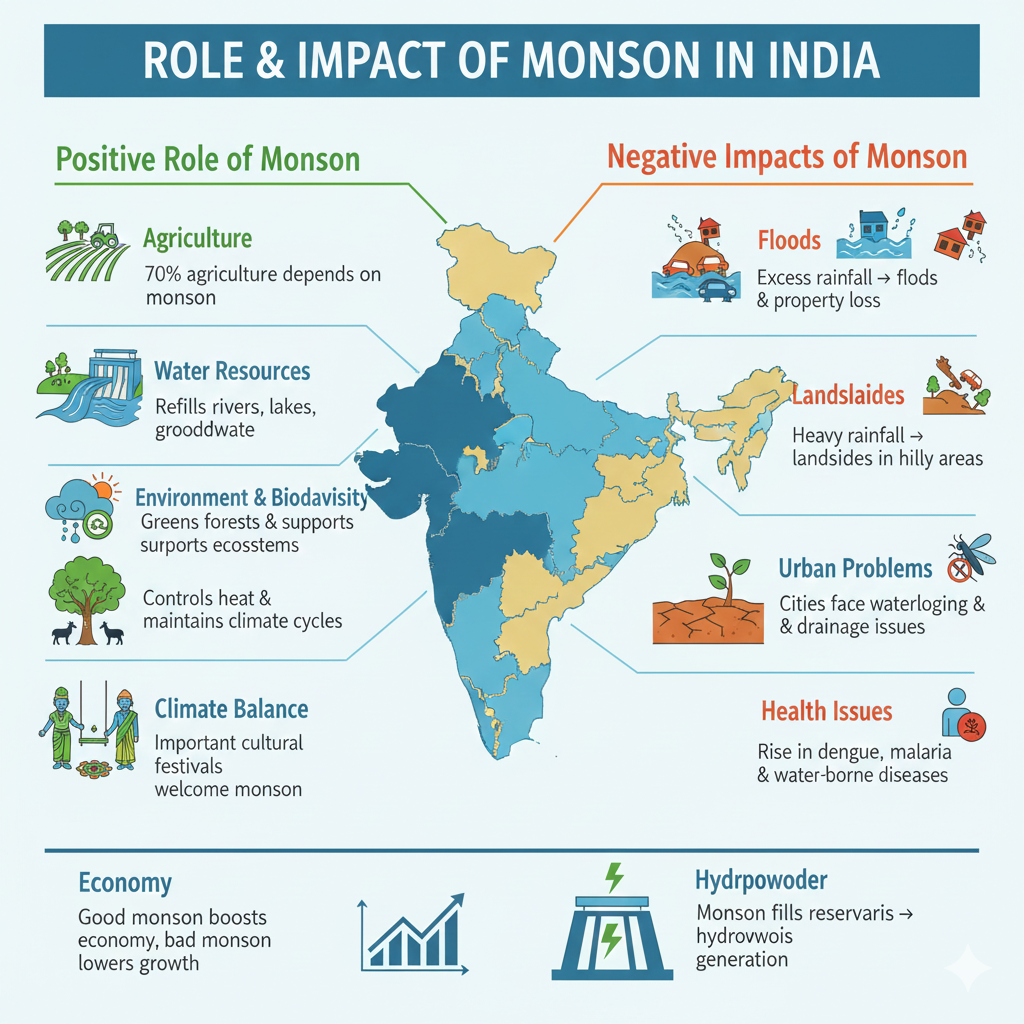
Nearly 70% of India’s agriculture depends on monsoon rainfall. Kharif crops such as rice, sugarcane, maize, and pulses thrive with timely and adequate rainfall. The proper arrival and withdrawal of the monsoon ensure a successful harvest season.
Recharging of Water Resources
Monsoon rains fill rivers, lakes, and reservoirs, which are essential for:
- Drinking water supply
- Irrigation
- Industrial use
It also helps maintain groundwater levels across the country.
Biodiversity and Environment
Monsoon brings greenery to forests and landscapes, promoting biodiversity. It plays a vital role in the lifecycle of various plants, animals, and microorganisms.
Climate Balance
Monsoon helps maintain India’s climate by bringing coolness and moisture. It eliminates excessive heat and dryness, balancing the overall climate system.
Social and Cultural Importance
Monsoon holds cultural significance in many Indian traditions and festivals. Celebrations such as Onam (Kerala) and Teej (North India) mark the arrival of the monsoon and symbolize prosperity.
Impact of Monsoon
Positive Effects
Impact on the Economy
India’s agriculture-based economy depends heavily on the monsoon. A good monsoon boosts crop production, rural income, and national economic growth.
Hydroelectricity Generation
Monsoon fills reservoirs and dams, which are major sources of hydropower. Several power plants rely on monsoon-fed water for electricity generation.
Industrial Development
Industries dependent on agriculture—such as food processing, textiles, and sugar—benefit greatly from a successful monsoon season.
Environmental Regeneration
Monsoon rejuvenates forests, grasslands, and natural ecosystems. Dry regions also regain greenery during this season.
Negative Effects
Floods and Landslides
Excessive rainfall can lead to floods, causing loss of life, property damage, and displacement. In hilly areas, heavy rain increases the risk of landslides.

drought and Irregularities
If the monsoon is delayed or weak, drought conditions may occur. States like Maharashtra, Rajasthan, and Madhya Pradesh are highly vulnerable.
Agricultural Crisis
Uneven rainfall patterns may damage crops, leading to economic hardship for farmers and triggering social distress.
Urban Problems
Cities often face waterlogging, traffic jams, and drainage issues during heavy rainfall. Urban areas like Mumbai, Chennai, and Kolkata are especially affected.
Effects on Health
During monsoon season, diseases such as dengue, malaria, and waterborne infections increase significantly.
Regional Impact of Monsoon
Areas with Heavy Rainfall
- Northeast India (Meghalaya, Assam)
- Western Ghats (Kerala, Karnataka)
These areas often face floods and landslides during monsoon.
Areas with Low Rainfall
- Rajasthan
- Gujarat
- Leh-Ladakh
Water scarcity is a common issue in these regions.
Rural and Urban Divide
In rural areas, monsoon is essential for agriculture. In urban regions, the monsoon creates challenges such as traffic congestion and waterlogging.
Conclusion
The monsoon is the foundation of India’s natural balance and economic stability. It supports agriculture, water resources, environment, and societal well-being. However, the uncertainty and irregularity of monsoon necessitate scientific planning and careful management. Through timely forecasting and efficient water management, India can strengthen its development process.
Frequently Asked Questions (FAQ)
1. Why is the monsoon important for India?
The monsoon supports agriculture, replenishes water resources, and influences the economy, environment, and climate.
2. How does monsoon impact agriculture?
Nearly 70% of India’s agriculture depends on monsoon rainfall, especially for Kharif crops like rice, maize, and sugarcane.
3. What are the negative effects of monsoon?
Floods, droughts, landslides, urban waterlogging, and increased health risks are major negative impacts.
4. Which areas receive the highest monsoon rainfall?
Northeast India and the Western Ghats receive the heaviest rainfall during monsoon.
5. How does monsoon affect the Indian economy?
A good monsoon boosts crop production and rural income, supporting overall economic growth.