
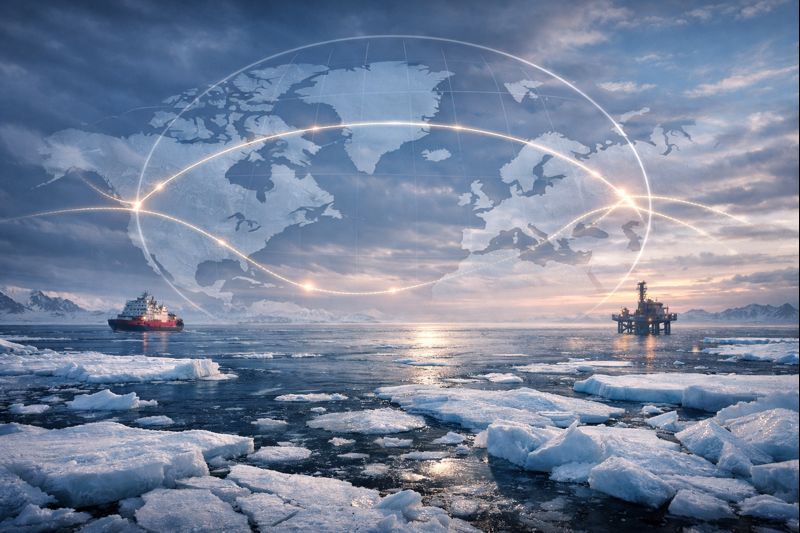
What Is Arctic Geopolitics?
Arctic Geopolitics refers to the strategic, economic, environmental, and military competition among countries in the Arctic region. Climate change and melting ice are opening new trade routes, energy resources, and geopolitical rivalries involving Russia, the United States, China, Canada, and other Arctic nations.
Introduction: A Frozen World That Is Slowly Melting
For a long time, the Arctic region was imagined as a distant, silent, and frozen land—far removed from the everyday concerns of human civilization. In popular perception, it was a world of endless ice, polar bears, and extreme cold, a place that seemed untouched by global politics. However, as I began exploring international relations and geopolitical affairs, I realized that this frozen world is quietly transforming into one of the most strategically important regions on Earth.
Climate change is melting the Arctic ice at an unprecedented pace. What appears, on the surface, to be an environmental tragedy is simultaneously opening access to vast reserves of oil, natural gas, rare minerals, and new maritime trade routes. These emerging opportunities have drawn the attention of the world’s major powers, turning the Arctic into a new arena of competition, cooperation, and strategic calculation.
Understanding Arctic geopolitics has been more than an academic exercise for me; it has been a journey of learning and reflection. Each report, map, and policy document revealed how deeply interconnected nature, power, and human ambition truly are. The Arctic is no longer a remote frontier—it is becoming a central stage where the future balance of global power may be shaped.
This introduction marks the beginning of a broader story about what lies beneath the ice—not only in terms of physical resources, but also in terms of political intentions, security concerns, and competing visions for the future. It invites us to look beyond the frozen surface and recognize the Arctic as a living, dynamic space where global interests converge.
The changing Arctic reminds us of an important truth: when the natural world changes, geopolitics changes with it. As ice melts and new possibilities emerge, humanity faces a critical choice—whether to pursue narrow national interests or to seek cooperation for the collective good. With this understanding, let us begin our exploration of a frozen world that is slowly melting, yet rapidly reshaping global politics.
The growing importance of Arctic Geopolitics is reshaping global strategic calculations in ways that were unimaginable just a few decades ago.
Why in News?
- Rapid Arctic ice melting is opening new trade routes.
- Russia and NATO are increasing military activities in the Arctic.
- China’s Polar Silk Road strategy is expanding Arctic competition.
- India is increasing Arctic research through Himadri Station.
What Is the Arctic Region?
When I first encountered the term “Arctic region,” I imagined an endless white landscape—silent, frozen, and seemingly disconnected from the rest of the world. It appeared to be a distant realm of ice and darkness, far removed from human concerns. Yet, as I began to explore its geography and significance, I realized that the Arctic is not merely a frozen wilderness. It is one of the most sensitive and strategically important regions on Earth.
The Arctic region refers to the area surrounding the North Pole and lying largely within the Arctic Circle. It includes the Arctic Ocean and parts of North America, Europe, and Asia. Despite its harsh climate, the Arctic plays a crucial role in regulating Earth’s temperature, influencing ocean currents, and shaping global weather patterns.
Geographical Location
The Arctic region encompasses territories belonging to eight countries: Russia, Canada, the United States (Alaska), Norway, Denmark (through Greenland), Finland, Sweden, and Iceland. It consists of vast oceanic spaces, ice-covered seas, frozen tundra, and scattered islands.
This geographic position gives the Arctic exceptional strategic value. The Arctic Ocean has the potential to connect the Atlantic and Pacific Oceans through emerging shipping routes. As sea ice retreats, passages such as the Northern Sea Route and the Northwest Passage are becoming increasingly navigable, drawing global attention.
Natural Characteristics
The defining feature of the Arctic is its extreme cold and long periods of ice cover. Winters are dark and bitterly cold, while summers are short and relatively cool. Large areas are covered by permafrost, where the ground remains frozen year-round.
The region supports a unique ecosystem adapted to severe conditions. Polar bears, seals, walruses, Arctic foxes, whales, and migratory birds depend on this fragile environment. Vegetation is dominated by tundra plants such as mosses, lichens, and small shrubs.
Human Presence and Life
Contrary to popular belief, the Arctic is not an empty land. Indigenous peoples, including the Inuit, Sami, and other native communities, have lived in the region for thousands of years. Their cultures, traditions, and livelihoods are closely tied to the Arctic environment.
These communities have developed deep knowledge of survival in extreme conditions, relying on hunting, fishing, and herding. However, modern development, resource extraction, and Climate change are rapidly transforming their way of life.
In essence, the Arctic region is far more than a cold and distant place. It is a crossroads of nature, humanity, and global politics. To understand the Arctic is to understand a vital part of the world’s future.

- ✔ High quality content
- ✔ Trusted by students
- ✔ Best value for money
Geographical Location
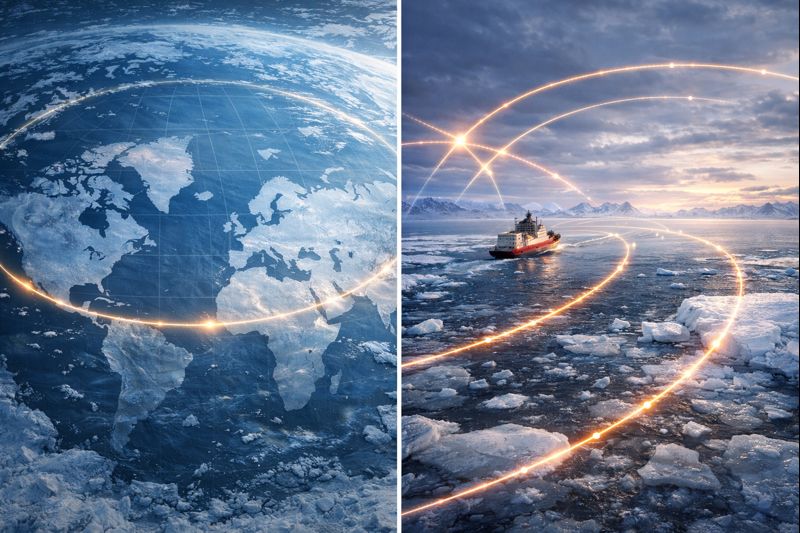
The Arctic region occupies the northernmost part of the Earth and is primarily located within the Arctic Circle, an imaginary line situated at approximately 66.5 degrees north latitude. This circle marks the area where, at least once a year, the sun does not set during summer (the Midnight Sun) and does not rise during winter (the Polar Night). The region surrounds the North Pole and is dominated by the Arctic Ocean, which is covered by sea ice for much of the year.
Geographically, the Arctic includes vast oceanic areas as well as coastal lands and islands belonging to eight Arctic states: Russia, Canada, the United States (through Alaska), Norway, Denmark (via Greenland), Finland, Sweden, and Iceland. Among these, Russia possesses the longest Arctic coastline, giving it a particularly strong strategic and geopolitical presence in the region.
The Arctic’s location places it at the intersection of three major continents—North America, Europe, and Asia. This unique positioning enhances its strategic importance, especially as melting ice opens shorter maritime routes between the Atlantic and Pacific Oceans. Routes such as the Northern Sea Route along Russia’s coast and the Northwest Passage through the Canadian Arctic have the potential to significantly reduce shipping time and costs compared to traditional routes like the Suez Canal.
In addition to trade, the Arctic’s geography is crucial from a security perspective. Its proximity to major global powers makes it a key zone for military surveillance, early warning systems, and strategic deployments. Thus, the Arctic’s geographical location transforms it from a remote polar region into a central node of global Geopolitics.
Natural Characteristics
The natural environment of the Arctic is defined by extreme cold, long winters, and short, cool summers. Temperatures can fall well below freezing for most of the year, particularly in the interior and during winter months. Large portions of the region are covered by sea ice, glaciers, and ice sheets, which play a vital role in regulating the Earth’s climate by reflecting solar radiation back into space.
A defining feature of the Arctic landmass is permafrost—soil that remains frozen for at least two consecutive years. Permafrost underlies much of the Arctic terrain and strongly influences infrastructure, vegetation, and human activity. As global temperatures rise, thawing permafrost poses serious challenges, including ground instability and the release of greenhouse gases such as methane.
Despite its harsh conditions, the Arctic supports a unique and highly adapted ecosystem. Wildlife such as polar bears, Arctic foxes, seals, walruses, whales, and migratory birds depend on sea ice and cold waters for survival. Plant life is dominated by tundra vegetation, including mosses, lichens, grasses, and dwarf shrubs, which have adapted to low temperatures, strong winds, and a short growing season.
The Arctic environment is extremely fragile. Small changes in temperature can lead to significant ecological shifts, affecting ice cover, wildlife habitats, and global weather patterns. For this reason, the Arctic is often described as a “barometer” of Climate change, offering early warning signs of environmental transformations that can impact the entire planet.
Together, these natural characteristics make the Arctic not only a region of scientific importance but also a critical factor in global climate stability, environmental security, and geopolitical decision-making.

- ✔ High quality content
- ✔ Trusted by students
- ✔ Excellent exam preparation
Arctic Geopolitics at a Glance
| Topic | Key Points |
|---|---|
| Important Countries | Russia, usA, Canada, Norway, Denmark |
| Main Resources | Oil, Natural Gas, Rare Earth Minerals |
| Important Routes | Northern Sea Route, Northwest Passage |
| Main Concerns | Climate change, Militarization, Territorial Claims |
| India’s Role | Himadri Station, Arctic Council Observer |
My Learning: Discovering the Arctic for the First Time
When I first began reading about the Arctic region, it existed in my mind as nothing more than a distant and frozen place on the map. In school textbooks, the Arctic was usually described in a few brief lines—extreme cold, endless ice, and polar bears. At that stage, I never imagined that this remote region would one day emerge as a focal point of global politics and strategic competition.
My understanding started to change when I explored articles, reports, and discussions related to international relations, energy security, and climate change. Gradually, I realized that the Arctic is not just a subject of scientific curiosity or environmental concern; it is becoming a central arena where economic interests, military strategies, and geopolitical ambitions intersect.
One of the most important lessons I learned is that nature and politics are deeply interconnected. As Arctic ice melts, new shipping routes open, access to vast natural resources becomes possible, and strategic calculations are reshaped. Climate change, therefore, is not only an environmental issue—it is also a powerful force that is redefining global power structures.
Studying the Arctic taught me that major transformations often occur quietly. There are no dramatic headlines when a layer of ice disappears, yet behind this silent change lie enormous political decisions, long-term investments, and strategic planning by powerful states. This realization encouraged me to look beyond surface-level events and examine the deeper processes shaping world affairs.
I also came to appreciate the significance of indigenous communities who have lived in the Arctic for thousands of years. Their traditional knowledge and close relationship with the environment highlight an alternative way of understanding development—one that values balance, sustainability, and respect for nature.
Ultimately, learning about the Arctic for the first time was more than an academic experience for me. It reshaped the way I view global politics, teaching me that the future of international relations may be decided in places that appear silent and distant today, but carry immense importance for tomorrow.
Historical Significance of the Arctic
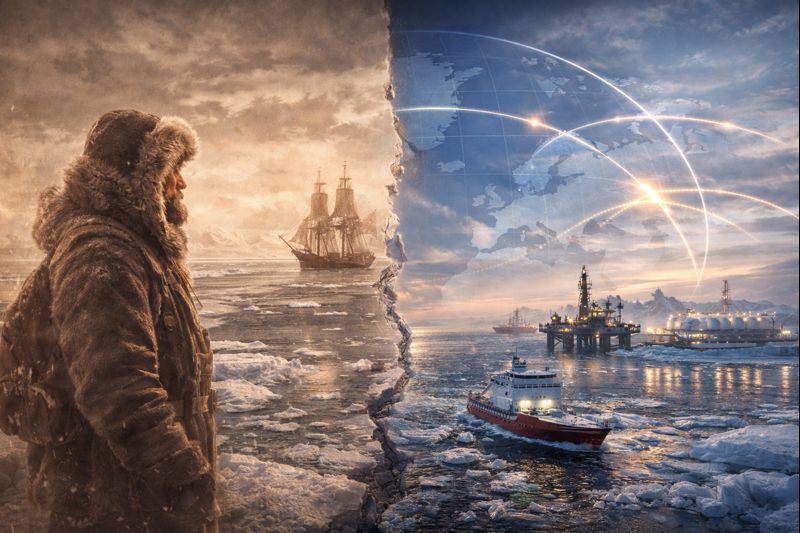
The historical significance of the Arctic region is often overshadowed by contemporary discussions about Climate change and Geopolitics. However, long before the Arctic became a focal point of modern strategic competition, it played a quiet yet important role in human history. For centuries, the Arctic was perceived as the edge of the known world—a mysterious, dangerous, and almost unreachable frontier. This perception, rather than discouraging exploration, gradually fueled human curiosity and ambition.
In the earliest periods of human settlement, the Arctic was home to indigenous communities such as the Inuit, Sami, and other native peoples who adapted to its extreme environment. These societies developed sophisticated survival techniques based on hunting, fishing, reindeer herding, and seasonal migration. Their presence demonstrates that the Arctic has never been an empty or meaningless space; instead, it has long been a region of human resilience, cultural richness, and deep ecological knowledge.
From the fifteenth century onward, the Arctic gained growing importance for European powers seeking new maritime routes to Asia. Explorers from countries such as England, Spain, and the Netherlands searched for shorter passages that could bypass traditional trade routes dominated by rival powers. The quest for the Northwest Passage and the Northern Sea Route turned the Arctic into a major arena of exploration. Many expeditions ended in tragedy, yet each journey expanded geographical knowledge and reinforced the Arctic’s place in global imagination.
During the nineteenth and early twentieth centuries, scientific interest in the Arctic intensified. Polar expeditions focused on mapping coastlines, studying weather systems, and understanding Earth’s magnetic field. These efforts transformed the Arctic into a laboratory for scientific discovery and strengthened awareness of its role in shaping global climate patterns.
The Cold War marked a turning point in the Arctic’s historical importance. The region became a strategic corridor between the United States and the Soviet Union, as the shortest routes for long-range bombers and intercontinental missiles passed over the Arctic. Military bases, radar installations, and submarine patrol routes were established, embedding the Arctic firmly into the global security architecture.
Looking back, it becomes clear that the Arctic has continually evolved in meaning and function. It has shifted from a remote wilderness to a zone of exploration, from a scientific frontier to a strategic military space, and now to a central arena of geopolitical competition. Understanding this historical journey helps explain why the Arctic occupies such a prominent position in today’s global affairs.
The Arctic’s past teaches an important lesson: geographical spaces do not remain static in their significance. Over time, they acquire new meanings based on human needs, technological progress, and shifting power structures. In this sense, the history of the Arctic is also a history of humanity’s changing relationship with the planet and with power itself.

- ✔ Updated content
- ✔ Trusted by aspirants
- ✔ Excellent for revision
Arctic and Energy Resources
The geopolitical importance of the Arctic region is closely tied to its vast energy resources. For centuries, these resources remained hidden beneath thick layers of ice, beyond the reach of human activity. Today, Climate change and technological advancement are making large parts of the Arctic more accessible, drawing the attention of major powers and multinational corporations. As a result, the Arctic is increasingly viewed not only as a remote polar region but as a potential cornerstone of future global energy security.
Energy resources shape national economies, influence foreign policy, and determine strategic independence. Countries that secure stable access to energy often enjoy greater economic resilience and political leverage. This reality explains why competition over Arctic resources is intensifying and why the region has become central to long-term geopolitical planning.
Oil and Gas Reserves
Estimates suggest that the Arctic holds a significant share of the world’s undiscovered oil and natural gas reserves. Some assessments indicate that around 13 percent of undiscovered oil and nearly 30 percent of undiscovered natural gas may lie within the Arctic. These figures alone highlight why energy-producing nations view the region as a strategic prize.
Russia, the United States, Norway, and Canada are among the leading countries investing in Arctic oil and gas exploration. Russia, in particular, has made Arctic energy development a pillar of its national strategy, expanding infrastructure, ports, and liquefied natural gas (LNG) facilities in its northern territories.
Extracting hydrocarbons in the Arctic is technically complex and extremely expensive. Harsh weather, ice-covered waters, and fragile ecosystems increase both operational risks and environmental concerns. Nevertheless, rising global energy demand and the gradual depletion of easily accessible reserves elsewhere continue to push states and companies toward Arctic exploration.
Rare Minerals
Beyond oil and gas, the Arctic region is believed to contain large deposits of rare and strategic minerals. These include rare earth elements, nickel, cobalt, copper, zinc, and uranium—materials that are essential for modern technologies and advanced industries.
Rare earth elements are crucial for producing smartphones, electric vehicles, wind turbines, batteries, and sophisticated military equipment. Control over these minerals therefore translates into technological and strategic advantage. As the world moves toward renewable energy and digital economies, demand for such materials is expected to grow rapidly.
The presence of these minerals transforms the Arctic into more than just an energy frontier; it becomes a foundation for future industrial and technological power. Consequently, countries are not only competing for energy extraction rights but also positioning themselves to secure long-term access to critical minerals.
In this way, the Arctic’s energy and mineral wealth is reshaping global calculations. The region is emerging as a key arena where economic interests, technological ambitions, and geopolitical strategies converge, making it one of the most consequential spaces in twenty-first-century international politics.
Arctic and Global trade routes
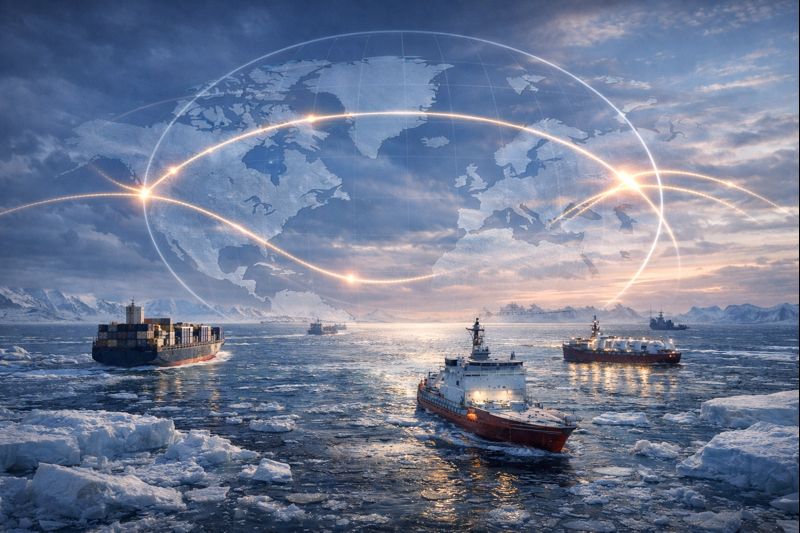
The significance of the Arctic region is not limited to its natural resources; it is increasingly recognized as a future hub of global trade routes. For most of history, thick ice and extreme weather made Arctic waters largely inaccessible for commercial shipping. However, as Climate change accelerates the melting of sea ice, new maritime pathways are gradually emerging, transforming the Arctic from a remote frontier into a potential bridge between the world’s major economic regions.
Traditionally, maritime trade between Asia, Europe, and North America has relied on long-established routes such as the Suez Canal and the Panama Canal. While these corridors remain vital, they are often congested, expensive, and vulnerable to geopolitical tensions. Arctic shipping routes, by contrast, offer the possibility of significantly shorter distances, reduced transit times, and lower fuel consumption.
Two Arctic routes are especially important in this context: the Northern Sea Route and the Northwest Passage. The Northern Sea Route runs along Russia’s northern coastline and connects the Atlantic and Pacific Oceans through Arctic waters. The Northwest Passage passes through Canada’s Arctic archipelago, providing another potential shortcut between Europe and Asia. In some cases, these routes can reduce travel distance by thousands of kilometers compared to traditional pathways.
The opening of these routes could reshape global supply chains. Faster shipping times can enhance trade efficiency, reduce transportation costs, and increase the competitiveness of exporters. Additionally, shorter routes may contribute to lower greenhouse gas emissions by cutting fuel usage, though this potential benefit must be balanced against environmental risks in fragile Arctic ecosystems.
Despite these opportunities, Arctic shipping faces serious challenges. Harsh weather conditions, limited infrastructure, unpredictable ice movement, and a lack of search-and-rescue capabilities make navigation difficult and risky. Insurance costs remain high, and strict safety regulations are necessary to prevent environmental disasters such as oil spills.
Control over Arctic trade routes is also a major geopolitical issue. Russia is actively developing ports, icebreaker fleets, and regulatory frameworks to position the Northern Sea Route as a major international shipping corridor. China has expressed strong interest in what it calls the “Polar Silk Road,” seeking to integrate Arctic routes into its broader global trade strategy. Meanwhile, Western countries are debating legal interpretations of whether these passages constitute internal waters or international straits.
In this way, Arctic trade routes are not merely commercial pathways; they are instruments of strategic influence. whoever shapes the rules, infrastructure, and security environment of these routes will gain significant leverage in future global commerce.
The Arctic is therefore emerging as a new maritime crossroads—one that could alter the geography of global trade and redefine how continents are connected in the twenty-first century.
Strategies of Major Powers
The Arctic region has rapidly transformed from a distant and isolated frontier into a central arena of global strategic competition. Melting ice, emerging trade routes, and vast untapped resources have drawn the attention of the world’s major powers. Each country approaches the Arctic through the lens of its own national interests, shaping distinct political, economic, and military strategies. Together, these strategies reveal how the Arctic is becoming a key space where future power dynamics may be decided.
Russia
Russia is the most dominant Arctic power in terms of geography, possessing the longest Arctic coastline and extensive northern territories. For Moscow, the Arctic is inseparable from national security and economic development. Russia views the region as a cornerstone of its long-term energy strategy, investing heavily in oil, natural gas, and liquefied natural gas (LNG) projects across its Arctic zones.
Beyond energy, Russia has significantly expanded its military presence in the Arctic. It has reopened Cold War–era bases, built new airfields and radar systems, and developed a powerful fleet of nuclear-powered icebreakers. These steps are designed to ensure control over the Northern Sea Route and to project strength in a region Moscow considers vital to its strategic depth.
United States
The United States approaches the Arctic primarily through the lenses of security, stability, and balance of power. With Alaska providing direct Arctic access, Washington views the region as essential to homeland defense and early-warning systems. The growing activities of Russia and China in the Arctic have reinforced U.S. concerns about maintaining strategic parity.
American strategy emphasizes cooperation with NATO allies, freedom of navigation, and the protection of international maritime norms. At the same time, the United States supports scientific research and environmental monitoring in the Arctic, while also recognizing the economic potential of energy development under carefully regulated conditions.
China
Although China is not an Arctic state, it has declared itself a “near-Arctic state” and steadily increased its involvement in the region. China’s Arctic strategy is primarily long-term and economically oriented. It sees the Arctic as a future source of energy, minerals, and new shipping routes that could support its global trade ambitions.
Beijing’s concept of a “Polar Silk Road” seeks to integrate Arctic maritime routes into the broader Belt and Road Initiative. China also invests in scientific research stations, infrastructure projects, and partnerships with Arctic countries, gradually building influence through economic and technological engagement.
Canada
For Canada, the Arctic is deeply connected to national identity and sovereignty. Ottawa places strong emphasis on asserting control over its Arctic archipelago and the Northwest Passage, which it considers internal waters. This position is not universally accepted, making sovereignty a central issue in Canada’s Arctic policy.
Canada’s strategy combines defense modernization, support for indigenous communities, and environmental stewardship. It seeks to balance economic development with the protection of fragile ecosystems, while reinforcing its presence through patrols, surveillance systems, and infrastructure investment.
Norway
Norway represents a pragmatic Arctic actor that prioritizes stability, cooperation, and sustainable development. As a major producer of Oil and Gas, Norway relies heavily on Arctic energy resources, yet it also maintains strict environmental standards and promotes responsible extraction.
As a NATO member, Norway plays an important role in Arctic security cooperation. It supports a rules-based international order, scientific collaboration, and confidence-building measures aimed at preventing conflict in the High North.
Together, these national strategies demonstrate that the Arctic is no longer a peripheral region. It has become a central stage where economic interests, security concerns, and geopolitical ambitions intersect, shaping the future architecture of global power.
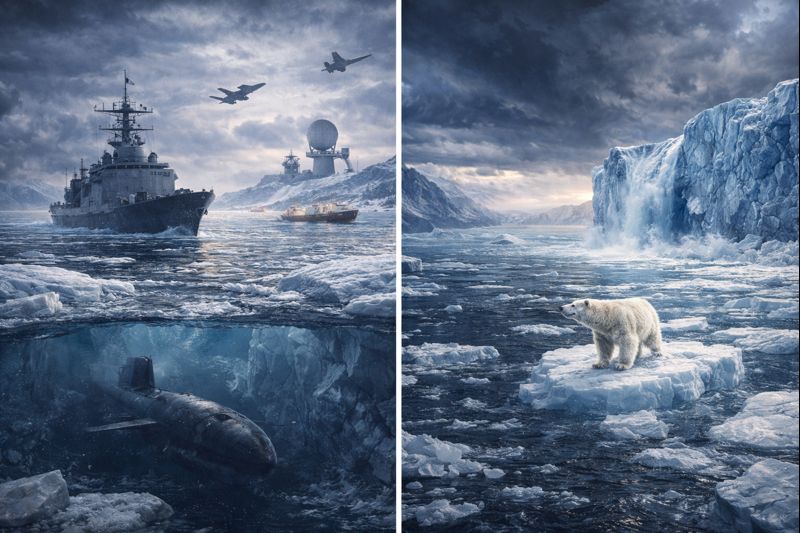
Militarization and Security Challenges
For a long time, the Arctic region was viewed as a zone of peace, scientific cooperation, and limited strategic confrontation. Its harsh climate and remote geography acted as natural barriers against large-scale military activity. However, as the Arctic becomes more accessible due to melting ice and growing economic opportunities, it is increasingly emerging as a space of strategic competition and military interest. This shift has placed militarization and security challenges at the center of Arctic Geopolitics.
The military significance of the Arctic is deeply connected to its geographic position. The region lies at the shortest distance between North America, Europe, and Asia, making it a critical corridor for long-range aviation, missile trajectories, and submarine operations. During The Cold War, the Arctic was a central theater for U.S.–Soviet strategic planning, and many of those underlying dynamics continue to influence contemporary security calculations.
Russia has taken the lead in expanding its military footprint across the Arctic. It has modernized former Soviet-era bases, constructed new airfields and radar installations, and strengthened its fleet of ice-capable and nuclear-powered icebreakers. These measures serve multiple purposes: protecting energy infrastructure, securing the Northern Sea Route, and reinforcing Russia’s claim as the dominant Arctic power.
The United States and its NATO allies have responded by increasing their own presence in the region. The modernization of facilities in Alaska, regular joint military exercises, and enhanced surveillance systems reflect growing concern over maintaining strategic balance. Countries such as Norway and Canada are also investing in Arctic defense capabilities, focusing on patrol operations, early-warning systems, and search-and-rescue infrastructure.
Rising militarization creates several serious security challenges. One major concern is the lack of clearly defined and universally accepted boundaries in certain parts of the Arctic, particularly regarding continental shelves and maritime zones. Competing territorial claims increase the risk of diplomatic disputes and, in extreme cases, potential confrontation.
Another challenge lies in the fragile Arctic environment. Military activities carry the risk of accidents involving aircraft, ships, or submarines, which could result in environmental disasters that are extremely difficult to contain or clean up. The remoteness of the region complicates emergency response and amplifies the consequences of any incident.
Transparency and confidence-building measures in the Arctic remain limited. While institutions such as the Arctic Council promote cooperation on scientific and environmental issues, military matters are often excluded from formal dialogue. This gap increases the possibility of misunderstandings, miscalculations, and unintended escalation.
Militarization in the Arctic is therefore not merely a regional issue; it has global implications. The way states manage competition, communication, and cooperation in this fragile region will shape not only Arctic stability but also the broader future of international security. Ensuring that the Arctic remains a space of dialogue rather than conflict is one of the most critical challenges of the twenty-first century.

- ✔ Updated syllabus
- ✔ Trusted by toppers
- ✔ Best for revision
Environmental Crisis and Climate change
The Arctic region stands at the forefront of the global environmental crisis and climate change. Scientists often describe the Arctic as a “climate change hotspot” because it is warming at more than twice the global average rate—a phenomenon known as Arctic amplification. This rapid warming is not an isolated regional issue; it is a signal of broader planetary changes that affect weather patterns, sea levels, and ecological stability across the world.
One of the most visible consequences of climate change in the Arctic is the dramatic loss of sea ice. Over recent decades, the extent and thickness of Arctic sea ice have declined significantly, particularly during summer months. This loss reduces the Earth’s ability to reflect sunlight back into space, as dark ocean water absorbs more heat than ice. As a result, warming accelerates further, creating a self-reinforcing cycle that intensifies global temperature rise.
Glaciers and ice sheets in the Arctic are also melting at alarming rates. Greenland’s ice sheet alone contains enough frozen water to raise global sea levels by several meters if it were to melt completely. Even partial melting contributes to rising sea levels, threatening coastal cities, low-lying islands, and millions of people far beyond the Arctic region.
Another critical aspect of the Arctic environmental crisis is the thawing of permafrost. Permafrost soils store vast amounts of organic carbon that have remained frozen for thousands of years. As temperatures rise, thawing permafrost releases greenhouse gases such as carbon dioxide and methane into the atmosphere. Methane, in particular, is a highly potent greenhouse gas, and its release further accelerates climate change, creating a dangerous feedback loop.
The Arctic’s fragile ecosystems are under immense pressure. Species such as polar bears, seals, walruses, and Arctic foxes depend on stable ice conditions for hunting, breeding, and migration. As ice disappears, these animals face habitat loss, reduced food availability, and declining populations. Migratory birds and marine life are also affected as changes in temperature and ice cover disrupt long-established ecological cycles.
Indigenous communities living in the Arctic are among the most vulnerable to environmental change. Their traditional ways of life—based on hunting, fishing, and close observation of seasonal patterns—are being disrupted by unpredictable weather, thinning ice, and shifting animal populations. Climate change threatens not only their economic survival but also their cultural heritage and identity.
Human activity is adding further strain to this fragile environment. Increased shipping, resource exploration, mining, and energy extraction raise the risk of pollution and industrial accidents. In the Arctic’s extreme conditions, even a small oil spill or chemical release can cause long-lasting environmental damage, as cold temperatures slow natural recovery processes.
The environmental crisis in the Arctic is closely intertwined with Geopolitics. As melting ice opens access to resources and trade routes, competition intensifies, often placing economic and strategic interests in direct conflict with environmental protection. This tension highlights a fundamental challenge: how to balance development with responsibility in one of the world’s most sensitive regions.
The Arctic’s transformation serves as a warning to the global community. Changes occurring here do not remain confined to the polar region; they ripple outward, influencing climate systems, sea levels, and human security worldwide. Addressing the environmental crisis and climate change in the Arctic therefore requires international cooperation, strong scientific research, and a commitment to sustainable policies. The future of the Arctic, and indeed the planet, depends on the choices humanity makes today.
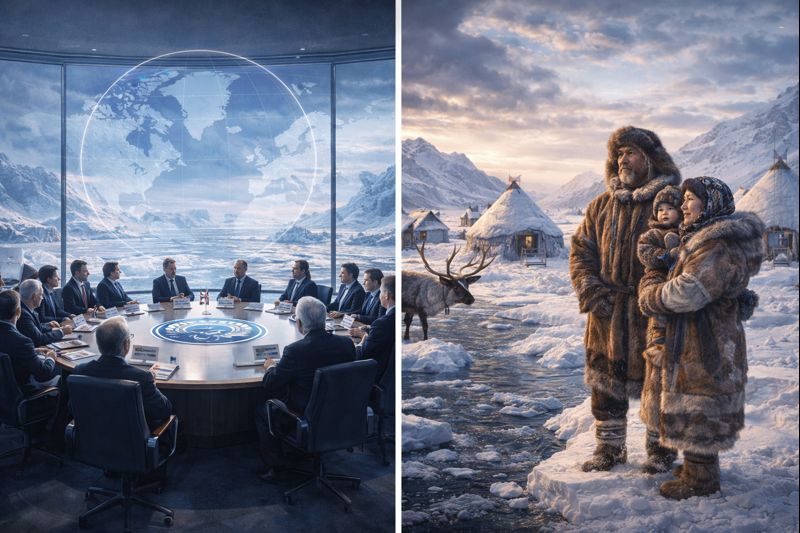
Arctic Council and International Law
As the Arctic region gains increasing geopolitical, economic, and environmental importance, the question of how it should be governed has become more critical than ever. Two key pillars shape the governance of the Arctic: the Arctic Council and international law. Together, they provide a framework for cooperation, dialogue, and rule-based order in a region that is undergoing rapid transformation.
The Arctic Council was established in 1996 as an intergovernmental forum to promote cooperation among Arctic states. Its eight member countries are the United States, Russia, Canada, Norway, Denmark (through Greenland), Finland, Sweden, and Iceland. The primary focus of the Council is on sustainable development, environmental protection, and scientific research rather than military or security matters.
One distinctive feature of the Arctic Council is the inclusion of Indigenous organizations as permanent participants. This ensures that the voices of Arctic’s native communities are represented in discussions and decision-making processes. The Council works through specialized working groups that address issues such as Climate change, biodiversity, marine pollution, emergency response, and human development.
Although the Arctic Council plays a vital role in fostering cooperation, it does not directly address military or defense issues. This limitation reflects the Council’s original mandate but also highlights a governance gap at a time when strategic competition in the Arctic is increasing. Nevertheless, the Council remains one of the most important platforms for building trust and maintaining dialogue among Arctic nations.
International law forms the second major foundation of Arctic governance. The most significant legal instrument in this context is the United Nations Convention on the Law of the Sea (UNCLOS). UNCLOS defines the rights and responsibilities of states over their territorial waters, exclusive economic zones (EEZs), and continental shelves. Arctic states rely on this framework to make and defend their maritime claims.
Under UNCLOS, countries may seek to extend their continental shelf beyond 200 nautical miles if they can provide scientific evidence that the seabed is a natural extension of their land territory. This provision has led Arctic states to conduct extensive geological surveys and submit claims to international bodies, making law and science central to Arctic Geopolitics.
In addition to UNCLOS, a range of international agreements on environmental protection, biodiversity conservation, and pollution control apply to the Arctic. These legal instruments aim to ensure that economic activities such as shipping, mining, and energy extraction are conducted responsibly and with minimal harm to fragile ecosystems.
Taken together, the Arctic Council and international law create a framework that encourages cooperation rather than confrontation. Strengthening these institutions and ensuring respect for international norms will be essential if the Arctic is to remain a region of stability in an era of growing global competition.

- ✔ Updated content
- ✔ Trusted by aspirants
- ✔ Ideal for quick revision
Indigenous Communities and Their Struggle
The story of the Arctic is incomplete without understanding the lives and struggles of its indigenous communities. Long before the Arctic became a subject of global Geopolitics, energy competition, or climate diplomacy, it was home to native peoples who learned to survive and thrive in one of the harshest environments on Earth. Communities such as the Inuit, Sami, Nenets, Chukchi, and many others have lived in the Arctic for thousands of years, developing cultures deeply rooted in nature.
Their traditional way of life has been closely connected to hunting, fishing, reindeer herding, and seasonal migration. Knowledge passed down through generations enables them to read subtle environmental signs—changes in ice thickness, animal behavior, wind patterns, and weather shifts. This indigenous knowledge system is not written in books but embedded in daily life, rituals, and collective memory.
However, this delicate balance between humans and nature is now under severe threat. Climate change has disrupted long-established patterns of ice formation and melting. Sea ice is becoming thinner and less predictable, making hunting routes dangerous and reducing access to traditional food sources. As a result, food insecurity and safety risks have increased for many Arctic communities.
In addition to environmental change, expanding industrial activities have intensified the challenges faced by indigenous peoples. Oil and Gas exploration, mining operations, and increased shipping traffic often take place near or on traditional lands. In many cases, development projects proceed without adequate consultation, leading to land degradation, water pollution, and damage to culturally significant sites.
The struggle of indigenous communities is not limited to economic survival; it is also a struggle for cultural preservation. Indigenous languages are disappearing, younger generations are migrating to urban centers, and traditional knowledge systems are under pressure from modern lifestyles. This gradual erosion threatens the cultural identity and social cohesion of Arctic communities.
Despite these challenges, indigenous peoples continue to show resilience and determination. They are increasingly organizing at local, national, and international levels to demand recognition of their rights. Through participation in forums such as the Arctic Council and global climate conferences, they are asserting their role as key stakeholders in decisions that affect their future.
The experience of Arctic indigenous communities offers an important lesson: sustainable development in the Arctic cannot be achieved without respecting the people who have protected and depended on this region for generations. Any vision for the Arctic’s future must place indigenous voices at the center, recognizing them not as obstacles to development, but as guardians of a fragile and irreplaceable environment.
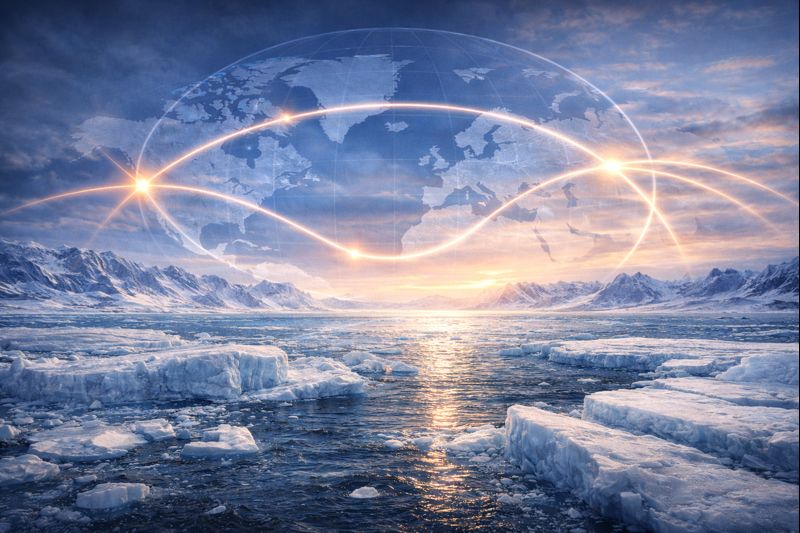
What Can We Learn from Arctic Geopolitics
Arctic geopolitics is not merely the story of a distant polar region; it is a reflection of the changing nature of global power and international relations. The developments unfolding in the Arctic reveal how environmental change, technological advancement, and national interests interact to reshape the global order. From this evolving region, several important lessons emerge that are relevant not only for policymakers but also for societies worldwide.
The first and most fundamental lesson is that nature and politics are deeply interconnected. Climate change has transformed the Arctic from an inaccessible frozen space into a region of opportunity and competition. This demonstrates that environmental challenges are not separate from strategic and economic concerns. Protecting the environment, therefore, is not only a moral responsibility but also a matter of long-term security and stability.
A second key lesson is that future competition will extend beyond traditional military power. Control over energy resources, rare minerals, trade routes, and advanced technologies is becoming as important as conventional armed strength. The Arctic clearly illustrates how economic and technological factors are increasingly central to geopolitical influence.
Another important insight is the value of cooperation alongside competition. Despite rising tensions, the Arctic has so far avoided large-scale conflict, in part due to mechanisms such as the Arctic Council and international legal frameworks. These institutions show that dialogue, rules, and shared norms can help manage rivalry and reduce the risk of confrontation.
Arctic geopolitics also teaches us that regions once considered remote or marginal can quickly become strategically vital. The Arctic’s transformation warns against underestimating seemingly distant areas, as shifts in climate, technology, or economics can rapidly elevate their global significance.
Finally, the Arctic reminds us of the importance of long-term thinking. Decisions made today about resource extraction, environmental protection, and security will shape the region’s future for generations. Short-term gains pursued without regard for sustainability may lead to irreversible consequences.
In essence, the greatest lesson from Arctic geopolitics is the need for balance—between competition and cooperation, development and preservation, national interests and global responsibility. In a rapidly changing world, such balance will be essential for achieving lasting peace and shared prosperity.
India and the Arctic Region
At first glance, India and the Arctic region appear to be worlds apart—geographically, climatically, and culturally. India lies in the tropical and subtropical zones, while the Arctic represents one of the coldest and most remote regions on the planet. Yet in an increasingly interconnected world, developments in the Arctic have direct and indirect consequences for India. Climate change, global Geopolitics, energy security, and scientific research have all brought the Arctic into India’s strategic and academic focus.
One of the most important links between India and the Arctic is climate change. The Arctic plays a critical role in regulating the Earth’s climate system, and changes occurring there influence weather patterns far beyond the polar region. Scientific studies suggest that Arctic warming can affect the Indian monsoon by altering atmospheric circulation and jet stream behavior. For a country like India, where millions of lives and livelihoods depend on predictable monsoon rainfall, understanding Arctic climate dynamics is a matter of national importance.
Recognizing this connection, India has actively invested in Arctic scientific research. India launched its first Arctic expedition in 2007 and, in 2008, established a permanent research station named “Himadri” in Svalbard, Norway. This station focuses on research related to glaciology, atmospheric sciences, marine ecosystems, and climate processes. Indian scientists use data from the Arctic to improve climate models and better understand global environmental change.
Beyond science, the Arctic also holds significance for India’s long-term energy and resource considerations. As a rapidly developing economy with growing energy demands, India closely observes global trends in energy exploration and resource availability. The Arctic’s vast reserves of oil, natural gas, and critical minerals make it an area of strategic interest, even though India does not seek direct control or competition. Instead, India emphasizes cooperation, technology sharing, and adherence to international norms.
India’s engagement with the Arctic is further reflected in its role within multilateral institutions. In 2013, India was granted observer status in the Arctic Council, recognizing its scientific contributions and responsible approach. Through this platform, India participates in discussions on environmental protection, sustainable development, and the rights of indigenous communities, reinforcing its image as a constructive and non-confrontational stakeholder.
From a geopolitical perspective, India supports a rules-based and inclusive Arctic order. It does not align itself with any single Arctic power bloc but advocates for peaceful cooperation, Transparency, and respect for international law. This approach is consistent with India’s broader foreign policy principles, including multilateralism and the idea of shared global responsibility.
India has also articulated its vision through its Arctic policy, which emphasizes science-led engagement, environmental protection, economic cooperation, and capacity building. The policy reflects India’s understanding that the Arctic’s future will influence global stability, climate resilience, and sustainable development.
In essence, India’s relationship with the Arctic is forward-looking and rooted in responsibility. While India is not an Arctic nation, it recognizes that the fate of the Arctic is closely tied to the fate of the planet. By prioritizing research, cooperation, and sustainability, India seeks to contribute meaningfully to the governance and preservation of this fragile yet strategically vital region.
Future of the Arctic: Cooperation or Conflict?
The Arctic today stands at a critical crossroads, where its future could move in two very different directions—toward cooperation or toward conflict. Over the past few decades, Climate change has transformed the Arctic from a remote and frozen frontier into a region of global strategic importance. As ice melts and access increases, competition over resources, trade routes, and influence is intensifying, making the question of the Arctic’s future more urgent than ever.
The possibility of cooperation lies in the shared nature of Arctic challenges. Issues such as climate change, environmental protection, maritime safety, and disaster response cannot be effectively addressed by any single country acting alone. Institutions like the Arctic Council demonstrate that even states with competing interests can engage in dialogue, share scientific knowledge, and work toward common goals. If countries continue to strengthen multilateral mechanisms and respect international law, the Arctic could become a model region for peaceful collaboration.
At the same time, the risk of conflict cannot be ignored. The growing military presence of major powers, competing claims over maritime boundaries, and rivalry for control of resources all increase the potential for tension. Strategic distrust between powerful states can easily spill into the Arctic, turning it into another arena of geopolitical confrontation.
The future of the Arctic will also depend on how humanity balances economic development with environmental responsibility. If short-term profits from resource extraction are prioritized over long-term ecological stability, the region may suffer irreversible damage. Conversely, a commitment to sustainable development and strict environmental standards can help preserve the Arctic while allowing limited, responsible economic activity.
Indigenous communities must play a central role in shaping the Arctic’s future. Their traditional knowledge, cultural heritage, and close relationship with the environment provide valuable insights into sustainable living in fragile ecosystems. Excluding them from decision-making processes would not only be unjust but would also weaken efforts to achieve lasting stability.
Ultimately, the future of the Arctic will be determined by collective choices. It will reflect whether the international community chooses rivalry over responsibility or cooperation over confrontation. The Arctic offers humanity a rare opportunity: to prove that even in an era of intense competition, dialogue, trust, and shared purpose can prevail.
Conclusion
The study of Arctic Geopolitics clearly demonstrates that no region in today’s world can truly be considered remote or insignificant. What was once viewed as a frozen and isolated expanse has emerged as a central arena of global politics, environmental concern, and strategic competition. The Arctic’s transformation reflects the broader reality of an interconnected world, where changes in one region can reshape dynamics across the entire planet.
Throughout this exploration, it becomes evident that the Arctic is far more than a reservoir of untapped resources or a collection of emerging trade routes. It is one of the most sensitive indicators of Climate change, offering a stark warning about the consequences of human activity. Melting ice, thawing permafrost, and fragile ecosystems highlight the urgency of addressing environmental degradation not only for the Arctic’s sake, but for the future of humanity as a whole.
From a geopolitical perspective, the Arctic illustrates how competition and cooperation coexist. Major powers are pursuing strategic and economic interests, yet institutions such as the Arctic Council and the framework of international law continue to provide avenues for dialogue and stability. These mechanisms demonstrate that rivalry does not inevitably lead to conflict, provided there is commitment to rules, Transparency, and mutual respect.
The experiences of indigenous communities remind us that geopolitics is ultimately about people, not just territory or power. Their struggles emphasize the need for development models that respect human dignity, cultural heritage, and environmental balance. Any sustainable vision for the Arctic must place these communities at its heart.
The growing engagement of non-Arctic states, including India, further underscores that the Arctic’s future is a global concern. Climate systems, economic networks, and security dynamics connect the Arctic to every region of the world.
In the end, the story of the Arctic is a story of choice. Humanity can allow short-term interests and rivalry to define the region’s future, or it can pursue cooperation, responsibility, and long-term thinking. The path chosen in the Arctic will not only shape the destiny of a polar region, but also reflect the values that guide the international community in the twenty-first century.
Frequently Asked Questions (FAQ)
What is Arctic Geopolitics?
Arctic geopolitics refers to the political, economic, and strategic interactions among countries in the Arctic region. It focuses on issues such as territorial claims, control over natural resources, emerging shipping routes, military presence, environmental protection, and international cooperation.
Why is the Arctic region becoming more important?
The Arctic is gaining importance because Climate change is melting sea ice, making resources and shipping routes more accessible. The region holds large reserves of oil, gas, and critical minerals, and it occupies a strategic position between major global powers.
Which countries are most active in the Arctic?
The most active Arctic countries include Russia, the United States, Canada, Norway, and Denmark (through Greenland). In addition, non-Arctic states such as China and India are increasingly involved through research, investment, and diplomatic engagement.
What role does climate change play in Arctic geopolitics?
Climate change is a central driver of Arctic geopolitics. Melting ice opens new shipping routes and access to resources, while also creating environmental risks. These changes reshape national strategies and intensify competition and cooperation in the region.
What is the Arctic Council?
The Arctic Council is an intergovernmental forum established in 1996 to promote cooperation among Arctic states. It focuses on sustainable development, environmental protection, and scientific research, and includes indigenous organizations as permanent participants.
Is the Arctic becoming militarized?
Yes, several countries are increasing their military presence in the Arctic. However, large-scale conflict has so far been avoided. Many experts emphasize the need for confidence-building measures and dialogue to prevent escalation.
How does the Arctic affect countries far away from it?
The Arctic influences global climate systems, sea levels, and weather patterns, including monsoon systems in South Asia. Economic and geopolitical developments in the Arctic also impact global trade and energy markets.
What is the future of the Arctic?
The future of the Arctic depends on whether countries choose cooperation or confrontation. Strengthening international law, environmental protection, and inclusive governance can help ensure that the Arctic remains a region of peace and stability.

- ✔ Updated content
- ✔ Trusted by aspirants
- ✔ Ideal for quick revision
References
- Arctic Council. Official Reports and Publications on Arctic governance and Sustainable Development.
- United Nations Convention on the Law of the Sea (UNCLOS). United Nations Treaty Collection.
- Intergovernmental Panel on Climate change (IPCC). Assessment Reports on Climate Change.
- U.S. Geological Survey (USGS). Arctic Oil and Gas Resource Assessments.
- Norwegian Polar Institute. Research on Arctic Environment and Climate.
- National Snow and Ice Data Center (NSIDC). Arctic Sea Ice Data and Analysis.
- International Energy Agency (IEA). Energy Outlook Reports.
- Stockholm International Peace Research Institute (SIPRI). Studies on Arctic Security and Militarization.
- World Meteorological Organization (WMO). Polar Climate and Weather Reports.
- Peer-reviewed journals on Geopolitics, climate science, and international relations.